



- Home
- /
- High Courts
- /
- Patna High Court
- /
- Cancellation Of Tender On Grounds...
Cancellation Of Tender On Grounds Waived By Bidder Is Manifestly Arbitrary: Patna High Court
Rushil Batra
3 April 2026 1:05 PM IST
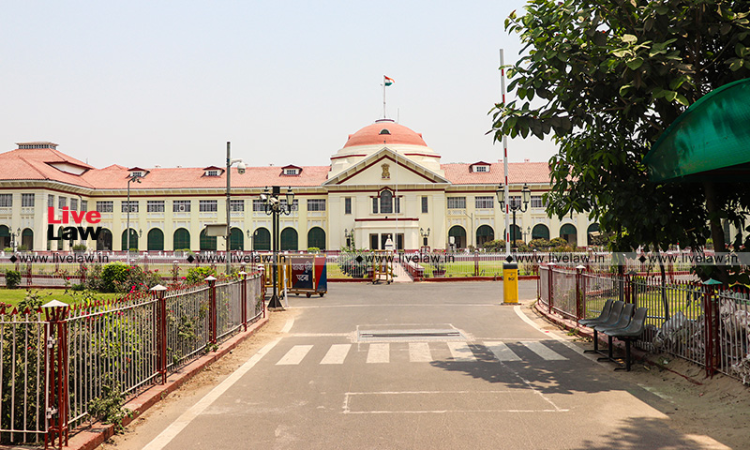
The Patna High Court has held that cancellation of a tender process on a factually incorrect and non-existent ground is manifestly arbitrary and violative of Article 14, setting aside the decision to re-tender despite the petitioner being declared L-1.A Division Bench comprising Justice Sudhir Singh and Justice Shailendra Singh was hearing a writ petition challenging the decision dated...
This is a premium content
Available exclusively to
Our subscribers
Subscribe Premium 
INR 1099+GST
Your support helps us to bring you more content at
an affordable subscription scheme !!!
All payment options available
The Patna High Court has held that cancellation of a tender process on a factually incorrect and non-existent ground is manifestly arbitrary and violative of Article 14, setting aside the decision to re-tender despite the petitioner being declared L-1.
A Division Bench comprising Justice Sudhir Singh and Justice Shailendra Singh was hearing a writ petition challenging the decision dated 15.09.2025 of the Tender Committee cancelling the tender process under the Rural Road Strengthening and Management Program (RRSMP) and directing re-tendering.
The petitioner submitted that he had participated in the tender process pursuant to the NIT dated 03.07.2025 and was declared the lowest bidder (L-1) after completion of both technical and financial evaluation. It was contended that even the Executive Engineer had recommended issuance of the work order in his favour. It was further pointed out that one bidder, Praveen Kumar, had been disqualified during technical evaluation for non-submission of mandatory documents relating to annual turnover. Crucially, the petitioner brought on record letters dated 12.09.2025 and 13.09.2025 issued by the said bidder, wherein he categorically admitted his failure to submit the required documents and expressly stated that he neither intended to file any objection nor to pursue the matter further.
Despite this, the Tender Committee cancelled the entire process on the ground that the said bidder had not been given adequate opportunity.
Per contra, the State contended that the cancellation was undertaken to ensure fairness and transparency in the tender process. It was argued that submission of documents was mandatory, and since financial bids had already been opened, the integrity of the process stood compromised. The respondents also relied on the clause in the NIT permitting cancellation of the bidding process at any stage.
At the outset, the Court framed the issue as whether the authorities were justified in cancelling the tender on the ground of denial of opportunity to a bidder who had already waived his right.
Upon examining the record, the Court found that the very foundation of the impugned decision was unsustainable. It held that the material on record clearly established that the concerned bidder had consciously waived his right to submit documents or raise objections prior to the impugned decision. The Court noted:
“However, the materials on record unequivocally demonstrate that prior to the impugned decision itself, the said bidder had waived his right to submit the requisite documents or to raise any objection. The letters dated 12.09.2025 and 13.09.2025 (Annexure- P/8 & P/9), clearly establish that the said bidder consciously accepted his disqualification and categorically stated that he neither intends to file any objection nor to pursue the matter further…In such circumstances, the very foundation of the impugned decision becomes unsustainable and collapses. The doctrine of waiver, which is a well-recognized principle in law, postulates that where a person, with full knowledge of his rights, voluntarily abandons or relinquishes the same, he cannot subsequently be heard to complain.”
Applying the doctrine of waiver, the Court held that once the bidder had voluntarily relinquished his right, there remained no subsisting grievance warranting consideration. The Court noted that “In such a situation, for the authorities to subsequently rely upon an alleged denial of opportunity to that very bidder as a ground for cancelling the entire tender process is not only contradictory but also manifestly arbitrary”.
The Court further reiterated that while the State has discretion in contractual matters, such discretion must conform to the mandate of fairness, transparency and non-arbitrariness under Article 14. It held that the impugned decision was based on a factually incorrect premise and suffered from non-consideration of relevant material.
Accordingly, the Court held that the decision dated 15.09.2025 cancelling the tender process was unsustainable in law and set it aside, allowing the writ petition.
Case Title: Kaushal Kishore v. State of Bihar and Ors.
Case No.: Civil Writ Jurisdiction Case No. 16089 of 2025.
Appearance: Senior Advocate Mr. Ramakant Sharma, assisted by Mr. Rajesh Kumar and Mr. Priyansh Ranjan appeared for the Petitioner. Mr. Sanjay Prasad appeared for the State of Bihar.
Tags


