



'Lack Of Prior State Approval No Ground To Terminate Employees Appointed Against Sanctioned University Posts': Patna High Court
LIVELAW NEWS NETWORK
28 Nov 2026 5:30 PM IST
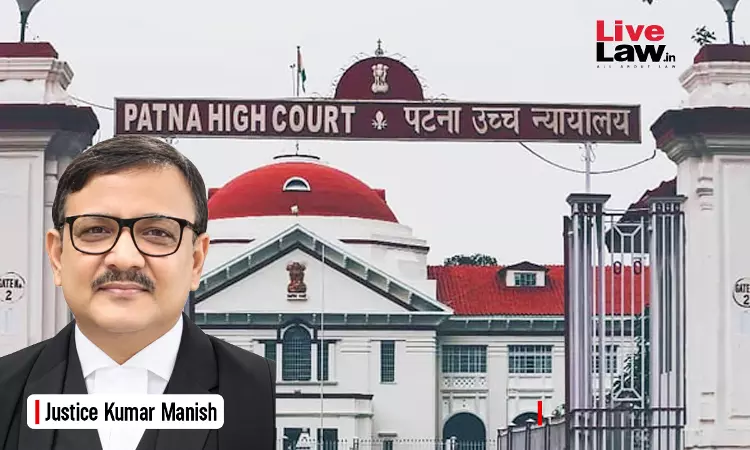
The Patna HC has held that appointments made against pre-existing sanctioned posts in affiliated colleges cannot be invalidated solely on the ground that prior approval of the State Government was not obtained under Section 35(2) of the Bihar State Universities Act, 1976.
A Single Judge Bench of Justice Kumar Manish allowed a batch of writ petitions filed by teaching and non-teaching employees of colleges affiliated with Kameshwar Singh Darbhanga Sanskrit University, quashing the State Government's orders rejecting their appointments. The Court held that directing their termination after years of service was arbitrary, discriminatory and violative of Articles 14, 16 and 21 of the Constitution.
The dispute arose from appointments made between 2008 and 2015 against teaching and non-teaching posts in Sanskrit colleges receiving deficit grants from the State Government. In one of the petitions, Birendra Prasad Thakur challenged the rejection of his appointment as Principal of Rudra Sanskrit Upshastri College, Supaul. The College had issued an advertisement for the vacant post of Principal on January 25, 2012, after obtaining approval from the University. A Selection Committee constituted under the applicable statutory provisions recommended the petitioner, following which the College's Governing Body appointed him on October 28, 2012. He joined service on November 4, 2012, and continued discharging his duties. However, following a dispute concerning the release of salary funds, the Director, Higher Education, rejected the University's recommendation for approval of his appointment on April 21, 2022, citing non-compliance with Section 35(2) of the Bihar State Universities Act.


Consequently, the University issued a communication on June 16, 2022, directing steps towards terminating his services. Several similarly situated employees challenged the rejection of their appointments and the consequential termination directives.
The petitioners contended that prior State Government approval was not required where appointments were made against vacant posts already sanctioned under the approved staffing pattern. Relying on the Full Bench judgment in Braj Kishore Singh v. State of Bihar, 1997 (1) PLJR 509, they argued that the State could not reject appointments against existing sanctioned posts merely by invoking Section 35(2). They further submitted that their appointments had been made through duly constituted Selection Committees and approved by the University's statutory authorities.
The State Government opposed the petitions, contending that Section 35(2) expressly prohibited affiliated colleges from appointing persons without prior government approval, except for temporary appointments against sanctioned teaching posts for periods not exceeding six months. It argued that the appointments had been made without obtaining such approval and that the consequential termination directives were therefore justified.
The University submitted that its approval of the appointments had been conditional upon the absence of objections from the State Government. Following the Government's rejection orders, it had withdrawn its conditional approval and directed the colleges to comply.
Examining the statutory framework, the High Court relied on the Full Bench decision in Braj Kishore Singh, which had considered the scope of Section 35(2) and its application to appointments against posts within an approved staffing pattern. Applying that decision, the Court noted that the petitioners had been appointed against vacant teaching and non-teaching posts arising from the staffing pattern sanctioned by the State Government through its resolution dated October 18, 1976.
The Bench observed:
“The appointments of the petitioners were made against vacant teaching and non-teaching posts that flow directly from the general staffing pattern sanctioned by the State Government's Education Department vide Resolution dated October 18, 1976, for deficit grant-in-aid Sanskrit institutions (prescribing 10 teaching posts and 4 non-teaching posts). The posts, therefore, carry statutory sanction within the ratio of Braj Kishore Singh (supra).”
The Court further found that the petitioners had been selected through open advertisements by duly constituted Selection Committees comprising University-approved experts under Sections 57A and 57B of the Act. Their appointments had also been scrutinised and approved by the University's Approval, Seniority and Pay Fixation Committee and the Syndicate.
Holding that the State could not invoke Section 35(2) to terminate employees after years of service in these circumstances, the Court observed:
“The petitioners have continuously discharged their duties for over a decade (having joined between 2008 and 2015). The State Government's sudden invocation of Section 35(2) to direct their termination after years of unblemished service is arbitrary, discriminatory, and violative of Articles 14, 16, and 21 of the Constitution of India”
The Bench also relied on the coordinate Bench decision in Sanjeev Kumar Ishwar v. State of Bihar, decided on April 2, 2025, wherein an identical departmental rejection order had been quashed by applying the Full Bench ruling in Braj Kishore Singh.
Finding no reason to depart from that view, the Court held:
“Consequently, the impugned rejection orders passed by the Director, Higher Education, on the sole ground of noncompliance with Section 35(2) of the Bihar State Universities Act, 1976, cannot be sustained in law.”
The Court additionally expressed concern over repeated litigation arising from administrative decisions taken without complying with governing statutory provisions. Referring to the Bihar State Litigation Policy, 2011, it observed that numerous similar cases had already been decided by different Benches of the High Court.
The Bench also expressed its expectation that the Advocate General would coordinate with the Chief Secretary and officials of the concerned departments to address such recurring litigation.
Accordingly, the High Court allowed all the writ petitions and quashed the rejection orders dated April 21, 2022, November 2, 2022, and allied orders issued by the Director, Higher Education, against the petitioners.
Appearance:
For the Petitioners: Mr. Ram Hriday Prasad, Advocate; Mr. Maruti Kumar, Advocate; Mr. Abhinav Srivastava, Senior Advocate; Mr. Raushan, Advocate; Mr. Akshat Kumar, Advocate; Mr. Chinmay Harsh Kumar, Advocate; Ms. Megha Kumari, Advocate; Mr. Arun Kumar, Advocate; Mr. Satyam Shivam Sundaram, Advocate; Mr. Aman Kumar, Advocate; Mr. Amar Kumar, Advocate.
For the State Respondents: Mr. Brajesh Kumar Pandey, SC-8; Mr. Arvind Kumar, GP-5; Mr. Radha Raman, GP-24; Mr. Sapan Kumar, AC to GP-24; Mr. Ravi Kant Pandey, AC to GP-24; Mrs. Babita Kumari, AC to GP-24; Mr. Anurag Kumar, AC to GP-24; Mr. Kaushal Kishor, GP-29; Mr. Kumar Samarjeet Singh, GP-23; Mr. Jainendra Kr. Pushkar, AC to SC-18; Mr. Ramanurag Singh, SC-37; Mr. Prabhu Narayan Sharma, SC-22; Mr. Ankit, AC to SC-22; Mr. Maurya Vijay Chandra, AAG-2; Mr. Gaurav Vardhan Singh, AC to AAG-2; Ms. Ritambhara, AC to AAG-2; Mr. Iqbal Asif Niazi, AC to GA-14; Mr. Shashi Bhushan Kumar, AAG-13.
For Kameshwar Singh Darbhanga Sanskrit University: Mr. Binay Kumar Singh, Advocat


