



- Home
- /
- High Courts
- /
- Patna High Court
- /
- 'Mere Absence Not Always Willful':...
'Mere Absence Not Always Willful': Patna High Court Quashes SBI Employee's Deemed Voluntary Resignation Over Medical Leave
LIVELAW NEWS NETWORK
6 Oct 2026 7:45 PM IST
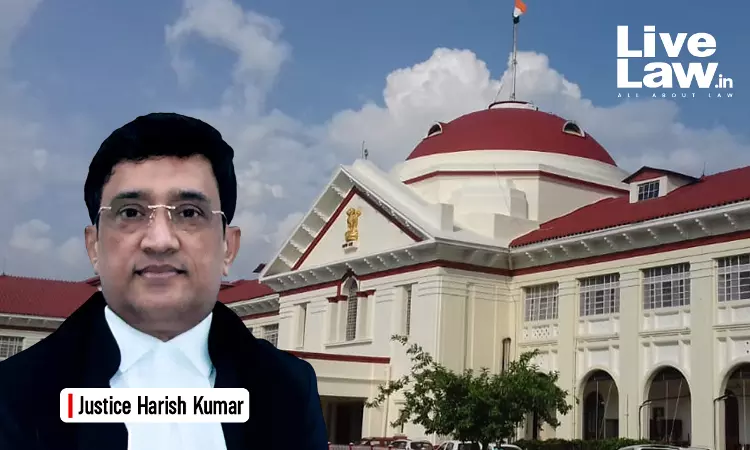
The Patna High Court has held that mere absence from duty cannot, by itself, lead to a conclusion that an employee was wilfully or unauthorisedly absent, particularly where the absence is supported by medical records.A Single Judge Bench of Justice Harish Kumar was hearing a petition filed by an SBI officer challenging notices whereby he was treated as having voluntarily vacated his service...
This is a premium content
Available exclusively to
Our subscribers
Subscribe Premium 
INR 1099+GST
Your support helps us to bring you more content at
an affordable subscription scheme !!!
All payment options available
The Patna High Court has held that mere absence from duty cannot, by itself, lead to a conclusion that an employee was wilfully or unauthorisedly absent, particularly where the absence is supported by medical records.
A Single Judge Bench of Justice Harish Kumar was hearing a petition filed by an SBI officer challenging notices whereby he was treated as having voluntarily vacated his service after failing to report for duty.
The petitioner had joined the State Bank of India in 1989 and had completed more than 30 years of service. He was transferred from the Digha Branch, Patna to the Muzaffarpur Zone in June 2019 and thereafter placed at the disposal of the Regional Business Office, Bettiah. The petitioner claimed that he was suffering from acute jaundice and had been advised complete rest for at least 45 days. His application for sick leave from 01.07.2019 to 31.07.2019 was approved through the Bank's HRMS portal. He subsequently developed severe pain in his legs and was treated by an orthopaedic surgeon, who advised further rest till December 2019.
The Bank, however, subsequently declined the leave and treated his absence from 29.06.2019 onwards as unauthorised. It issued a notice under Rule 40(3) of the SBI Officers' Service Rules, 1992 directing him to report for duty within 30 days, failing which he would be deemed to have voluntarily vacated his office. A subsequent notice dated 13.12.2019 declared that the petitioner had voluntarily vacated his service with effect from 07.12.2019.
The High Court noted that Rule 40(2) deals with an officer overstaying leave and permits appropriate penalties, while Rule 40(3) permits the Bank, subject to specified conditions, to treat prolonged absence as voluntary vacation of service. The Court, however, emphasised that the drastic consequence under Rule 40(3) could not be invoked without first determining whether the absence was actually unauthorised or amounted to overstaying leave. It observed:
“The Court is conscious of the distinction between mere absence from duty and wilful or unauthorized absence from duty. The mere fact that an officer was not physically present at his place of posting cannot, by itself, lead to the conclusion that such absence was wilful, deliberate or without justification. Before holding an employee to be unauthorizedly absent from duty, particularly where the absence is claimed on medical grounds, the appointing or competent authority is required to consider the reasons furnished by the employee and the materials placed in support thereof.”
The Court further noted that the petitioner had submitted medical prescriptions and reports, and that their genuineness had never been specifically disputed or discredited by the Bank. It held that even if the initial sanction of leave was by an incompetent authority, the Bank ought to have forwarded the application to the competent authority for consideration rather than simply treating the absence as unauthorised.
The High Court also relied on the Supreme Court's decision in Krushnakant B. Parmar, observing that absence caused by compelling circumstances such as illness, accident or hospitalisation cannot invariably be treated as wilful absence or lack of devotion to duty. The Court ultimately held that the Bank's action did not satisfy the requirements of fairness and reasonableness under Article 14 and also violated natural justice, as the petitioner had not been given a fair and meaningful opportunity to explain his alleged unauthorised absence before the drastic consequence of voluntary vacation of service was imposed.
Accordingly, the notices dated 06.11.2019 and 13.12.2019, along with the appellate order dated 24.06.2020, were quashed.
The Court clarified, however, that the petitioner would not be entitled to salary or allowances for the period during which he did not actually discharge his duties. The period would nevertheless be counted for continuity of service and other consequential service benefits in accordance with the applicable rules.
Case: Pankaj Kumar Singh v. State Bank of India and Ors.
Case No.: Civil Writ Jurisdiction Case No. 8579 of 2020
Appearance: For the Petitioner – Mr. P.K. Shahi, Sr. Advocate, Mr. Raju Patel, Advocate, Mr. Mukesh Kumar Thakur, Advocate. For the SBI – Mr. Rajendra Narain, Sr. Advocate, Mr. Binod Bihari Sinha, Advocate, Mr. Amarjeet Choudhary, Advocate, Mr. Ajay Dutt Mishra, Advocate.
Click Here To Read/Download Order
Tags


