



- Home
- /
- High Courts
- /
- Punjab and Haryana High Court
- /
- Foreign Driving Licence Without...
Foreign Driving Licence Without International Permit Or Indian Authorisation Can't Be Used To Drive In India: P&H High Court
Aiman J. Chishti
8 Sept 2026 7:15 PM IST
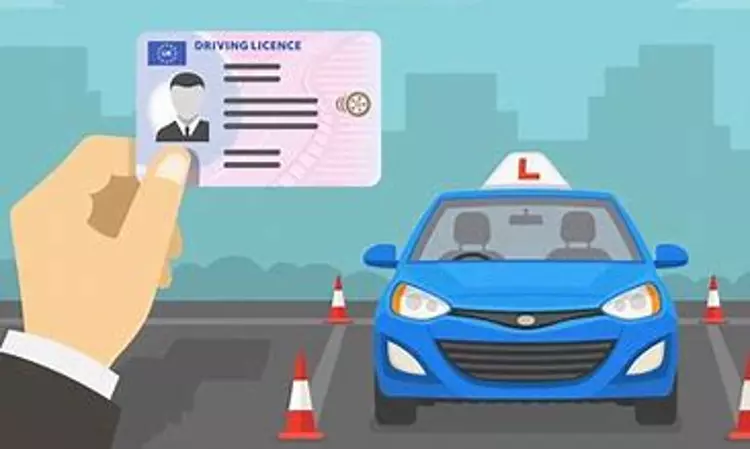
The Punjab and Haryana High Court has held that merely holding a valid foreign driving licence does not authorise a person to drive in India, unless the licence meets the applicable statutory requirements and is accompanied by the requisite international driving permit or Indian authorisation.The Court made the observation while dismissing an appeal filed by a driver challenging a Motor...
This is a premium content
Available exclusively to
Our subscribers
Subscribe Premium 
INR 1099+GST
Your support helps us to bring you more content at
an affordable subscription scheme !!!
All payment options available
The Punjab and Haryana High Court has held that merely holding a valid foreign driving licence does not authorise a person to drive in India, unless the licence meets the applicable statutory requirements and is accompanied by the requisite international driving permit or Indian authorisation.
The Court made the observation while dismissing an appeal filed by a driver challenging a Motor Accident Claims Tribunal award, which had granted the insurer liberty to recover the compensation amount from him and the vehicle owner after satisfying the award in the first instance.
The Tribunal had found that the driver did not possess a valid and effective licence to drive in India.
Justice Deepak Gupta noted,
"The appellant has not shown that the Australian licence produced by him fulfilled the statutory requirements applicable to a foreign national or a person temporarily visiting India, or that it was accompanied by a valid international driving permit recognised in India. The Tribunal, therefore, commited no error in holding that the appellant was not possessing a valid and effective driving licence at the %me of the accident."
The case arose from a motor vehicle accident on 31.08.2015 in which a nine-month-old child, Jivika, died after the car driven by the appellant allegedly struck a motorcycle from behind while overtaking. The Tribunal awarded ₹2,49,500 with 9% interest, holding the driver and owner jointly and severally liable, but directed the insurer to satisfy the award in the first instance with liberty to recover the amount from them, on the finding that the appellant did not possess a valid and effective driving licence to drive in India.
The appellant argued that he was not driving the vehicle at all, a claim bolstered by additional evidence produced before the High Court showing that Pankaj Kumar (PW-1 before the Tribunal, father of the deceased child), while deposing in the parallel criminal trial, stated he could not identify the driver, resulting in the appellant's acquittal in the criminal case.
He further argued that the vehicle's owner never appeared to establish that the appellant was employed or authorised to drive it, and that even if he was driving, he held a valid Australian driving licence (issued in Victoria, valid till 11.04.2017) which the Tribunal wrongly disregarded merely because it wasn't Indian-issued.
The insurer countered that criminal acquittals are not binding on Claims Tribunals, which operate on preponderance of probabilities rather than proof beyond reasonable doubt; that PW-1's testimony before the Tribunal specifically identifying the appellant as the driver remained unshaken in cross-examination and was corroborated by the FIR and police report; and that the appellant admitted in cross-examination to holding no Indian driving licence, with the Australian licence absent any international permit or Indian recognition being legally insufficient.
The Court held that Tribunal proceedings are governed by preponderance of probabilities, not the criminal standard of proof beyond reasonable doubt.
While adding that PW-1's subsequent inconsistent statement in the criminal trial (that he couldn't see the driver) and the resulting acquittal were "relevant circumstances," the Court held these did not automatically exonerate the appellant of civil liability, since:
"An acquittal in the criminal case, therefore, does not ipso facto exonerate the appellant from civil liability arising out of the same occurrence."
The Court weighed this against the contemporaneous FIR naming the appellant as the driver, the police charge-sheet, and the appellant's own admission that he had been arrested and challaned without ever alleging false implication to any authority — concluding that the Tribunal's finding was not rendered perverse. It also held that non-examination of the vehicle's owner did not help the appellant, since liability as a driver does not depend on proving a formal employment relationship, and the appellant could himself have summoned the owner if his testimony was material.
Invoking Section 3 of the Motor Vehicles Act, 1988, the Court held that a foreign licence's validity in its country of issuance does not automatically confer a right to drive in India.
The appellant admitted he held no Indian driving licence, could not furnish any details of an earlier Indian licence he claimed to have deposited with Australian authorities, and produced only a domestic Australian licence, no international driving permit or Indian endorsement. Relying on its own earlier decision in Dilpreet Singh v. United India Insurance Co. (2015), where a Canadian licence without Indian endorsement was similarly held insufficient, the Court held the Tribunal committed no error in finding the appellant lacked a valid and effective licence.
Relying on National Insurance Co. Ltd. v. Swaran Singh (2004) and Shamanna v. Oriental Insurance Co. (2018), the Court held that once it is established the vehicle was driven without a valid licence, the insurer is entitled to avoid its contractual indemnity obligation towards the insured, subject to its statutory obligation to first satisfy the award in favour of third-party claimants and then recover from the persons responsible for the breach — a mechanism protecting victims while preserving the insurer's contractual rights.
Dismissing the appeal, the Court held that neither the appellant's subsequent criminal acquittal nor the Australian licence furnished any ground to interfere with the recovery rights granted to the insurer, clarifying that the dismissal would not affect the claimants' right to receive and retain the awarded compensation, with the insurer remaining liable to pay first and recover thereafter as per the Tribunal's award.
Title: Sameer Gaba v. Priyanka and Others
Mr. Prateek Mahajan, Advocate and Ms. Arche Anant, Advocate for the appellant.
Mr. Vinod Chaudhari, Advocate for the respondents.
Tags
Aiman J. Chishti
Aiman J. Chishti is a Principal Correspondent with LiveLaw, covering Punjab And Haryana High Court

