



- Home
- /
- High Courts
- /
- Rajasthan High Court
- /
- Acquittal For Lack Of Evidence Can...
Acquittal For Lack Of Evidence Can Amount To Honourable Acquittal Even If Benefit Of Doubt Was Granted: Rajasthan High Court
Nupur Agrawal
27 Nov 2026 9:23 AM IST
The Rajasthan High Court has held that an acquittal for lack of evidence can amount to an honourable acquittal even if the accused was formally extended the benefit of doubt by the trial court.The Court directed the appointment of a candidate to the post of Senior Teacher (Sanskrit), whose candidature had been kept in abeyance pending consideration of his suitability for public employment by...
This is a premium content
Available exclusively to
Our subscribers
Subscribe Premium 
INR 1099+GST
Your support helps us to bring you more content at
an affordable subscription scheme !!!
All payment options available
The Rajasthan High Court has held that an acquittal for lack of evidence can amount to an honourable acquittal even if the accused was formally extended the benefit of doubt by the trial court.
The Court directed the appointment of a candidate to the post of Senior Teacher (Sanskrit), whose candidature had been kept in abeyance pending consideration of his suitability for public employment by a committee constituted by the State to assess candidates with criminal antecedents.
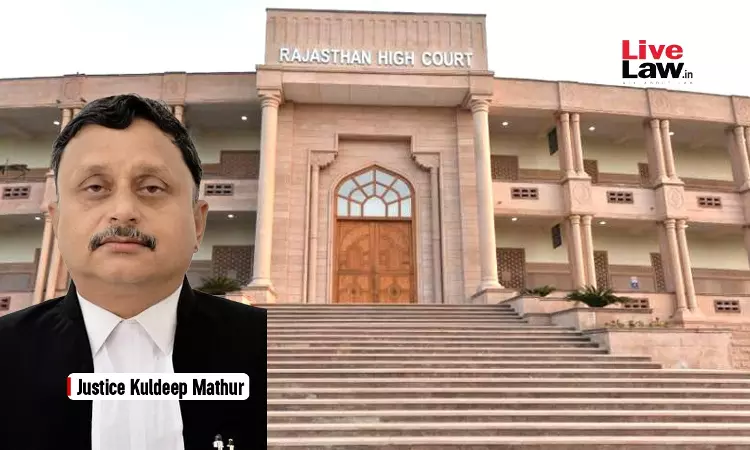
The bench of Justice Kuldeep Mathur held that the mere fact that the committee's meeting had not been convened could not justify keeping the petitioner's candidature in abeyance indefinitely, particularly when he had otherwise qualified in the recruitment process.
The Court further observed that the expression "honourable acquittal" has not been defined under either the CrPC or the BNSS. Although the petitioner had formally been extended the benefit of doubt, his acquittal was essentially on account of lack of evidence and thus deserved to be treated as an honourable or clean acquittal.
For context, the petitioner had cleared the recruitment process for the post of Senior Teacher and his name was also published in the list for allotment of divisions. However, after he submitted his preferences, his name did not figure in the final appointment list.
It was the State's case that the petitioner had been involved in a criminal case involving serious charges, including attempt to murder, in which he was subsequently acquitted.
The State submitted that his suitability for public employment was required to be assessed by a committee constituted pursuant to the Department of Personnel's circulars dated December 4, 2019 and October 26, 2021, and that such consideration was still pending.
It further argued that considering the nature of the offences and the responsibilities attached to the post of a teacher, the petitioner could not claim appointment merely on the basis of his inclusion in the merit list.
After hearing the contentions, the Court referred to the Supreme Court's decision in Avtar Singh v. Union of India & Ors., wherein it was held:
“If acquittal had already been recorded in a case involving moral turpitude or offence of heinous/serious nature, on technical ground and it is not a case of clean acquittal, or benefit of reasonable doubt has been given, the employer may consider all relevant facts available as to antecedents, and may take appropriate decision as to the continuance of the employee.”
In this light, the Court highlighted that although the offences alleged against the petitioner were serious, a mere reference to the penal provisions, without examining the relevant facts and the judgment of acquittal, could not form the basis for denying consideration of his candidature.
Upon perusing the judgment of acquittal, the Court noted that although the petitioner had been given the benefit of doubt, it virtually amounted to an acquittal on merits owing to lack of evidence.
“The mere fact that a meeting of the committee has not been convened cannot be a justification for keeping the petitioner's candidature in abeyance indefinitely, particularly when he has otherwise qualified in the selection process and furnished the relevant documents. Thus, the petitioner has been deprived of appointment to the advertised post, despite possessing the requisite eligibility, for no fault on his part.”
In view of the above, the Court held that the State's action of excluding the petitioner's name from the final appointment list was unsustainable.
Accordingly, the petition was allowed and the State was directed to grant appointment to the petitioner within 60 days, subject to fulfilment of other eligibility conditions.
Tags


