



- Home
- /
- High Courts
- /
- Rajasthan High Court
- /
- Rajasthan High Court Invokes...
Rajasthan High Court Invokes India-US Treaty To Serve Summons On Rape Complainant Living In America
Nupur Agrawal
21 Oct 2026 5:45 PM IST
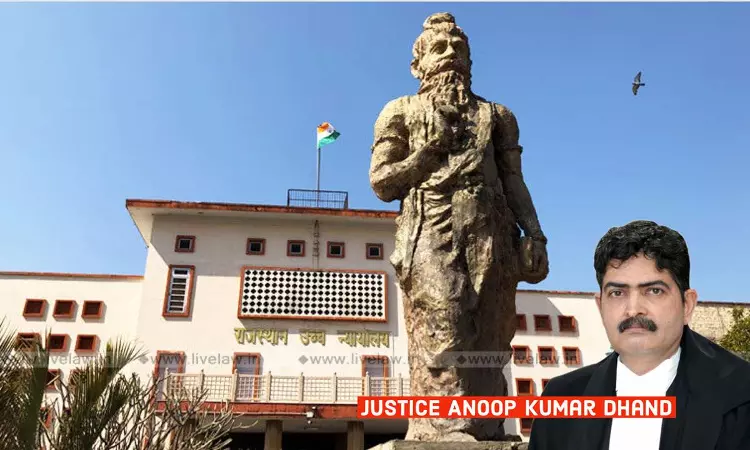
Rajasthan High Court invoked the Mutual Legal Assistance Treaty (MLAT) signed between Indian and the USA, read with Section 110 of BNSS, for ascertaining the whereabouts and serving notice to a woman in a rape case who was stated to have shifted to the USA after filing the complaint. Section 110, BNSS governs reciprocal arrangements for serving or executing court processes in relation to...
This is a premium content
Available exclusively to
Our subscribers
Subscribe Premium 
INR 1099+GST
Your support helps us to bring you more content at
an affordable subscription scheme !!!
All payment options available
Rajasthan High Court invoked the Mutual Legal Assistance Treaty (MLAT) signed between Indian and the USA, read with Section 110 of BNSS, for ascertaining the whereabouts and serving notice to a woman in a rape case who was stated to have shifted to the USA after filing the complaint.
Section 110, BNSS governs reciprocal arrangements for serving or executing court processes in relation to any person residing outside India in a country with which Central Government had made required arrangements for such service.
The bench of Justice Anoop Kumar Dhand was hearing a quashing petition in relation to an FIR alleging rape, in which the complainant remained unserved for about 2 years, and her whereabouts in India were not ascertainable.
After hearing the contentions, and considering the fact that despite multiple occasions, the prosecutrix remained unserved for 2 years, the Court held that she was the "star witness" in the present matter and the investigation could not proceed effectively without her participation.
"India and the USA have entered into a Mutual Legal Assistance Treaty (MLAT) in Criminal Matters, signed in 2001 and brought into force in 2005. Article 1(2) of the said Treaty specifically provides for assistance in taking evidence of the person, providing documents and locating persons.
The Ministry of Home Affairs (MHA), Government of India, has issued Guidelines bearing No.25016/17/2007-Legal Cell dated 11.02.2009 (revised through guidelines No.F.NO25016/52/2019- LC dated 04.12.2019) concerning the service of summons, notices and other judicial processes upon persons residing abroad. Under the prescribed procedure, the Ministry of Home Affairs, Internal Security Division, acts as the Central Authority for MLAT requests and upon receiving such requests shall forward to the concerned Indian Missions/Embassies, which in turn forward the same to the Central Authority of the concerned Country or to the concerned Indian Mission/Embassy through diplomatic channels as mentioned in the MLAT"
The court said that as per the MLAT Guidelines, the USA does not object to service through postal means or informal delivery through diplomatic/consular missions under Article 10(a) of Hague Service Convention.
In this light, the Court referred to Section 110, BNSS and the MLAT between Indian and the USA, opining that the service through diplomatic channel was a valid mode for securing presence of person residing abroad.
“Considering that the prosecutrix is stated to be residing in the USA and repeated attempts to serve notice upon her at the available address have remained unsuccessful and that her presence is necessary for the further proceedings, this Court deems it appropriate to invoke the mechanism available under Section 110 of the BNSS, read with the India–USA MLAT and the relevant guidelines, for ascertaining her whereabouts and facilitating service of notice upon her.”
As per the investigating officer, based on information from her relatives, she was residing in the USA, but her exact address was unknown.
The Court highlighted that after the FIR was lodged, she returned to the police station and submitted an application for withdrawal of the FIR, stating that the same was filed out of anger. Based on the application, IO proposed filing of a negative final report.
Before submission of the closure report, a higher police officer again contacted her for getting confirmation on the withdrawal application and verifying the content of the application, and she stated that the application was submitted under pressure, and she wished to prosecute the petitioner. Hence, the matter was reopened.
The IO submitted that in the absence of the prosecutrix, the submission of the application could not be verified and the investigation remained pending.
Accordingly, directions were issued to send a request to the Ministry of Home Affairs, to undertake the process of ascertaining the whereabouts of the prosecutrix and serving summons to her.
Tags


