



Human Rights Commission's Recommendation Of Compensation For Prisoner's Suicide Following Discriminatory Treatment Is Binding: Tripura High Court
Aryan Raj
13 Nov 2026 7:25 PM IST
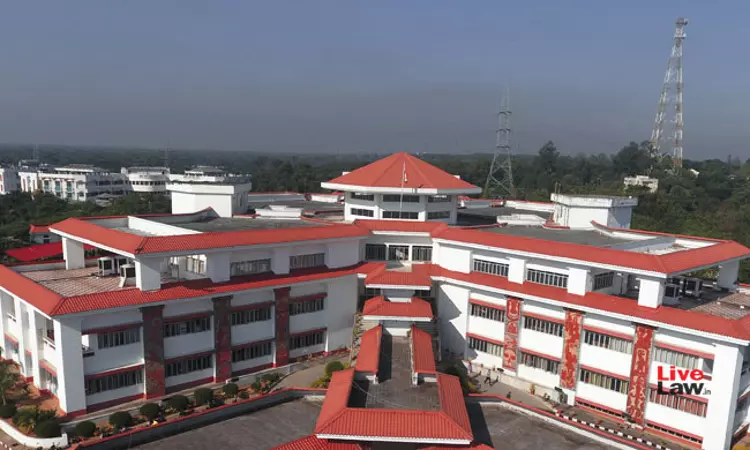
The Tripura High Court has held that recommendations made by the State Human Rights Commission under Section 18 of Protection of Human Rights Act directing compensation to family of prisoner who died by suicide inside the prison due to discriminatory treatment and negligence are binding and enforceable.
Section 18 highlights the steps that the Commission may take after completion of an inquiry into alleged human rights violation which includes recommendation to the State government to make payment of compensation or damages to the complainant or to the victim or the members of his family.
A Division Bench comprising Chief Justice M.S. Ramachandra Rao and Justice Biswajit Palit made these observations while dismissing a petition filed by the Inspector General of Prisons, Tripura challenging the Commission directions to pay Rs 4 lakh compensation to the family of a prisoner who died by suicide inside prison custody and initiate departmental action against the concerned officials.
"The material considered by the Commission indicated that in the Prison, there was an office order for maintaining a German Shepherd dog and only the deceased convict was asked to clean the dirty material of the dog every day and no other convict was assigned this work. The Commission also noted that when the Jail Authority officially ordered for keeping a dog in the Jail premises, it was also the duty of the Jail Authorities to arrange for proper cleaning of the said room by deployment of R.I. Convicts on payment of wages, but only the deceased, could not have been asked to do it and this indicates discrimination. According to the Commission, out of depression caused by the humiliation of having to do this work on a daily basis, the deceased committed suicide by hanging.


It further held that the Warden Raju Debbarma, who was supposed to supervise the work of the convict, was negligent in supervision and, therefore, was prima facie responsible for the death of the deceased by suicide. The above findings of fact recorded by the Commission cannot be faulted prima facie though they may not be treated as conclusive in any departmental inquiry which may be held against the Warden Raju Debbarma and other staffs of the Prison, which inquiry has been recommended by the Commission"
Further the court referred to Madras High Court's decision in Abdul Sathar v. State (2021) which held that recommendation of the Human Rights Commission under Section 18 is an adjudicatory order which is legally and immediately enforceable, though the concerned Government or authority can also file a petition seeking judicial review of the Commission's recommendation.
In the present case the court found that the Commission had declined to exercise its review power since there is no action taken report filed within one month of supply of the report to the petitioner-State.
It said that when the report was communicated on 25.02.2026 by the Commission to the petitioner, within one month thereof, reconsideration should have been sought, but admittedly the same was sought only on 10.07.2026. It said that the Commission had rightly rejected the review plea as time barred.
"Though the State has sought judicial review of the recommendation of the Commission in this Writ Petition, we see no ground to exercise the power of judicial review in the instant Writ Petition as the Commission had followed the provisions of the Act and made it's recommendation on the basis of material available to it," the court said.
The deceased was serving a 12 Year rigorous imprisonment at Kendriya Sansodhanagar, Bishalgarh. On October 23, 2024, he was found hanging from an exhaust fan in a toilet inside the prison.
Following an inquiry, the Tripura Human Rights Commission found that the deceased was regularly assigned the task of cleaning the waste of a German Shepherd dog maintained inside the prison. No other prisoner was assigned this work. The Commission also found that the concerned warder had failed to properly supervise him while he was performing the task.
The Commission concluded that the discriminatory treatment and humiliation, negligence in supervision contributed in his suicide. Thus, Commission recommended Rs 4 lakh compensation to his widow and children and departmental action against the concerned prison officials.
However, the State challenged the recommendations by relying on a magisterial inquiry report which had concluded that the death was a suicide and found no culpability on the part of the jail authorities.
Rejecting the State's contention, the High Court observed that proceedings under Section 196 of the BNSS are confined to identifying the apparent cause of death whether suicidal, homicidal or accidental.
The High Court observed that the Magistrate had no jurisdiction to record findings regarding negligence of the jail authorities and that such findings could not bind the Human Rights Commission.
The High Court also rejected the State's argument that the Commission could not make recommendations before the completion of departmental proceedings against the concerned officials. It held that the proposed departmental inquiry did not prevent the Commission from recording its findings and making appropriate recommendations.
The Court clarified, however, that the Commission's findings regarding the responsibility of the officials would not be conclusive in any subsequent departmental inquiry.
Accordingly, the Bench dismissed the writ petition and directed the State to implement the Commission's directions within one month and report compliance to the Court.
Counsel for Petitioner: Dipankar Sarma, Additional Government Advocate.
Counsel for Respondents: Somik Deb, Senior Advocate assisted by Abir Baran and Rijuka Roy Barman, Advocates.


