



- Home
- /
- High Courts
- /
- Tripura High Court
- /
- Legal Heirs Of 'Korfa' Cultivator...
Legal Heirs Of 'Korfa' Cultivator Cannot Claim Compensation Decades After Cultivation Ceased: Tripura High Court
LIVELAW NEWS NETWORK
3 Oct 2026 5:30 PM IST
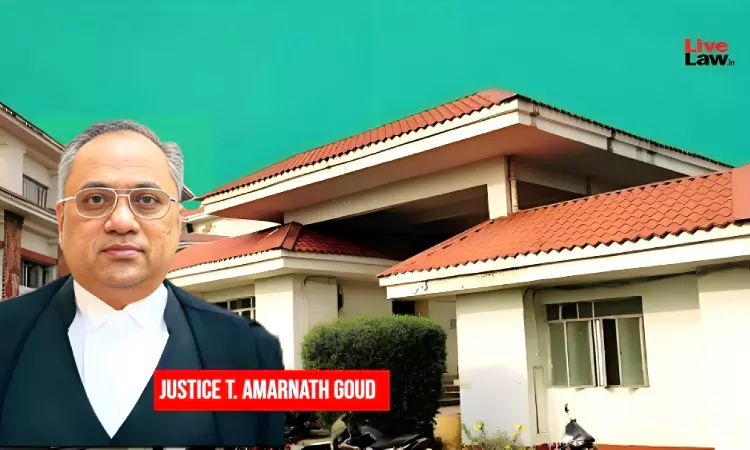
The Tripura High Court has held that legal heirs of a 'Korfa' or under-raiyat cannot claim a share in land acquisition compensation merely on the basis of old revenue records when there is no evidence that they continued cultivation or possessed a subsisting tenancy right on the date of acquisition.Justice Dr. T. Amarnath Goud remarked that: “The petitioner/legal heirs cannot enter into...
This is a premium content
Available exclusively to
Our subscribers
Subscribe Premium 
INR 1099+GST
Your support helps us to bring you more content at
an affordable subscription scheme !!!
All payment options available
The Tripura High Court has held that legal heirs of a 'Korfa' or under-raiyat cannot claim a share in land acquisition compensation merely on the basis of old revenue records when there is no evidence that they continued cultivation or possessed a subsisting tenancy right on the date of acquisition.
Justice Dr. T. Amarnath Goud remarked that: “The petitioner/legal heirs cannot enter into the shoes of the cultivator as there is no relation with the owner and the cultivators and no fresh lease agreement either in written or oral evidence has been placed on record. The old entries in the revenue records, will not empower the legal heirs for any share to the award/compensation for the land acquired as the entries in revenue records were not updated.”
Background of the Case
The petitioner, Santi Chiran, claimed compensation as the legal heir of late Dajindra Garo, who was recorded as a 'Korfa' cultivator in respect of land acquired for construction of NH-44. Dajindra Garo had died in 1986, while the land was acquired in 2015.
In 2025, the petitioner approached the competent authority seeking apportionment and payment of the compensationamong the legal heirs under Section 3H(4) of the National Highways Act, 1956. The authority rejected the claim on the ground that she had failed to establish her right and title over the acquired land.
The petitioner subsequently sought a reference to the District Judge under Section 3H(4) for determination of the compensation dispute. As the authority did not make the reference, she approached the Tripura High Court under Article 226 of the Constitution
The Court observed that a 'Korfa' is an under-raiyat whose interest in the land is heritable but not transferable. However, there was no evidence that the petitioner or other legal heirs had continued cultivating the land after Dajindra Garo's death in 1986, or that any fresh lease or cultivation arrangement existed with the landowners.
The Court held that a claim for apportionment of compensation requires a subsisting legal interest in the land on the date of acquisition. The continued presence of Dajindra Garo's name in old revenue records, without evidence of continued cultivation, did not establish such an interest.
Accordingly, the Court held that there was no occasion to refer the matter under Section 3H(4) of the National Highways Act, dismissed the writ petition and upheld the competent authority's order rejecting the compensation claim.
Date of Decision: 24.09.2026
Tags


