



- Home
- /
- High Courts
- /
- Uttarakhand High Court
- /
- Forcible Religious Conversion Under...
Forcible Religious Conversion Under “Deep Coercion”: Uttarakhand High Court Rejects Bail To POCSO Accused, Flags Forged Aadhaar
Preet Luthra
19 Sept 2026 10:30 AM IST
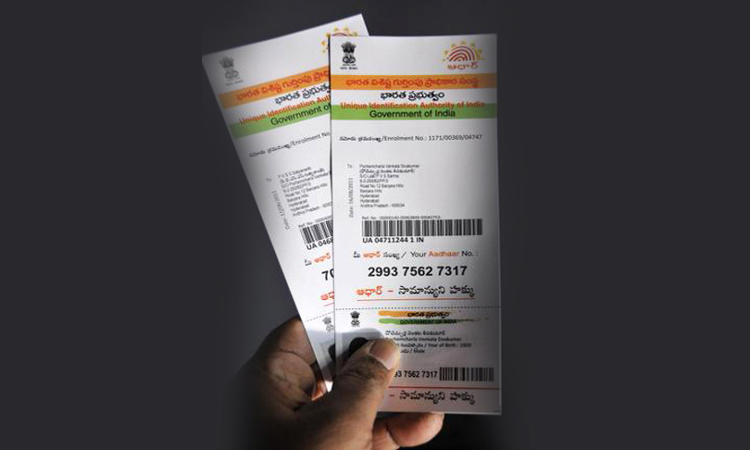
The Uttarakhand High Court has denied bail to a man accused of POCSO offences, observing that the evidence in the case indicated a “systemic attempt of forcible religion conversion under deep coercion.” Importantly, the Court also took note of the alleged creation of a forged Aadhaar card under a false name, observing that it indicated the extent of the applicant's involvement in the...
This is a premium content
Available exclusively to
Our subscribers
Subscribe Premium 
INR 1099+GST
Your support helps us to bring you more content at
an affordable subscription scheme !!!
All payment options available
The Uttarakhand High Court has denied bail to a man accused of POCSO offences, observing that the evidence in the case indicated a “systemic attempt of forcible religion conversion under deep coercion.” Importantly, the Court also took note of the alleged creation of a forged Aadhaar card under a false name, observing that it indicated the extent of the applicant's involvement in the alleged crime.
Rejecting the bail, the Court also reiterated that once the victim is established to be a minor, a plea of consensual sexual relationship has no relevance under the POCSO Act. It further observed that the victim denying the allegations during her examination cannot wipe out scientific evidence connecting the accused with the alleged offence, and that the hostility of a witness is a matter for final adjudication at trial and not a ground for bail where strong forensic evidence is available.
Justice Rakesh Thapliyal made the observations while dismissing the first bail application filed by the accused, who was booked along with a co-accused for offences under Sections 64 and 70 of the Bharatiya Nyaya Sanhita, read with Sections 5(l)(n)/6 of the POCSO Act. Following investigation, the two were chargesheeted for offences under the BNS and POCSO Act, besides Section 3(2)(v) of the SC/ST Act and Section 5 of the Freedom of Religion Act.
Counsel for the applicant argued that he had been falsely implicated, pointing out that during her cross-examination before the trial court, the victim did not support the prosecution case and denied the allegations. It was submitted that the relationship, if any, was entirely consensual.
The applicant also relied upon the forensic science laboratory report to submit that no spermatozoa, dead or alive, had been detected. He further sought parity with the co-accused, who had already been granted bail by a Coordinate Bench. It was also submitted that the applicant had been in custody since May 3, 2025 and that there was no possibility of the trial concluding soon.
Opposing bail, the State submitted that the victim was a minor and, therefore, her alleged consent was legally irrelevant under the POCSO Act. The State relied upon the FSL report, according to which the mixed DNA sample collected from the victim's vaginal swab matched the DNA from the blood samples of the victim and the applicant.
Importantly, it was further alleged that the applicant and the co-accused had trapped the victim and actively participated in the sexual assault. The State also relied upon the recovery of a forged Aadhaar card in the name of “Bisara”, alleging that it linked the accused with a premeditated design involving forcible religious conversion.
After considering the rival submissions and the forensic report, the Court rejected the argument based on the absence of spermatozoa. It observed that the absence of spermatozoa did not negate sexual assault, as semen may lack spermatozoa due to a medical condition or the nature of the sexual assault. More importantly, the Court found that the presence of the applicant's DNA in the victim's vaginal swab provided “scientific corroboration of physical contact.”
The Court further held that once the victim's age was established to be that of a minor, “any plea of consensual sexual relationship has no relevance.” It also rejected reliance on the victim's subsequent denial of the allegations, observing that such denial could not “wipe out scientific evidence” connecting the applicant with the alleged offence.
It added that the hostility of the witness was a matter for final adjudication at trial and could not constitute a ground for bail when strong forensic evidence was available.
The Court also rejected the plea of parity with the co-accused, observing that parity could not be claimed as a matter of right and that the allegations against the two accused were “slightly different”, as the accused had taken “active part in physical assault under the garb of conversion of religion”.
Significantly, the Court observed that the evidence showed “a case of systemic attempt of forcible religion conversion under deep coercion.” Referring to the creation of a forged Aadhaar card under a false name, it said that this “indicates to what extent the applicant is involved in the commission of crime”.
Hence, finding no good ground to enlarge the applicant on bail, the Court dismissed the application. It clarified that the trial court should proceed with the trial without being influenced by the observations made in the bail order.
Case: Tanveer v. State of Uttarakhand, BA1/1111/2026
Coram: Justice Rakesh Thapliyal
Citation: 2026 LiveLaw (UK) 105
Tags


