




Know the Law

Know The Law | Doctrine Of Ratification : Supreme Court Explains Principles
In a judgment clarifying the doctrine of ratification in administrative law, the Supreme Court has held that once the competent authority ratifies an act initially performed without authority, the ratification relates back to the date of the original act, validating it as though prior authority had existed from the outset.A Bench of Justice Pamidighantam Sri Narasimha and Justice Alok...
Order 18 Rule 17 CPC | Parameters On Recall Of Witness : Supreme Court Explains
The Supreme Court on Tuesday (August 4) reiterated that the power of the Court under Order XVIII Rule 17 CPC only permits recall of witnesses for examination by the Court itself, not for cross-examination by either of the parties “…the scope and object of Order XVIII Rule 17, CPC, was to enable the court to clarify doubts regarding evidence led by the party. It was further stated that...
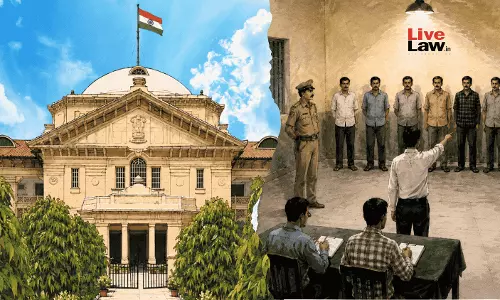
How Should A Test Identification Parade (TIP) Be Conducted? Allahabad High Court Explains Step-By-Step Procedure
The Allahabad High Court last week elaborately explained the step-by-step procedure governing the conduct of a Test Identification Parade (TIP).The bench clarified that such an identification parade must strictly comply with the safeguards prescribed under the UP Police Regulations and the UP Jail Manual, as any unexplained delay or procedural lapse seriously undermines their...
Is Subsequent Impleadment Application Barred By Res Judicata If Earlier Plea Was Rejected Wrongly? Supreme Court Answers
The Supreme Court on Monday (July 27) held that if an earlier application seeking an impleadment under Order I Rule 10 CPC was decided on the merits, even though it was based on an erroneous consideration of facts, a subsequent application seeking an impleadment under a different CPC provision would be barred by the doctrine of res judicata. A bench of Justice Sanjay Karol and Justice...

S. 451/457 CrPC | Decision On Interim Release Not Based On Title, Court Only Sees Who Entitled To Possession : Supreme Court
The Supreme Court has clarified that the power of the courts to order an interim release of a seized material under the Cr.P.C / BNSS is not an adjudication of ownership, but a prima facie assessment of who is best entitled to possession.“The exercise of this power requires the Court to make only a prima facie assessment of who is best entitled to possession, having regard to the nature of...
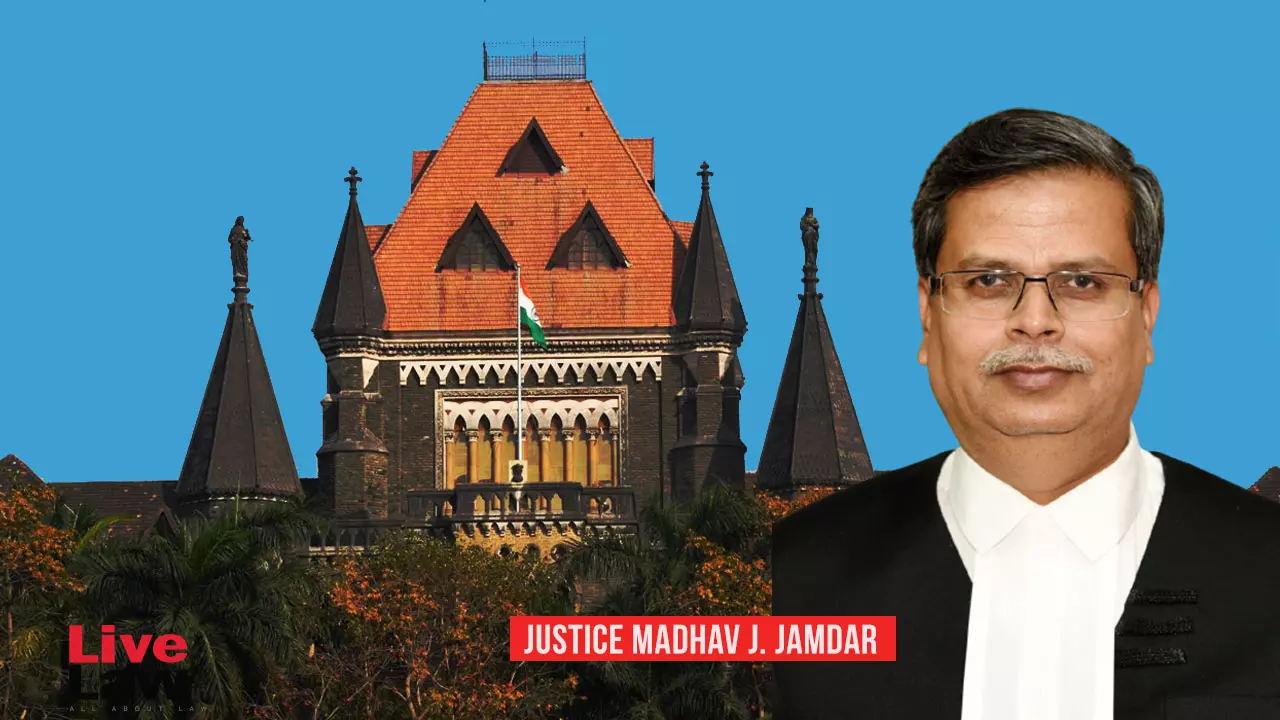
Externment Of Gang Member Under Police Act Requires Satisfaction About Gang's Activities, Not Individual Alone: Bombay High Court
The Bombay High Court has held that the "subjective satisfaction" required for passing an externment order under Section 55 of the Maharashtra Police Act, 1951 against a gang or body of persons is fundamentally different from the satisfaction required under Section 56 for externment of an individual. The Court observed that while Section 55 requires the authority to be satisfied about...
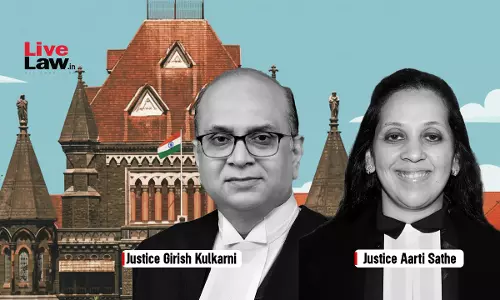
Reservation Of Sarpanch Post Must Follow Statutory Rotation; Consecutive Reservation For Women Impermissible: Bombay High Court
The Bombay High Court has held that where the office of Sarpanch of a Gram Panchayat was reserved for the Women category in the immediately preceding term, it must ordinarily revert to the Open (General) category in the succeeding term in compliance with the statutory principle of rotation under the Maharashtra Village Panchayats (Sarpanch and Upa-Sarpanch) Election Rules, 1964. The Court...

BCI Rules Do Not Bar Advocate From Representing Family Members; Prohibition Applies To Appearing Before Relative Judges: Bombay High Court
The Bombay High Court has held that the Bar Council of India Rules do not prohibit an advocate from representing his or her own family members in legal proceedings. The Court observed that Rule 6 of the Standards of Professional Conduct and Etiquette merely prohibits an advocate from appearing before a court, tribunal or authority where a relative is a member of that adjudicatory body, and...
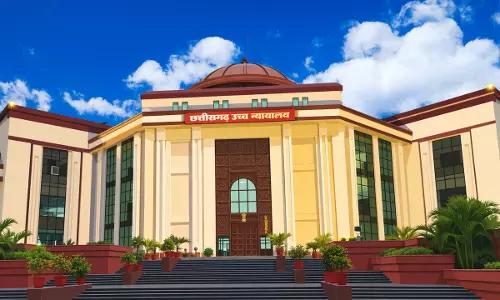
Revenue Court Cannot Declare Registered Sale Deed Void Even If Executed In Violation Of Statutory Provisions: Chhattisgarh High Court
The Chhattisgarh High Court has held that even where a registered sale deed is alleged to have been executed in violation of statutory provisions governing transfer of land, a Revenue Court has no jurisdiction to declare the sale deed null and void. The Court observed that the power to adjudicate upon the validity and cancellation of a registered sale deed vests exclusively in the Civil...

S. 38 BNSS | Advocate Of Accused Cannot Remain Present Throughout Police Interrogation : Supreme Court
Clarifying the scope of Section 38 of Bharatiya Nagarik Suraksha Sanhita, 2023, the Supreme Court on Monday (July 27) held that the provision entitles an arrested person to meet an advocate of choice during interrogation but does not contemplate continuous physical presence throughout the interrogation. “A plain reading of the provision makes it clear that the right guaranteed thereunder...
New Criminal Law Allows Police Custody Beyond First 15 Days : Supreme Court Explains S.187(2) BNSS
The Court explained that police custody can be sought in parts beyond first 15 days of remand subject to an aggregate of 15 days.
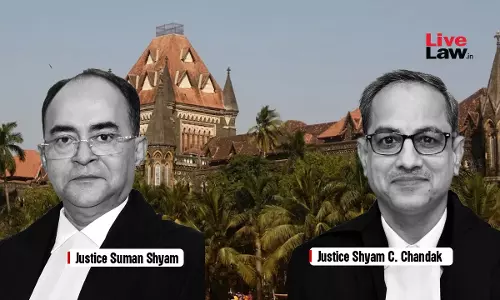
Bombay High Court Quashes Mutation Of Wakf Properties As Enemy Property, Says Due Process Is Mandatory
The Bombay High Court has quashed communications directing mutation of certain Wakf properties as "enemy property" in the name of the Custodian, holding that such action cannot be taken without first determining the jurisdictional facts through an inquiry and affording the affected parties an opportunity of hearing. The Court further held that Section 22A of the Enemy Property Act, 1968 cannot...