




Know the Law
Know The Law | Factors To Be Considered While Sentencing A Convict? Supreme Court Explains
The Supreme Court laid down the set of principles which must necessarily guide the decision on sentencing. A bench of Justice Sanjay Karol and Justice Augustine George Masih laid down the following aspects which must be considered while deciding on sentencing: “(a) Be in accordance with the nature and gravity of the crime; (b) Adequately protect the interest of the society; (c) Take...
How Juvenile Justice Boards Should Conduct Preliminary Assessment Under S.15? Supreme Court Issues Guidelines
The Supreme Court has issued guidelines as to what factors should be considered by the Juvenile Justice Board while conducting preliminary assessment under Section 15 of the Juvenile Justice (Care and Protection of Children) Act, 2015. A bench of Justice JB Pardiwala and Justice Ujjal Bhuyan issued these guidelines while dismissing an appeal challenging the Patna High Court's ruling which...
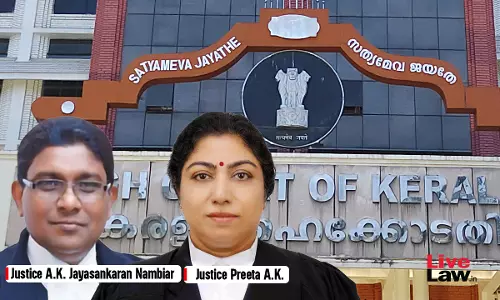
Can Wife Be Denied Half Share In Jointly Purchased Property Because Husband Paid Entire Consideration? Kerala High Court Answers
The Kerala High Court has held that the property, purchased under the joint names of both spouses cannot be claimed by the husband alone by claiming that he paid the entire amount, unless theres is evidence to show that the property was held on trust or that the property was fraudulently purchased in the name of one spouse. [2026 LiveLaw (Ker) 391]The Division Bench of Dr. Justice...

Can Banks Refuse Education Loan To Student Due To Parent's Low Credit Score? Kerala High Court Answers
The Kerala High Court has ruled that banks can refuse education loan to students if their parent, who signs the loan as a co-borrower, has a poor credit score. [2026 LiveLaw (Ker) 387]Justice M.A. Abdul Hakhim dismissed a batch of petitions filed by students challenging the banks' refusal to grant them educational loan.The petitioners argued that denial of loan to them on the basis of...
How Can Dead Witness's Testimony Be Used Against Accused Who Absconded? Supreme Court Explains S.299 CrPC
The Supreme Court has clarified that the earlier testimony of a witness who has since died can be used against an accused who had absconded during the original trial, provided the conditions under Section 299 of the Code of Criminal Procedure, 1973 (CrPC) are satisfied.A Bench of Justice Sanjay Karol and Justice Vipul M. Pancholi held that Section 299 CrPC is an exception to the general rule...
Know The Law | When Can High Courts Grant Relief Under Article 226 Beyond Pleadings? Supreme Court Explains
The Supreme Court recently clarified that although High Courts are ordinarily expected to remain confined to the pleadings and reliefs sought by parties, the rule is flexible while exercising jurisdiction under Article 226 of the Constitution. In exceptional cases, where the record clearly establishes a legal entitlement and denying relief on technical grounds would perpetuate injustice,...
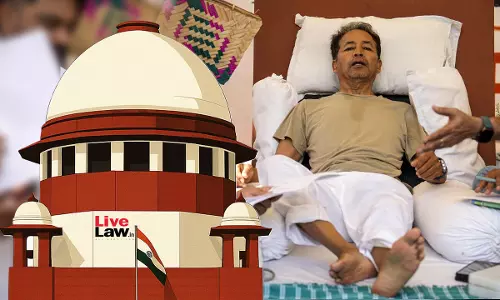
Sonam Wangchuk Protest : Law On Hunger Strikes & Judicial Approach
On the 20th day of the hunger strike over exam paper leaks, Ladakhi activist Sonam Wangchuk was forcefully shifted by the Delhi Police from the Jantar Mantar protest site to a hospital. The Police fell back on a Delhi High Court order, which directed the authorities to monitor Wangchuk's health and adopt necessary medical interventions clinically, to justify its action. India is not new...
How To Prove A Will As Genuine? Supreme Court Explains Tests
In a significant ruling on the law governing wills, the Supreme Court has explained the principles courts must apply while determining whether a will is genuine. Reiterating settled legal principles, the Court said that although a will is proved like any other document, the law imposes additional safeguards because the maker of the will (the testator) is no longer alive to testify about...
Know The Law| When Can A Right Be Waived? Supreme Court Explains
The Supreme Court recently explained the concept of waiver of rights as an intentional relinquishment of a right, advantage, benefit, claim or privilege that the person may have enjoyed. Pertinently, the key to waiving a right is that it must first be known to the person; that is, he must be aware of his existing right. On May 13, a bench comprising Justice Dipankar Datta and Justice AG...
Know The Law | Which Documents Require Mandatory Proof Of Attestation? Supreme Court Explains
In an important ruling clarifying the scope of Section 68 of the Indian Evidence Act, the Supreme Court has explained that the statutory requirement of proving a document by examining an attesting witness applies only to documents that are required by law to be attested. A registered sale deed, the Court held, does not fall within this category and therefore need not be proved in the...
Is Application For Probate Of Will Time-Barred If Not Filed Within 3 Years Of Testator's Death? Supreme Court Answers
The Supreme Court has held the probate of Will need not be necessarily filed within three years of the testator's death. The Court added that right to apply for probate accrues when it becomes necessary to do so i.e., when an action hostile to the position established by the Will was taken.“The right to apply would therefore accrue from the date that it becomes necessary to apply....