




Know the Law
S. 408 CrPC | Can A Part-Heard Trial Be Transferred To Original Judge's New Court Within Same Division? Allahabad High Court Answers
Transferring a case so the judge can retain the "advantage of watching the demeanor" of witnesses is a valid exercise of power u/s 408 CrPC, HC said.
Does Refusal By Family Members To Accept Court Notice Amount To Valid Service? Orissa High Court Answers
The Orissa High Court has reiterated that when an addressee refuses to receive summons/notice and the same is thus affixed to the outer door or some other conspicuous part of his house, the Court can presume its valid and sufficient service upon him as per illustration (f) of Section 114 of the Evidence Act read with Section 27 of the General Clauses Act and Order V Rule 9(5) as well as Rule...
Know The Law | Does Delayed Payment By Auction Purchaser Invalidate Sale Under SARFAESI Act?
The Supreme Court has recently addressed an important question under the Securitisation and Reconstruction of Financial Assets and Enforcement of Security Interest Act, 2002 (SARFAESI Act) concerning the validity of the auction sale in an event of delay in payment of the sale consideration by an auction purchaser, holding that the statutory timeline prescribed is mandatory in nature,...

Hindu Marriage Can't Be Solemnised Or Dissolved Through Notarised Agreements: Madhya Pradesh High Court
The Madhya Pradesh High Court has held that a Hindu Marriage can neither be legally solemnised nor dissolved through a notarised agreement. [2026 LiveLaw (MP) 253]While dealing with the case of a deceased woman who during her lifetime executed a notarised divorce agreement with her husband and entered into a notarised marriage agreement with another man, the division bench of Justice GS...

Can Absconding Accused Claim Default Bail If Police Doesn't File Supplementary Chargesheet After His Arrest? MP High Court Answers
The Madhya Pradesh High Court has held that where a chargesheet has already been filed against an accused while he was absconding, there is no requirement for filing a supplementary chargesheet after his arrest. [2026 LiveLaw (MP) 252]The bench of Justice Dwarka Dhish Bansal while denying default bail to the accused held, "merely because the Investigating Agency sought time to conduct...

Can Owner Of Uninsured Vehicle Involved In Accident Get Interim Custody By Furnishing Property As Security? Kerala High Court Answers
The Kerala High Court, in a recent decision, considered the question as to whether the owner of a vehicle involved in a motor accident can get interim custody by furnishing property as security if there is no third-party insurance coverage. [2026 LiveLaw (Ker) 360]Justice C.S. Dias was considering a plea by a vehicle owner alleging that the condition imposed by the Magistrate asking him...
When Can A Judgment Be Declared 'Per Incuriam'? Supreme Court Explains
The Supreme Court on Tuesday reiterated that the doctrine of per incuriam is an exception to the rule of stare decisis and can be invoked only in limited circumstances, holding that a judgment may be declared per incuriam if its ratio is irreconcilable with an earlier decision rendered by a Bench of equal or larger strength or if it was delivered without considering a relevant...

Compensation In Motor Accidental Death Cases: How It Is Calculated
In Shishupal @ Shish Ram And Ors. v. Surjeet And Ors. 2026, the Supreme Court recognised 'loss of domestic care' as an additional ground for compensation in Motor Accident Claims. By acknowledging the elevated status of a 'housewife' as a 'homemaker', the Court significantly increased the compensation awarded by the Motor Accident Claims Tribunal from Rs. 8.43 lakh to Rs. 66.70 lakh for the...
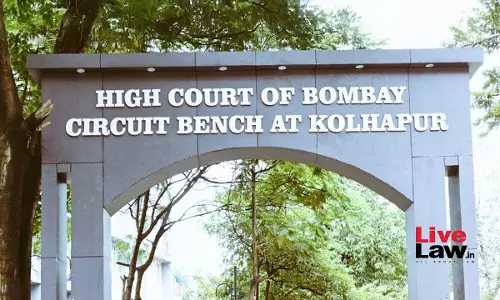
Is Arrest Illegal If Person Isn't Supplied Earlier Charge Sheet Filed Against Co-Accused? Bombay High Court Answers
The Bombay High Court recently held that the arrest of a person after the filing of chargesheet against already arrested co-accused is not illegal merely because the arrested person was not provided with a copy of the chargesheet along with the grounds of arrest. [2026 LiveLaw (Bom) 302]Sitting at the Kolhapur seat, the division bench of Justice Vrushali Joshi and Justice Sandesh Patil...
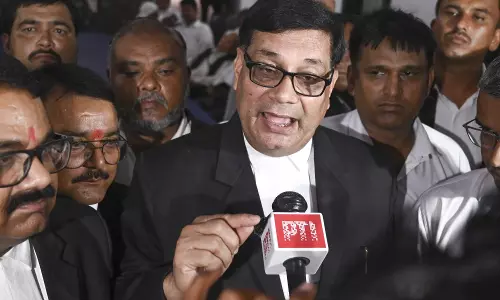
Why Ayodhya Lawyers' Refusal To Represent Accused In Ram Mandir Donation Theft Case Violates Law
In the wake of alleged embezzlement of donations received by the Shree Ram Janmbhoomi Teertha Kshetra Trust for Ayodhya's Ram Mandir, the Faizabad/Ayodhya Bar Association in Uttar Pradesh recently passed a resolution restraining its members from representing the accused.The resolution stated that none of its members would represent persons arrested in connection with the alleged...
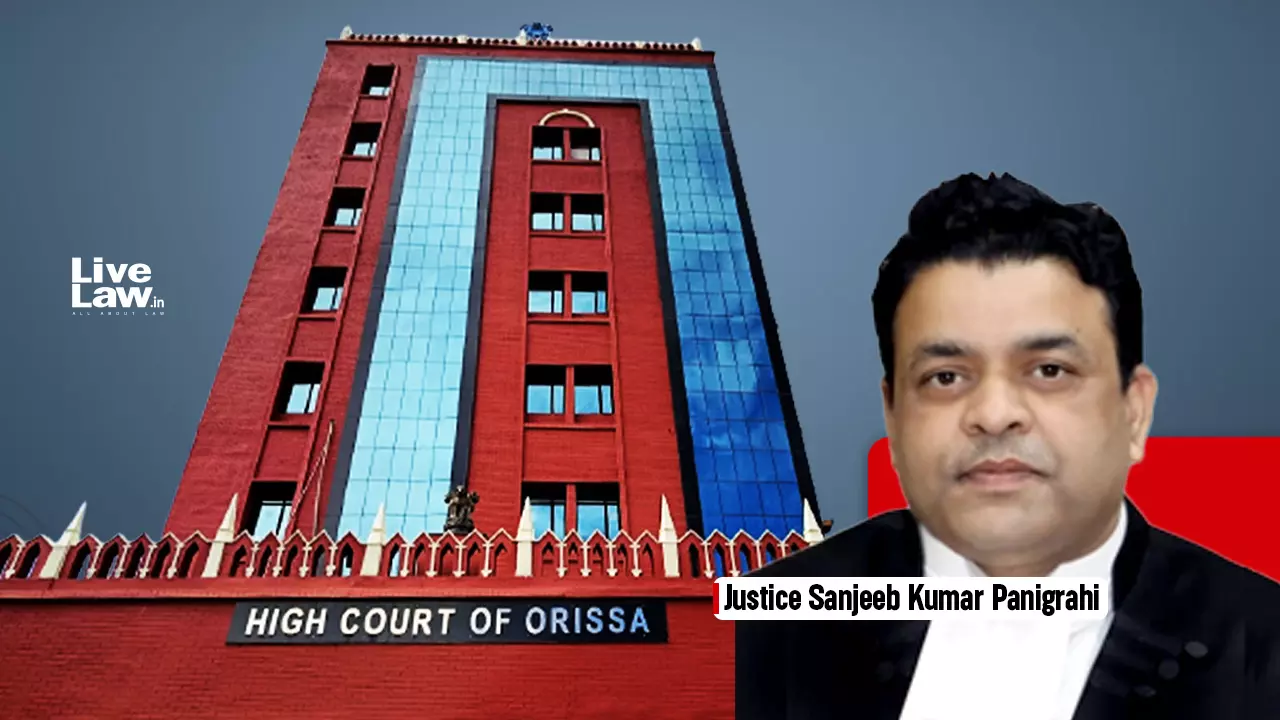
Can Production Warrant Override A Subsisting 'No Coercive Action' Order? Orissa High Court Answers
The Orissa High Court has held that a 'production warrant' under Section 267 of the Code Criminal Procedure (CrPC) cannot be issued against an accused, violating an interim protection order of the higher Court, merely because he is already lodged in the judicial custody in connection with another case. [2026 LiveLaw (Ori) 65]While setting aside production warrant and subsequent police...
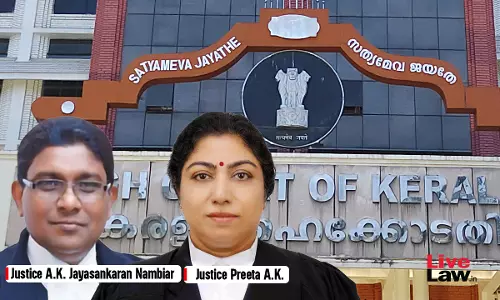
Can State Minority Commission Pass Eviction Orders? Kerala High Court Answers
The Kerala High Court recently upheld the finding of a Single Bench on the point that the State Minority Commission cannot bypass the jurisdiction of a civil court and pass eviction orders. [2026 LiveLaw (Ker) 345]The Division Bench of Dr. Justice A.K. Jayasankaran Nambiar and Justice Preeta A.K. was considering an appeal filed challenging a decision of the Single Judge that set aside an...