




Labour & Service

Outsourced Forest Dept Employees Not Bound By Official Secrets Act, But Expected Not To Divulge Sensitive Info: Uttarakhand High Court
The Uttarakhand High Court has held that even if an outsourced employee is not bound by the provisions of the Official Secrets Act, such an employee is nevertheless expected not to divulge sensitive official information to strangers. The Court observed that this obligation applies equally to regular and outsourced employees working in a government department.Justice Manoj Kumar Tiwari was...

DGCA Cannot Suspend Pilot's License Without Show-Cause Notice; Merely Based On FIR: Bombay High Court
The Bombay High Court has held that the Director General of Civil Aviation (DGCA) cannot suspend a pilot's licence without issuing a show-cause notice and affording an opportunity of hearing merely because an FIR has been registered or allegations of forged documents have surfaced. [Citation: 2026 LiveLaw (Bom) 285]The Court clarified that the exception under Rule 19 of the Aircraft Rules,...
Removing Employee From Service In Private Unaided School Void If Passed Without Prior Approval Of Director Of Education : Delhi HC
A Division Bench of the Delhi High Court comprising Justice C. Hari Shankar and Justice Om Prakash Shukla held that the dismissal order is void for violating Section 8(2) of the Delhi School Education Act, 1973, which requires prior approval of the Director of Education before imposing penalty of removal from service on an employee of a private unaided school. Background Facts...

Legality Of Regularisation: What Courts Say About Contract Employees
In India, we have millions of workers including but not limited to guest lecturers, ,pump operators, data entry assistants, special police officers who serve for decades in departments of the central government and different state governments performing functions that are not distinguishable from those of regular employees, yet these workers continue to hold the status of a “temporary” or “contractual” employee and they are perpetually denied pensions, increments, and social security benefits at...
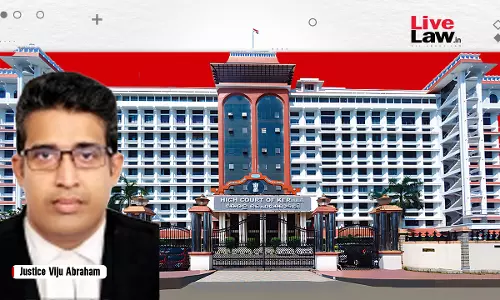
Does A Recruitment Freeze Apply To Compassionate Appointments? Kerala High Court Answers
The Kerala High Court in a recent judgment held that a ban on regular appointments would not automatically act as a bar for compassionate appointments. [2026 LiveLaw (Ker) 330]Justice Viju Abraham referred to two decisions rendered by the Bombay High Court that took a similar view and reasoned that the compassionate employment scheme is an exemption to help a family to survive sudden...
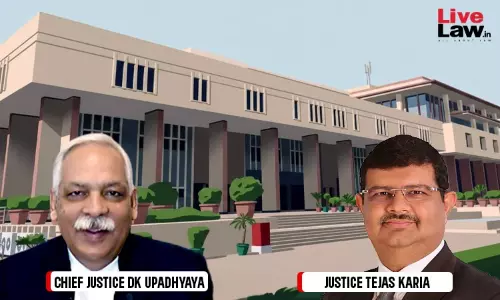
DTC Conductor's Dismissal Invalid: Charge Of Collecting Fare Without Issuing Tickets Not Established Without Cash Verification : Delhi HC
A Division Bench of the Delhi High Court comprising Chief Justice Devendra Kumar Upadhyaya and Justice Tejas Karia held that the failure to supply relevant documents (like the Log Book and past service record) and the absence of cash verification to prove misappropriation vitiates the disciplinary enquiry, entitling the conductor to reinstatement with continuity of...
Withdrawal Of Earlier Challenge To Defective Charge Memo Doesn't Bar Disciplinary Authority From Issuing Fresh, Valid Charge Memo: Calcutta HC
A Division Bench of the Calcutta High Court comprising Justice Madhuresh Prasad and Justice Prasenjit Biswas held that the dismissal of a prior proceeding as infructuous due to a defective charge memo does not bar the disciplinary authority from issuing a fresh, proper charge memo as Order 23 Rule 1 CPC does not apply. Background Facts A departmental proceeding was initiated...
Under What Circumstances Cancellation of An Examination Is Justified? Answers Gauhati High Court
A Division Bench of the Gauhati High Court comprising Chief Justice Ashutosh Kumar and Justice Arun Dev Choudhury held that cancellation of an examination is only justified when the sanctity of the process is compromised at a systemic level and it is impossible to separate tainted candidates from untainted ones; otherwise, segregation of suspicious candidates is required. Background...
Supreme Court Upholds Validity of Haryana Rule Deferring Compassionate Assistance For Kin Accused Of Murdering Govt Employee
The Court also clarified that 'compassionate assistance' was different from 'compassionate appointment'.

Outsourced Workers Have No Right To Promotion; Designation Upgrade Without Authority Can Be Corrected: Uttarakhand High Court
The Uttarakhand High Court has held that “outsourced or contract employees do not automatically acquire the status enjoyed by regular State Employees”. Thus, holding the above, the High Court iterated that “continuance of an outsourced employee in service for long periods of time does not Ipso facto establish a direct employee-employer relationship with a State Government”. The Court...

Allowing Officer To Oversee Department Handling Disciplinary Proceedings Against Him Is Impermissible: MP High Court
The Madhya Pradesh High Court has held that permitting a delinquent officer to hold charge of the very department responsible for initiating disciplinary proceedings against him is legally impermissible and contrary to principles of natural justice. 2026 LiveLaw (MP) 211The bench of Justice Vivek Kumar Singh strongly criticised the State, remarking that the decision "shocks the conscience" of...

Is Sole Surviving Widow Entitled To Full Family Pension Despite Being 'Second Wife'? P&H High Court Answers
The Punjab and Haryana High Court has held that where a deceased government employee is survived by only one widow and there are no eligible claimants from a pre-deceased spouse, the surviving widow is entitled to full (100%) family pension.The Court clarified that the State cannot retain any portion of the pension by misapplying provisions meant for cases involving multiple...