



Labour & Service
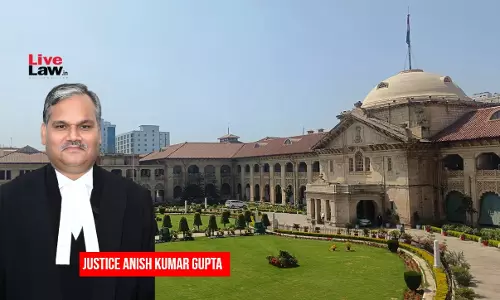
Civil Services | Disciplinary Proceedings Can't Continue After Retirement Without Governor Sanction Under Regulation 351-A: Allahabad High Court
The Allahabad High Court has held that a disciplinary proceeding initiated against a government servant before his retirement cannot continue after he retires, and no punishment can be imposed on its basis, without the sanction of the Governor under Regulation 351-A of the Civil Services Regulations.Regulation 351-A reserves to the Governor the right to withhold or withdraw a pension and to...
Charge-Sheet Witnesses Must Be Examined In Presence Of Delinquent Employee, Deviation Infringes Natural Justice: Allahabad High Court
The Allahabad High Court has held that Rule 7(vii) of the U.P. Government Servant (Discipline and Appeal) Rules, 1999 requires the Inquiry Officer to record the oral evidence of the witnesses named in the charge-sheet in the presence of the charged government servant, and any deviation infringes the principles of natural justice. It held that the opportunity to cross-examine must be given...
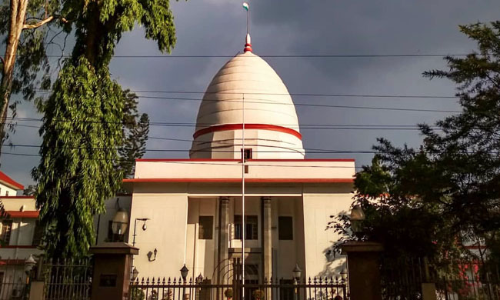
Trivial Domicile Error Without Undue Advantage Cannot Justify Cancelling Appointment: Gauhati High Court
A Division Bench of the Gauhati High Court comprising Justice Robin Phukan and Justice Yarenjungla Longkumer held that a trivial, inadvertent, and bona fide error in an application that does not affect eligibility or provide any undue advantage is not a valid ground to cancel a candidature or appointment. Background Facts The respondents had applied for the post of Constable (GD)...
Pre-Regularization Service Must Be Counted For Pension Benefits : Supreme Court
The Supreme Court has held that service rendered by employees on contract, ad hoc, daily-wage or work-charge basis prior to their regularization must be counted as qualifying service for retiral and pensionary benefits, particularly where the breaks in service are merely notional, artificial or caused by administrative circumstances or court orders.Holding thus, a bench of Justice Prashant...
Supreme Court Upholds Asst Professor's Appointment Despite Doubts Over PhD, Orders University Probe
The Court refused to interfere with the appointment on the ground that PhD was not a mandatory qualification for the post.
Enquiry Officer Acting As Prosecutor Through Leading Questions Vitiates Disciplinary Proceedings: Chhattisgarh High Court
The Chhattisgarh High Court has held that while non-appointment of a Presenting Officer by itself does not vitiate a disciplinary enquiry, an Enquiry Officer cannot assume the role of the prosecutor by putting leading or suggestive questions to prosecution witnesses. The Court held that such conduct compromises the Enquiry Officer's position as an independent adjudicator, gives rise to a...
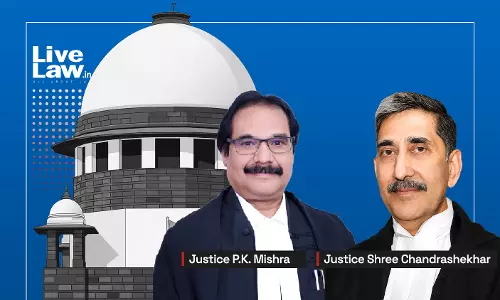
Widow's Family Pension Must Be Paid From Date Of Husband's Death : Supreme Court
The Court stated that its 2014 judgment in 'Tarsem Singh' was rendered ignoring an earlier precedent.
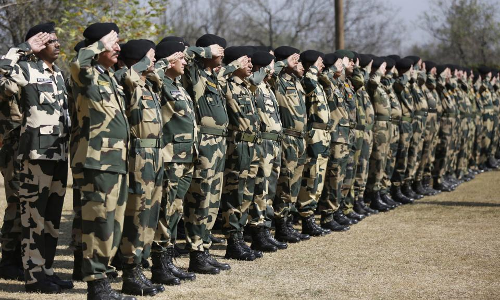
Bigamy Strictly Prohibited: Allahabad High Court Upholds CRPF Constable's Dismissal Under 'Minor Punishments' Provision
The Allahabad High Court has held that a member of the Central Reserve Police Force can be dismissed from service under Section 11 of the Central Reserve Police Force Act, 1949, which is headed 'Minor punishments'. It held that the punishments listed in clauses (a) to (e) of Section 11(1) are awardable in addition to, or in lieu of, suspension or dismissal, and are not the only punishments...
Regularisation Takes Effect From Date Of Appointment Under Rules, Not Initial Ad-Hoc Appointment: Allahabad High Court
The Allahabad High Court has held that an ad hoc employee regularised under the U.P. Regularization of Ad-Hoc Appointments (on Posts Outside the Purview of Public Service Commission) Rules, 1979 cannot claim that his regularisation be treated as effective from the date of his initial ad hoc appointment or from the date on which he became eligible for regularisation. It held that under the...

Current Duty Charge Service Can't Be Counted For Regular Service For promotion : Punjab & Haryana High Court
A Division Bench of the Punjab & Haryana High Court comprising Justice Harsimran Singh Sethi and Justice Minderjeet Yadav held that service rendered on Current Duty Charge as stop-gap arrangement cannot be counted as completed service under statutory rules requiring eight years of substantive service in the cadre for promotion. Background Facts The respondent joined as a...
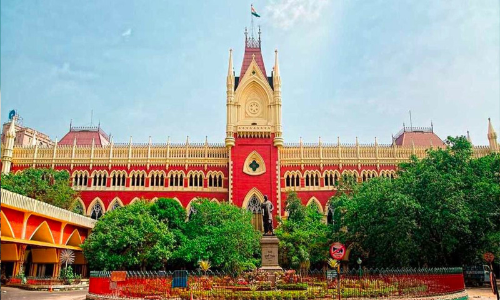
Dismissal Solely On Admission Of Guilt In Preliminary Enquiry Without Regular Charge-Sheet Is Arbitrary: Calcutta High Court
A Division Bench of the Calcutta High Court comprising Justice Shampa Sarkar and Justice Ajay Kumar Gupta held that an employee's confession in preliminary enquiry report cannot justify dismissal from service without issuing a charge sheet and conducting a regular disciplinary proceeding. Background Facts The appellant was working as the Head Assistant of IFU, SWM-I, Br.-VIII at...
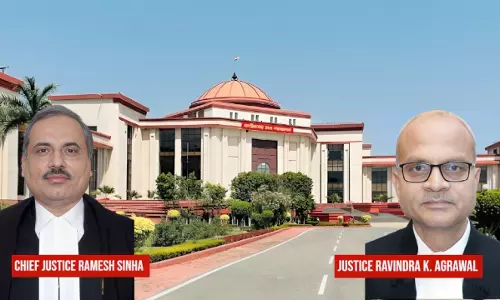
Qualifying Service For Promotion Is Counted From Calendar Year Of Joining Feeder Cadre, Not From Actual Date Of Joining: Chhattisgarh HC
A Division Bench of the Chhattisgarh High Court comprising Chief Justice Ramesh Sinha and Justice Ravindra Kumar Agrawal held that qualifying service for promotion is counted from the calendar year of joining the feeder cadre, not from the actual date of joining, as per the Rule 6(2) of the Chhattisgarh Public Services (Promotion) Rules, 2003. [2026 LiveLaw (Chh) 125] Background...