



- Home
- /
- Labour & Service
- /
- Acquittal On Merits Doesn't...
Acquittal On Merits Doesn't Automatically Confer Right To Full Back Wages: Chhattisgarh HC
Namdev Singh
30 May 2026 9:00 AM IST
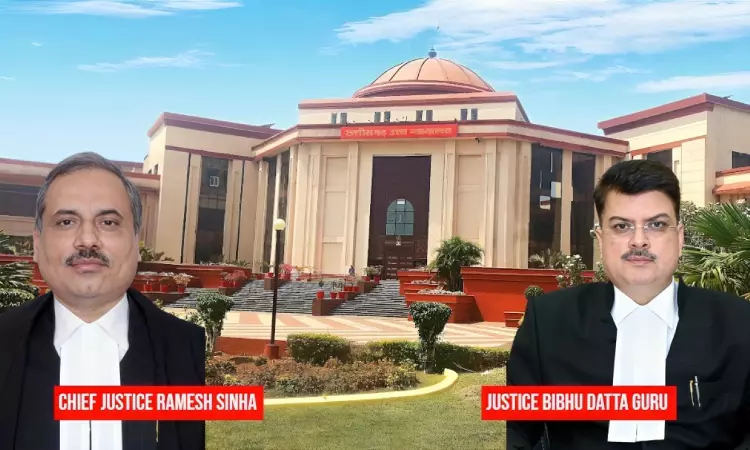
A Division Bench of the Chhattisgarh High Court comprising Chief Justice Ramesh Sinha and Justice Ravindra Kumar Agrawal held that an employee dismissed due to criminal conviction is not entitled to back wages merely because he is acquitted, since the principle of “no work no pay” applies and acquittal does not automatically erase the consequences of the conviction.Background Facts...
This is a premium content
Available exclusively to
Our subscribers
Subscribe Premium 
INR 1099+GST
Your support helps us to bring you more content at
an affordable subscription scheme !!!
All payment options available
A Division Bench of the Chhattisgarh High Court comprising Chief Justice Ramesh Sinha and Justice Ravindra Kumar Agrawal held that an employee dismissed due to criminal conviction is not entitled to back wages merely because he is acquitted, since the principle of “no work no pay” applies and acquittal does not automatically erase the consequences of the conviction.
Background Facts
The appellant-employee was appointed in the Electricity Board as Assistant Grade-I (Civil). Later he was promoted to the post of Supervisor (Civil). An FIR was registered against him under the Prevention of Corruption Act, 1988. He was placed under suspension. The Special Judge convicted him. He preferred a criminal appeal before the High Court.
While the criminal appeal was pending, he attained the age of superannuation. The High Court set aside his conviction and acquitted him on merits. After his acquittal, the respondent passed an order withdrawing the dismissal order. The respondents notionally reinstated the employee but denied actual back wages and monetary benefits for the period from employee's dismissal from service until his superannuation.
The employee challenged the order before the Single Judge, who dismissed his writ petition. His review petition was also dismissed. Aggrieved, the employee filed the writ appeal before the Division Bench of the Chhattisgarh High Court.
It was contended by the employee that the employer cannot be permitted to retain the benefit of denying wages for the intervening period when the employee was kept out of service due to a conviction which had ultimately been set aside as unsustainable. Such a position would be inequitable as well as run contrary to the doctrine of restitution, which mandates that a person who has suffered on account of a wrongful action must be restored to the position which he would have otherwise occupied.
The decision in Santosh Kumar Patnayak vs. State of Chhattisgarh was relied upon by the employee wherein it had been held that upon honourable acquittal, an employee is entitled to full back-wages under FR 54 and the employer has no discretion in the matter for the period from dismissal to reinstatement.
It was submitted that Fundamental Rule 54 applies when a government servant who has been dismissed, removed or compulsorily retired is reinstated as a result of appeal or review. It is a beneficial provision intended to restitute an employee who has been wronged. The rule mandates that in case of full exoneration, the period of absence shall be treated as a period spent on duty for all purposes, which includes the payment of salary and allowances.
Relying upon the Supreme Court judgment in M. Gopalakrishna Naidu v. State of M.P., it was argued that an order under FR 54 determining the pay and allowances for the period of absence entails civil consequences and cannot be passed without affording a reasonable opportunity of hearing to the concerned employee.
It was lastly submitted that no disciplinary proceeding was initiated against the employee and the termination of service was a direct consequence of conviction in a criminal case.
On the other hand, it was argued by the respondents that Fundamental Rule 54-B would not be applicable. It was submitted that the employee was not placed under suspension but was dismissed from service due to his conviction.
Findings and Observations of the Court
It was noted by the court that the employee was convicted by the criminal Court for offences under the Prevention of Corruption Act, 1988. Consequently, he was dismissed from service by the competent authority. Therefore, on the date when the order of dismissal was passed, the same was founded upon a valid judgment of conviction.
It was held that merely because the employee was subsequently acquitted in appeal, it would not automatically erase the legal consequences which had already occurred on account of the conviction.
The case of Ranchhodji Chaturji Thakore vs. Superintendent Engineer was relied upon wherein it was held by the Supreme Court that where an employee was dismissed from service on account of conviction in a criminal case, subsequent acquittal would not entitle such employee to claim back wages as a matter of right since the employee could not render service during the relevant period due to his own involvement in the criminal prosecution.
Similar view was held in the case of Union of India vs. Jaipal Singh, wherein it was held that acquittal in a criminal case does not automatically confer entitlement to salary for the period during which the employee remained out of service due to dismissal based upon conviction.
It was held by the Division Bench that that Fundamental Rule 54-B would not apply to employee, as he was not reinstated upon revocation of suspension but had been dismissed from service consequent upon conviction by the criminal Court.
It was further held that even assuming the acquittal was on merits, the same would not create a right to claim salary for the period during which the employee had not discharged any duty. Further the principle of “no work no pay” would apply as the relationship of employer and employee remained severed during the relevant period due to the dismissal order.
With the aforesaid observations, the appeal filed by the appellant-employee was dismissed by the Division Bench.
Case Name : Ram Prasad Nayak v. State of Chhattisgarh & Others
Case No. : WA No.358 of 2026
Counsel for the Appellants : Surya Kawalkar Dangi, Advocate
Counsel for the Respondents : Prasun Kumar Bhaduri, Deputy Advocate General, K.R.Nair, Advocate.
Click Here To Read/Download Order
Citation: 2026 LiveLaw (Chh) 41
Tags


