



Linda Sema Ruling: Closing One POCSO Reporting Loophole, Opening Another?
Aryan Apurva
21 July 2026 8:00 PM IST
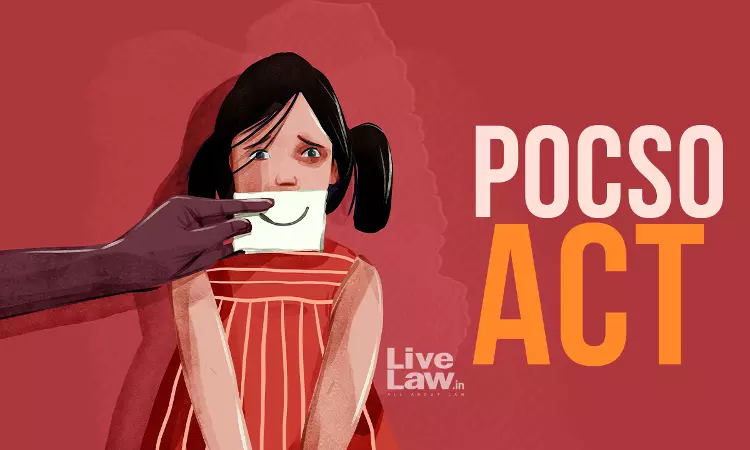
An appeal was raised in front of the Supreme Court of India by the mother of a 7-year-old girl who was assaulted at school against the discharge of the headmistress. The said headmistress had firsthand knowledge about the offence but conducted a private investigation along with the school staff, amounting to nothing, and allegedly decided to suppress the information. The Supreme Court of India, in its judgment dated July 9, 2026 (AAA v. Linda Sema & Ors., SLP (Criminal) No. 4772 of 2024), set aside the discharge order concerning the headmistress. Institutions often try to avoid disclosing the information that could tarnish their reputation, as arguably happened here, when the School Board decided the matter should not be spoken of. In the process, they undermined the victim and the law meant to protect innocent lives. The ruling improves the interpretation of the phrase “knowledge of the offence” but has left a gap: the very reasoning that increases liability for the direct recipient of a disclosure may make it easier for institutions to avoid liability altogether by obscuring who received it.
The 7-year-old victim was sexually assaulted by a senior JCWL (juvenile in conflict with the law), aged 16 years 2 months, per the birth certificate at the time of commission of the act. The victim conveyed the incident to her elder sister, a minor, and her friend, also a minor, who was denied being a witness by her parents, hence not listed in the police report. The act was then reported to the head girl, a minor. Then the head girl and the victim reported the matter to the headmistress, Linda Sema. The headmistress, along with a school teacher, examined the victim; they found bruises and redness, along with some sticky substance on her undergarment. Later, a team of school teachers and staff was formed to investigate the matter. No evidence or CCTV footage was found regarding the offence, nor were any changes observed in the behavior of JCWL. In a meeting attended by the warden of the hostel, teachers and staff, the school's board decided not to disclose the incident. Later, the mother of the victim found out about the incident, and the appeal was raised to the Supreme Court of India arising out of the order of discharge against the headmistress, some teachers, the girls' hostel warden and other staff.


The core legal question before the court was whether the “knowledge" under Section 19(1) of the Protection of Children from Sexual Offences Act, 2012 (Act No. 32 of 2012) demands personal witnessing or independent verification of the act, or whether credible information received directly from the victim is enough to trigger the reporting duty.
The acts of a child's sexual abuse/assault do not happen in the public gaze. Any knowledge of the commission of such an event is to be reported to protect the victim and prevent it from happening in the future. If the meaning of knowledge is taken as having the knowledge by witnessing the act or via independent verification, this limits the scope, questioning the credibility of knowledge. Section 19 of the Protection of Children from Sexual Offences Act, 2012 (POCSO Act) says that anyone who has knowledge that such an offence has been committed under this Act should report such information to the Special Juvenile Police Unit or the local police. Knowledge is not defined here, so the further task was how knowledge is to be defined. In A.S. Krishnan and Ors. v. State of Kerala, (2004) 11 SCC 576, the court interpreted the expressions 'knowledge' and 'reason to believe '. Knowledge is being aware of something; it is considered a state of mind. Again, the reason to believe is also a state of mind, but this doesn't amount to mere suspicion or doubt. Knowledge, in this sense, sits at a higher threshold of awareness than 'reason to believe'. Still, it remained unclear what would constitute 'knowledge' in this specific case of the 7-year-old victim. Further, looking into P. Ramanatha Aiyar's Advanced Law Lexicon, 4th edn. (LexisNexis), knowledge is described in the sense of information, describing a state of mind. Knowledge doesn't mean satisfaction that feels to the senses of a person; any information that is not believed to be false can also be considered knowledge. This means that knowledge of an offence is not limited to the direct knowledge of the act being committed. It includes the knowledge that such an act has been committed, conveyed by the victim to the person in question. As in this case, it was conveyed to the headmistress, Linda Sema, directly by the victim, making her the person with firsthand knowledge about the committed offence. Based on that, the court accordingly set aside her discharge. The Supreme Court of India directed the Trial Court to charge her according to the law for the offences committed by her. Regarding the accused school teachers and staff, they had second-hand information rather than a direct disclosure from the victim, and could not be charged with suppression, since that would require credible proof that an offence had actually occurred. Further, the court noted that it's natural that anyone who's part of an institution would not spread anything that tarnishes the reputation of the institution without credible proof. Additionally, there was no worthwhile material to prove conspiracy against the teachers and the staff or the JCWL, who is a child, nor was there any evidence that the accused had destroyed or tampered with evidence. The court accepted the discharge of the school teachers and staff.
The ruling closes the loophole regarding private investigations conducted by the institutions in case of such an offence, but narrowing the liability to the direct receiver of the information may leave open a different escape route where liability depends on institutions diffusing who receives information, rather than concealing it outright. In this case, the information travelled from the victim to her sister, friend, head girl, headmistress, and then the school teachers and staff; multiple people knew the offence was committed. Yet only the headmistress, who received the disclosure directly, was held to have 'knowledge' in the eyes of the law. The channel for the passage of information in the institutions often routes through multiple levels or vaguely rather than a specific direct channel, making it harder to pinpoint who legally 'knows', despite the institution being collectively aware of it. One might argue that it would be unfair to hold the teachers and staff criminally liable for institutional failures that weren't caused by them personally. The fix for this is not increasing the liability of an individual, but a structural change, requiring every institution to have a designated nodal officer accountable for reporting such events, so that diffusion of information cannot become a built-in feature of institutional reporting. This is not a new proposal; the District Child Protection Officer is already designated as the district-level nodal authority under the POCSO Rules, 2020. Adding a comparable single point of accountability to individual institutions would just apply an existing model at the level where disclosures actually occur.
The Supreme Court rightly held the headmistress liable for failing to report the incident, given that she received the disclosure directly from the victim. This still leaves a loophole of institutional diffusion of knowledge across multiple people, despite the institution being collectively aware of it. A designated, accountable nodal officer in every institution, rather than informal reporting chains, would help ensure this loophole doesn't outlive the very ruling meant to close it.
Author is a first-year B.A. LL.B. student at Banaras Hindu University. Views are personal.


