



Beyond Policy Matters: How Jaya Thakur Verdict Redefines Menstrual Autonomy
Sara & Tannu Shree
11 March 2026 5:30 PM IST
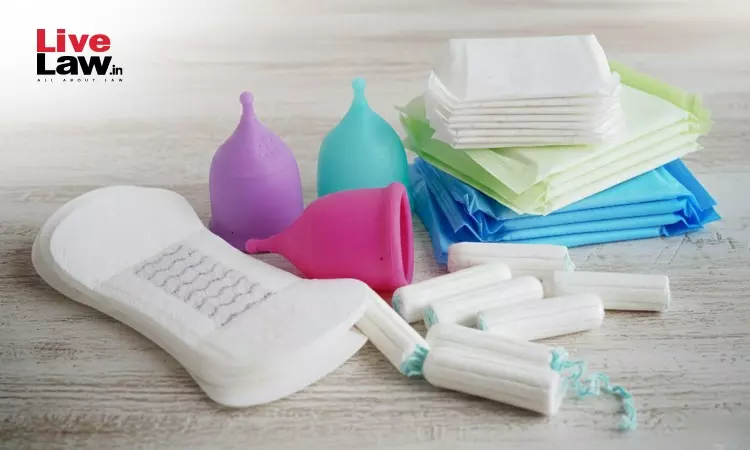
In India, the topic of menstrual justice has been increasingly discussed in constitutional conversations over the past few years. It has emerged from the fringes of social activism. The Supreme Court's recent landmark ruling in Dr Jaya Thakur v. the Government of India recognised menstrual hygiene infrastructure as a fundamental right under Article 21, stating, “A period should end a sentence, not an education.” Earlier, in Shailendra Mani Tripathi v. Union of India (2023), when a PIL was filed seeking menstrual leave, the Court called it a “policy matter.” And therefore, the recent judgment in Jaya Thakur's case is a big step forward, as the judiciary is actively building a framework for menstrual equity, and now the courts are in a position to expand the focus from simply securing logistics to guaranteeing true dignity in the workplace.
Constitutional Mandate for Menstrual Equity and Judicial Paradox
The Constitution of India already contains provisions for menstrual equity under Article 15(3) and Article 46 to ensure their educational and economic interests, as well as Article 47 of the DPSP, which addresses public health. Together, they establish menstrual health as part of women's dignity, autonomy and equality.


In the present case of Dr. Jaya Thakur v. Government of India, the PIL was filed by a social worker wherein SC gave appropriate guidelines to the Union of India, the States and Union Territories appropriate directions to guarantee that (i) all female students from classes 6 to 12 receive free sanitary pads; and (ii) all residential and government-aided schools have a separate female toilet. Apart from this, other consequential reliefs in the interest of the public, such as the provision of restrooms and the dissemination of awareness campaigns, are to be provided. Additionally, the Hon'ble SC reasoned that “Autonomy can be meaningfully exercised only when girl children have access to functional toilets, adequate menstrual products, availability of water, and hygienic mechanisms for disposal.”
However, when PIL was filed in the case of Shailendra Mani Tripathi v. Union of India in 2023 which sought menstrual leave for women, the court dismissed the petition by stating that “the matter of menstrual leave needs more governance and policies so that they can be applicable, and thus representation must be filed in ministry of women and child development and labelled it as policy matter.”
In Dr Jaya Thakur, the Supreme Court asserted that the lack of menstrual infrastructure creates a structural hurdle, which forces girls to drop out of school, highlighting the Court's much-needed evolving approach to this issue. Just as the Maternity Benefit Act exists, so that a woman's natural biological function does not penalise a woman's economic participation. Similarly, recognising menstruation as a barrier to education provides a logical path to addressing similar barriers in professional environments. The judiciary has opened the door to broader protections for addressing this issue in the future by recognising that autonomy is related to both hygiene mechanisms and physical dignity.
Walking through that door also means recognising the severe medical conditions such as dysmenorrhea, endometriosis, and menorrhagia, which cause enormous physical and long-lasting fatigue that is not relieved by standard medication. Furthermore, this evolving jurisprudence ought to take into account psychological conditions like Premenstrual Dysphoric Disorder (PMDD), which can induce or even cause significant emotional and cognitive distress in women. Recognising these challenges would ensure that women are not compelled to work under substantial physical or mental distress, upholding the constitutional promise of dignity for all.
Comparative Jurisprudence: Global Blueprints
Around the world, in 2023, Spain became the first European country to enact a national menstrual leave law, treating severe dysmenorrhea as an occupational health condition and funding it through the State's social security system rather than the employer directly. In Asia, Japan introduced menstrual leave as part of its labour law in the 1920s. Article 68 of Japan's Labour Standards Act guarantees that an employer cannot compel a woman suffering from painful periods to work during that time. Indonesia's Menstrual policy provides that employees suffering from menstrual pain are not required to work during the first two days of their menstrual cycle. Taiwan under Gender Equality in Employment has even added that a woman can take a day off of 'menstrual leave' every month and won't be considered as a day off, but rather it will be dealt with as per sick leave for attendance and remuneration purposes. Vietnam's labour law took a slightly different approach, which has allowed for a 30-minute break to women during their menstrual cycle. However, in 2020, a 3-day leave per month was added, and if someone didn't take leave, they would be paid extra. Among the African nations, Zambia had a very dignified approach; they introduced a day of leave every month without the requirement of any medical certificate or reason, calling it 'Mother's Day'.
The Indian Approach to Reform
India can draw inspiration from global models and its own states. In 1992, Bihar became the first Indian state to grant 2 days of menstrual leave per month to its female employees in government services; later, Kerala reinstated this policy in 2023, announcing mandatory menstrual leave for female students across all state-run universities. The Karnataka government subsequently issued an order granting 12 days of paid leave per year to all working women aged 18 to 52. Recently, the Maharashtra State Commission for Women has begun drafting a menstrual leave policy. Additionally, the concept of menstrual leave is not limited to nations and states only; several companies, such as Zomato, Swiggy, Culture Machine, and Gozoop, offer menstrual leave for women too, and are pioneering as an example. However, there is no national law mandating the same. In 2018, the Menstruation Benefits Bill was introduced in Parliament, proposing the grant of 2 days of menstrual leave to women in both the public and private sectors per month, but it has not yet become law.
While the concerns remain, the reluctance to implement a national policy is also rooted in long-standing concerns about Menstrual Leave. A primary argument is that such a mandate might reinstate or reinforce the taboo and stereotypes around menstruation. It may further strengthen the glass ceiling around women's hiring and promotion, as well as other aspects, treating them as liabilities or less efficient than their counterparts. Secondly, it might just benefit the privileged women, like in corporate or government jobs and would overlook daily wage labourers. However, the absence of a perfect, universal solution should not be used as an excuse to deny relief in the formal sector. Moreover, it is worth noting that over the past three decades, since the inception of the Menstrual Leave Policy in Bihar, there has been no official state report or data indicating that this policy has caused any occupational harm, wage penalty, or adverse career impacts for women who use it. On the other hand, it is further noted that providing leaves to women during menstruation is likely to increase their productivity post-menstruation and can alleviate the stress and discomfort associated with working during menstruation.
The Way Forward: Bridging the Gap
India can proceed to address these issues strategically by taking note of internationally successful measures, such as Spain's model of incorporating menstrual leave for severe conditions into the Employees' State Insurance (ESI) scheme to prevent corporate hiring bias. Furthermore, the government could initiate a phased rollout, beginning with Public Sector Undertakings (PSUs) and present the empirical data on productivity. This would not only dispel the misconception that menstrual leave hampers productivity but is also likely to increase productivity post-menstruation, as stress and discomfort are alleviated. Finally, occupational health frameworks, just as modern jurisprudence, have been critically examining the interface between mental health and the very justice system; and must similarly evolve to formally recognise the severe psychological toll of conditions like PMDD, ensuring both the physical and cognitive dimensions of reproductive biology are equally protected.
The decision in Jaya Thakur is undeniably a triumph for women's rights and judicial empathy, but it also shows how slowly judicial pragmatism moves. It is essential to understand that achieving true menstrual equality requires both time (rest) and good hygiene infrastructure. The constitutional promise of Article 14 is only partially fulfilled until both of these issues are resolved. While the judiciary is increasingly comfortable mandating the provision of menstrual infrastructure (pads, toilets, disposal mechanisms), there remains a gap in menstrual justice, specifically the right to Menstrual Leave. Since we have recognised the right to menstrual health as a fundamental right, it's now also high time to identify the right to a painless workday, as accurate menstrual equity requires not only the acknowledgement of menstrual hygiene but also the full spectrum of the biological experience.
References and End Notes
- India Consti. art. 15, cl. 3.
- India Consti. art. 46.
- India Consti. art. 47.
- Dr Jaya Thakur v. the Government of India, 2026 INSC 97.
- Shailendra Mani Tripathi v. Union of India W.P.(C) No. 327/2024.
Authors are law students. Views are personal.


