



Misdeclaration, Grid Discipline, And Strict Liability
Riddhima Joshi
12 Jun 2026 8:00 PM IST
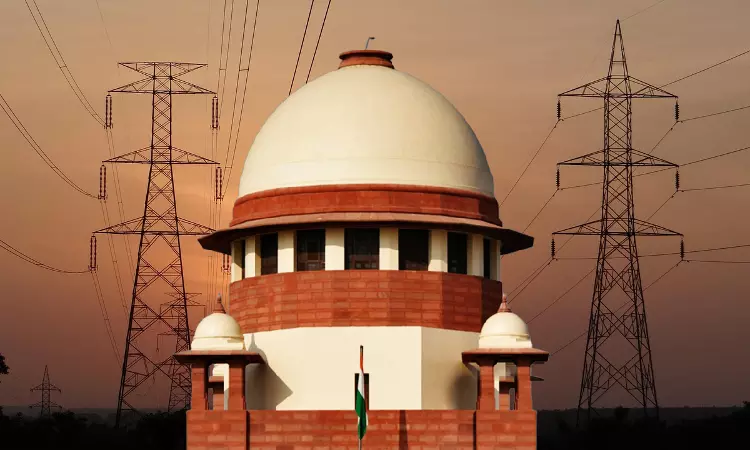
The Supreme Court's ruling in Punjab State Power Corporation Ltd. v. Talwandi Sabo Power Ltd., Civil Appeal Nos. 7432 and 7436 of 2025, decided on 20 May 2026, marks a big deal for India's electricity rules. It's not just about settling a conflict between a power maker and grid bosses; it lays down a key rule for the whole industry. The court says grid trustworthiness hinges on being certain, accurate, and accountable, not on what the entities are meant to do.
Electricity regulation depends on a tightly coordinated system where generation, scheduling, and use need constant monitoring. Small mistakes about how much power is available can mess up planning, affect costs, and destabilize the grid. So, the Supreme Court's decision really matters. The Court made a clear difference between “gaming the electricity market” and simply failing to show proper power capacity as defined by the Punjab State Grid Code. Also, they emphasized that the failure to prove capacity leads to strict civil liability, no matter if there was fraud or personal gain involved.


Punjab State Power Corporation Limited, Punjab State Load Despatch Centre, and Talwandi Sabo Power Limited, a thermal power generator, were entangled in a dispute. TSPL supplies electricity under a Power Purchase Agreement. According to the Grid Code, generators must state their “Declared Capacity,” which is the amount of electricity they can provide at certain times. This information is crucial because scheduling relies on these reports, maintaining grid stability. PSLDC started the fuss when they found that TSPL repeatedly failed to supply the amount of electricity they said they could throughout January 2017. On January 15th, 17th, 24th, and 31st, PSLDC ordered TSPL to show they had the claimed ability but they couldn't. This resulted in fines, around ₹162.74 crore, according to Regulation 11.3.13 of the Punjab State Grid Code.
TSPL challenged the penalties at the Punjab State Electricity Regulatory Commission (PSERC). While the commission kept some of the findings, they said there needed to be proof of intent to unlawfully gain for the penalties to stick. APTEL later got rid of the penalties completely. So, PSPCL and PSLDC went to the Supreme Court for further relief.
The main question for the Court was whether not proving declared capacity necessarily means there must be evidence of fraud or wrongdoing. They had to figure out if Regulation 11.3.13 creates strict liability or if regulators need to show proof of bad intent too. The issue was really important because TSPL said they hadn't done anything dishonest. They claimed operational issues just got in the way of their supply, not that they lacked the tech to make electricity. Also, they argued that they didn't benefit wrongly or manipulate the market on purpose. Still, the Supreme Court shot down their reasoning and went with a stricter take on the Grid Code.
A key part of the judgment is how the court distinguishes between “gaming” and failing to show capacity. They carefully looked at Regulations 11.3.4, 11.3.12, and 11.3.13 of the Punjab State Grid Code. The court states that “gaming” means deliberately faking declarations to get an unfair advantage. This action requires dishonesty and intentional wrongfulness. As a result, they say you need to prove the person had the intent to do wrong for charges of gaming, natural justice principles apply here too. The Court decided that Regulation 11.3.13 has its own legal basis. If a company says they'll provide a certain capacity and can't prove they've established it by the deadline, they get sanctioned, no questions asked - the Grid Code makes it automatic. So, liability happens from breaking a rule, not from the intent behind the rule, according to the Court.
In reaching their decision, the Supreme Court leaned on the doctrine of strict civil liability pretty hard. They pointed out that the penalty under the Grid Code is civil, not requiring proof of intent to harm. This aligns with earlier rulings too, like Union of India v. Dharamendra Textile Processors. In that case, the Court said penalties from modern laws often don't need mens rea proof that someone meant to do wrong.
The Court also stressed on “grid discipline,” unlike most products, electricity can't be easily stored in large amounts; it needs to be used right after production. Because of this, grid operators rely heavily on accurate info from power plants about their output. When generators say they can provide more juice than they actually can, it messes up the schedule and endangers system stability.
The Court made it clear that maintaining the electric grid's reliability trumps needing detailed operational justifications. They emphasized that precise reporting in the electricity sector is more than just a contract matter, it's about fulfilling a bigger regulatory responsibility for public safety and stability.
The Court also went on to explain the “four-time block rule.” When a generator gets notice, the time block they receive it in counts as the first one. So, the generators have to show they can handle stuff in the following blocks as spelled out. If they don't, they immediately face liabilities. Furthermore, the Court shot down TSPL's argument that fixing the mistake later on would make things okay. Allowing retroactive fixes, the Supreme Court argued, wouldn't maintain the critical scheduling discipline needed. It'd just create more confusion and uncertainty. Therefore, this strict ruling strengthens how seriously folks need to take the deadlines set by the Grid Code.
The TSPL tried to justify their actions, citing operational shutdowns, issues with coal handling, and situations similar to force majeure. Yet, the court wasn't convinced; it thought their arguments lacked both factual and legal support. That being said, the court didn't dismiss the potential for operational issues outright. They acknowledged that thermal power generation can run into problems. Still, the company can only adjust their declared capacity if there are real constraints. After a declaration is made and notice is given, the generators must stick to it; they can't use operational uncertainties as an excuse later on.
This ruling also sheds light on how the Power Purchase Agreement relates to regulatory requirements in the Grid Code. When capacities are wrongly declared, it's not just a technical issue but it leads to financial repercussions too. These declarations affect cost recovery, scheduling priorities, and money matters between parties involved.
Moreover, the Supreme Court pointed out that penalties in the Grid Code maintain order and ensure fairness economically in the electricity market. Incorrect declarations mess with both scheduling and payments. Because of this, the court emphasizes that commercial duties in the electricity business go hand-in-hand with following the rules.
The Supreme Court took issue with how APTEL mixed up the ideas of “gaming,” “deviation management,” and “failure to demonstrate declared capacity.” These things each have their own place in electricity regulation, and shouldn't be swapped around casually.
APTEL justified by stating that small changes in operation don't necessarily mean anything wrong happened minor deviances can happen. But the Court wasn't okay with that thinking. While there are ways to deal with these slight deviations, the basic rule to prove you've shown your true capacity is still required by the Grid Code. By clarifying this, the Court actually strengthened the independence of the grid rules.
This judgment has some big impacts. For one, it sets a solid standard that regulators can use easily. So, they don't have to prove intent when a generator doesn't hit their stated capacities anymore. That means less complicated work for them and more certainty in administration. Moreover, the ruling shows that electricity regulation affects the public. You can't treat it just as a private business deal, since problems ripple out to everyone including the customers, distribution firms, and the entire network. Because of this, staying reliable in operations matters a lot to the public interest.
Looking at the bigger picture, this case adds to India's developing legal framework on strict liability in regulatory governance. The ideas from this instance could set a precedent in areas like environmental protection, securities, and telecoms. These sectors need consistency and sticking to rules way more than figuring out personal intentions.
The judgment raises some valid worries about being too rigid. While strict liability does boost efficiency, it can ignore the real problems power plants face. Things like technical issues, fuel shortages, and equipment failure happen, and managers can't always prevent them. The Supreme Court leaned on interpreting the text to ensure system stability, but this leaves less wiggle room for unusual circumstances. Allowing defenses only for truly unavoidable issues could have struck a better balance. The court made a crucial distinction between gaming the system and actual production shortcomings. More importantly, it said that following the rules, not just intentions, determines liability under the Grid Code.
This ruling shows how Indian regulatory law is moving towards tighter controls in areas that need technical know-how. It boosts grid regulators' power and stresses that promises made in the electricity market have to be precisely followed for reliability. Ultimately, the judgment acknowledges a key truth about electricity regulation: reliability isn't just something contractually expected; it's a must for keeping the whole power system stable.
Author is a Law student at Symbiosis Law School NOIDA. Views are personal.


