



- Home
- /
- News Updates
- /
- Delhi Court Imposes 8-Year Sentence...
Delhi Court Imposes 8-Year Sentence On Sukesh Chandrashekhar For Impersonating Supreme Court Judge To Secure Bail
Malavika Prasad
31 Aug 2026 1:45 PM IST
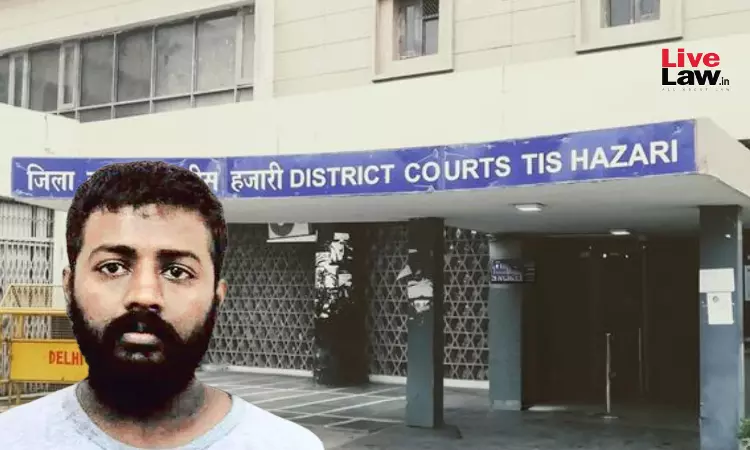
Court must convey to the convict and men of his ilk that cost of attacking the institution of justice isn't unconsequential, the Court said.
The Delhi Court has sentenced Sukesh Chandrashekhar to 8-years in jail for calling up a judicial officer who was presiding over a corruption case lodged against him and then impersonating a Supreme Court judge and pressurizing the trial judge to grant him bail. In doing so the court held that no genuine remorse was shown by the convict during the course of trial, rather he and his counsel...
This is a premium content
Available exclusively to
Our subscribers
Subscribe Premium 
INR 1099+GST
Your support helps us to bring you more content at
an affordable subscription scheme !!!
All payment options available
The Delhi Court has sentenced Sukesh Chandrashekhar to 8-years in jail for calling up a judicial officer who was presiding over a corruption case lodged against him and then impersonating a Supreme Court judge and pressurizing the trial judge to grant him bail.
In doing so the court held that no genuine remorse was shown by the convict during the course of trial, rather he and his counsel sought to put the Judicial Officer (complainant) in the dock by questioning her conduct.
For context the court had earlier convicted Sukesh for calling up a judicial officer who was presiding over a corruption case lodged against him, then impersonating a Supreme Court judge and pressurizing the trial judge to grant him bail further threatening the judicial officer with adverse professional ramifications if bail wasn't granted.
The allegation against Sukesh was that while in police custody in connection with a 2017 corruption case he obtained access to a constable's mobile phone in whose custody he was and thereafter used it to contact the official landline and mobile number of the judicial officer who was presiding over the corruption case.
Emphasizing that the sentence must carry a deterrent message in the present case, the court of Chief Judicial Magistrate Harshita Mishra, Tis Hazari Courts said:
"It should send a message that calculated criminality, particularly when directed against the administration of justice, will invite consequences commensurate with its gravity. The sentence awarded to the convict in this case, must therefore serve not only the purpose of reforming the convict, but also that of protecting public confidence in the justice system and warning those similarly inclined that criminal ingenuity cannot outrun the penal reach of law. This Court must resolutely convey to the convict as well as men of his ilk that the cost of attacking the institution of justice is neither uncertain nor inconsequential. This Court must convey a message that no criminal ingenuity, however insidious or audacious; no fabricated identity, however impressive or grand; and no attempt at manufactured influence, can be permitted to bend the course of justice"
The court said that the nature of the offences, the distinct mischief addressed by each provision, the manner in which the offences were committed and their cumulative impact upon the administration of justice makes this a fit and compelling case for "consecutive sentences" and it cannot be permitted to merge into one another or to operate merely concurrently.
The court said that the sentence must reflect that the criminal justice system distinguishes between an isolated unlawful act and a deliberate sequence of acts designed to manipulate, intimidate or interfere with the lawful functioning of public institutions. Where distinct criminal wrongs are deliberately committed, each substantial wrong must be adequately reflected in the punishment, the court said.
"Accordingly, all substantive sentences are directed to run consecutively," the court said.
The court thus sentenced the convict to rigorous imprisonment for 02 years and a fine of Rs. 5,000 for the offence punishable under Section 170 IPC; rigorous imprisonment for 02 years and a fine of Rs. 5,000 for the offence punishable under Section 189 IPC; and rigorous imprisonment for 04 years for the offence punishable under Section 507 IPC.
The court found no mitigating circumstances after a comprehensive assessment of the facts and circumstances of the case, the conduct of the convict, the nature and gravity of the offences, and his conduct during the course of trial.
"The convict has not demonstrated genuine remorse, contrition or acceptance of responsibility. Rather, as noticed hereinabove, he has persisted in questioning the credibility of the complainant Judicial Officer and in attributing mala fides and collusion to the prosecution. His conduct throughout the proceedings, therefore, does not furnish any basis for extending the benefit of a mitigating consideration. Accordingly, this Court finds that the mitigating side of the sentencing balance is conspicuously absent," the court said.
The court futher observed that the conduct of the convict is aggravated by the deliberate assumption of a false judicial identity, the calculated nature of the deception, the object of influencing a judicial officer, the attempt to secure bail in another criminal case through such deception, and the potential of the act to erode public confidence in the administration of justice.
He has also not shown any genuine remorse during the course of trial. Rather he as well as his counsel sought to put the Judicial Officer (complainant) in the dock by questioning her conduct in calling back on the number from which she had received the calls on 28.04.2017, the court observed.
"The convict and his counsel have insinuated and even openly stated that the Judicial Officer had connived with the Delhi Police to falsely implicate the convict. This attempted slander of the Judicial Officer clearly shows that the convict has shown no remorse for his mendacious actions and continues to tread on the Road to Perdition. When the trial was nearing conclusion, the convict started a slanderous campaign against this Court also, hoping to derail the trial and delay the pronouncement of judgment.
The offences of which the convict stands convicted protect distinct legal interests. Section 170 IPC addresses the deliberate assumption of the character or position of a public servant; Section 189 IPC criminalises intimidation of a public servant with a view to inducing or deterring the exercise of public functions; and Section 507 IPC aggravates criminal intimidation where the threat is communicated anonymously or with concealment of the identity of its maker" the court added.
The court also called for a report from Jail Superintendent, whether if at any point of time, bail bonds /personal bonds were furnished by the convict before the Jail Superintendent and for this aspect the matter has been listed on September 2.
Case title: STATE Vs. SUKASH CHANDER SHEKHAR @ SUKESH
Cr. Case No. 5409/2018

Malavika Prasad
Malavika Prasad is a Desk Editor with LiveLaw

