



- Home
- /
- News Updates
- /
- Parliament Clears MSME Development...
Parliament Clears MSME Development (Amendment) Bill 2026 Addressing Delayed Payments, Enhancing Ease Of Doing Business
Malavika Prasad
10 Aug 2026 10:28 AM IST
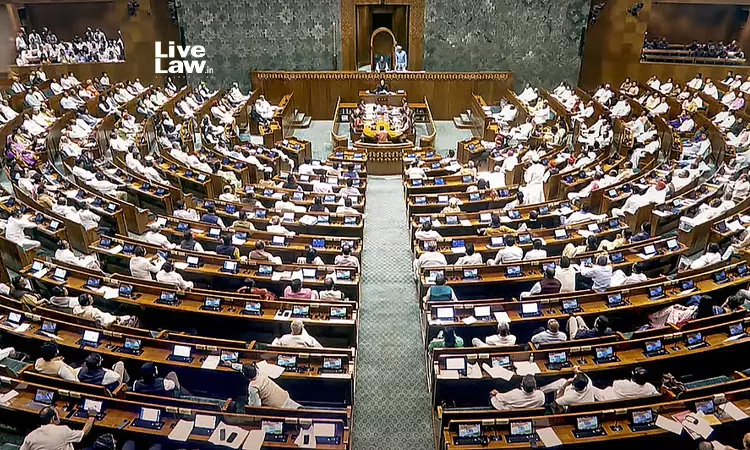
The Parliament has cleared the Micro, Small and Medium Enterprises Development (Amendment) Bill 2026, bringing in changes to the MSMED Act which seeks to facilitate growth and development of the MSME sector. The Bill was passed by the Lok Sabha on August 7 subsequent to its passing by the Rajya Sabha on August 3. The bill now awaits President of India's assent. The salient features of...
This is a premium content
Available exclusively to
Our subscribers
Subscribe Premium 
INR 1099+GST
Your support helps us to bring you more content at
an affordable subscription scheme !!!
All payment options available
The Parliament has cleared the Micro, Small and Medium Enterprises Development (Amendment) Bill 2026, bringing in changes to the MSMED Act which seeks to facilitate growth and development of the MSME sector.
The Bill was passed by the Lok Sabha on August 7 subsequent to its passing by the Rajya Sabha on August 3. The bill now awaits President of India's assent.
The salient features of the amendments to the MSMED Act are:
1. Aligning MSMED Act with changing landscape:
Classification based on “Investment in plant/machinery” and “Turnover” has been incorporated. The Bill provides permanence to the Udyam Registration Portal as a Digital, free, and voluntary registration platform for MSMEs. However registration for MSMEs is "voluntary".
2. Strengthening mechanism for addressing Delayed Payments and provide for enforcement of arbitral awards for the MSEs:
The amendment provides for Online Dispute Resolution ensuring MSMEs are able to resolve their disputes in a timely and cost-effective manner. Mandates payment of at least 50% of the awarded amount to the micro and small enterprises suppliers, if the application to set aside decree, award or order is pending for more than 6 months.
3. Ensuring faster adjudication of delayed payments disputes:
The amendment introduces timelines to ensure faster adjudication of delayed payment disputes. Thus the MSEFCs or mediation service provider, as the case may be, is required to complete the mediation within 90 days from the date fixed for first appearance.
The MSEFCs are required to refer the matter for arbitration within 30 days from the date of termination of mediation. Subsequently, the MSEFCs or any institution or centre providing alternative dispute resolution services, as the case may be, is required to make the award within a period of ninety days from the date of completion of pleadings.
4. Strengthening recoveries:
The amendments provide that any mediated settlement agreement or arbitral award made by the Facilitation Council, or through a mediation service provider or any alternative dispute resolution institution under Section 18, can be recovered as an 'arrear of land revenue' through the District Collector, Deputy Commissioner, or any notified authority in the jurisdiction where the buyer's assets are located.
5. Facilitating faster payments to MSMEs:
All Central Public Sector Enterprises (CPSEs) to route the settlement of invoices through a Trade Receivables Discounting System Platform (TReDS) for procurement of goods and services from MSMEs. The amendment also provides an enabling mechanism for States to nudge their PSEs to avail invoice settlement through TReDS.
6. Enhances ease of doing business, trust based regulations:
The amendment provides for decriminalisation and replaces conviction-based fines with graded civil penalties. Under the amendments, penal provisions have been decriminalised. In the instances of furnishing wrong information, a warning will be issued in the first instance, and a penalty will be levied in case of second and subsequent instances. The conviction and fine for non-disclosure of unpaid amounts with interest in annual accounts by buyers has been replaced with a warning on the first instance, a penalty for the second instance, and a fine for the third and subsequent instances.

Malavika Prasad
Malavika Prasad is a Desk Editor with LiveLaw

