




OTHERS
Meghalaya High Court Directs Authorities To Pay Land Acquisition Compensation For Border Fencing Within 3 Months
The Meghalaya High Court has directed the State and Union authorities to resolve their differences concerning the draft awards and disburse compensation to landowners whose land was acquired for construction of the Indo-Bangladesh Border Fencing within three months. The Court observed that possession of land cannot be taken by the Government while compensation is withheld for years without...
50% Pre-Deposit For Appeal Not Exhausted At Filing Stage Where Rent Liability Is Recurring: Allahabad High Court
The Allahabad High Court has held that where the order appealed against fixes a liability recurring from month to month, the fifty percent pre-deposit required by the proviso to Section 35(1) of the Uttar Pradesh Regulation of Urban Premises Tenancy Act, 2021 is not exhausted by the deposit made at the stage of filing the appeal. It held that the requirement continues to operate on the...

Dispute Over Sale Consideration Doesn't Invalidate Registered Sale Deed: Allahabad High Court
The Allahabad High Court has held that a registered sale deed cannot be declared void under Section 54 of the Transfer of Property Act, 1882 merely on a dispute over payment of sale consideration by the purchaser. It held that a seller who complains of non-payment must sue to recover the money, and cannot have the sale deed cancelled on that ground.Section 54 of the Transfer of Property Act,...
Acquisition Of Additional Land Cannot Be Done Through Corrigendum; Authorities Must Follow Statutory Procedure: Tripura High Court
The Tripura High Court has held that additional land required for a public project cannot be acquired merely by issuing a corrigendum to an earlier land acquisition notification, particularly after the original acquisition proceedings have concluded and compensation has been paid. The Court directed the authorities to return 0.019 acres of land to the petitioner, while permitting them to...
Jharkhand High Court Grants Relief To 'Physics Wallah', Says Authority Must Consider Reply Before Sealing Premises
The Jharkhand High Court has held that where a public authority issues a notice requiring a person to rectify alleged deficiencies and the person submits a response, the authority must consider the reply and pass an appropriate reasoned order before taking coercive action such as sealing the premises.A Single Judge Bench of Justice Rajesh Shankar was hearing a petition challenging the sealing...
Revenue Entries Cannot Establish Ownership; Title Must Be Proved Through Title Deeds: Tripura High Court
The Tripura High Court has dismissed a writ petition seeking correction of revenue records, holding that entries in revenue records are merely ancillary to ownership and cannot, by themselves, establish title to immovable property.Justice Dr. T. Amarnath Goud remarked that: “This Court finds that the revenue entries are ancillary and consequential actions once ownership is established....

Motor Accident Claims | Posthumously Filed Income Tax Returns Can Be Considered For Assessing Deceased's Income: Gujarat High Court
The Gujarat High Court has said that there is no hard and fast rule that posthumously filed income tax returns cannot be taken into consideration while calculating income of the deceased for determining accident compensation. [2026 LiveLaw (Guj) 269]In doing so the court enhanced the accident compensation by Rs. 6,16,342 to be given to the family of the deceased. The court was hearing...
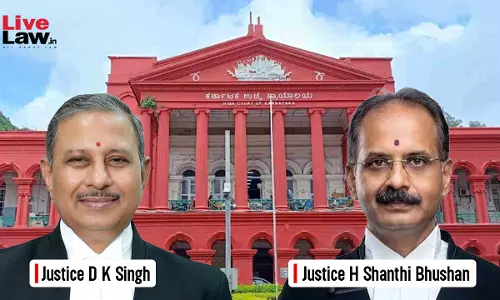
'State Doesn't Have 5 Acres For Soldier Who Served Nation': Karnataka High Court Laments In Ex-Serviceman's Plea For Grant Of Land
The Karnataka High Court set aside a single judge's direction to grant five acres of agricultural land to an ex-serviceman, holding that the amended Rule 8(8) of the Karnataka Land Grant Rules entitles him only to a residential site of 2,400 square feet where Government land is unavailable. The Court, however, recorded its regret in detail about the current state of affairs. [2026 LiveLaw...
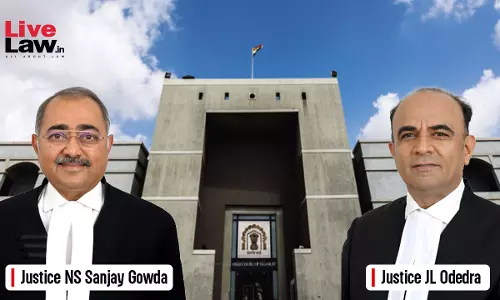
Gujarat High Court Upholds Judge's Dismissal For Associating With Practicing Advocate, Accepting Phone From Her
The Gujarat High Court has held that a judicial officer found assoicating/communicating with a practicing advocate, accepting a phone from the latter and using the same would amount to improper conduct. [2026 LiveLaw (Guj) 268]In doing so the court upheld the removal of a judicial officer over various charges including the charge that he was in touch with a practicing advocate and...
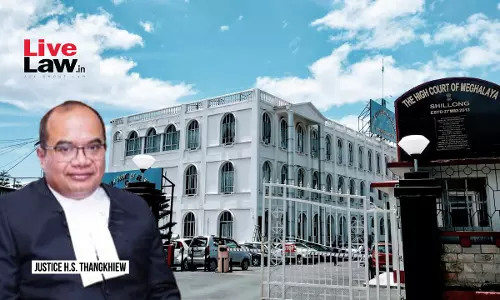
Reviewing Officer Must Give Specific Reasons For Departing From Reporting Officer's APAR Assessment: Meghalaya High Court
The Meghalaya High Court has held that where a Reviewing Officer differs from the assessment of the Reporting Officer in an Annual Performance Assessment Report (APAR), such departure must be supported by specific and cogent reasons. The Court accordingly directed the authorities to reconsider the petitioner's APAR in accordance with the applicable DoPT instructions and guidelines, after...

Public Authorities Can't Shift Burden To Citizens: Karnataka High Court Directs Information Commission To Maintain RTI Implementation Data
The Karnataka High Court has issued a slew of directions to the State Information Commission to prescribe a uniform format for the collection, maintenance and disclosure of information relating to the implementation of the RTI Act by public authorities in the State. The petitioner an RTI applicant had sought names of the Public Information Officer or Public Information Officers against...
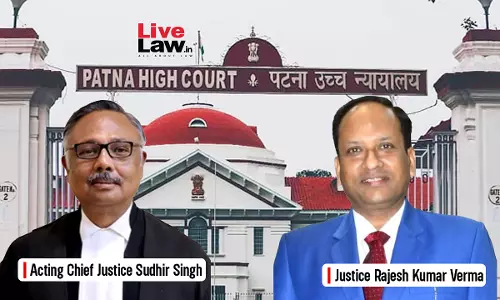
Authority Cannot Proceed Without Bidders Consent After Making Bid Validity Extension A Condition For Evaluation: Patna High Court
The Patna High Court has held that a tendering authority, after expressly making extension of bid validity a condition for consideration of a tender, cannot proceed to evaluate the bid where the bidder has not consented to such extension.A Division Bench of Acting Chief Justice Sudhir Singh and Justice Rajesh Kumar Verma was hearing a writ petition filed by M/s Universal Agro Corporation...