Supreme court
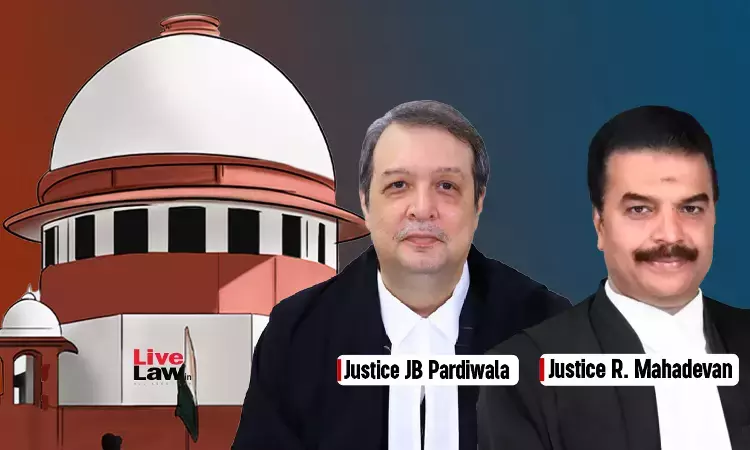

District Judges' Retirement Age Can Be Enhanced To 61 Years : Supreme Court To Madhya Pradesh High Court
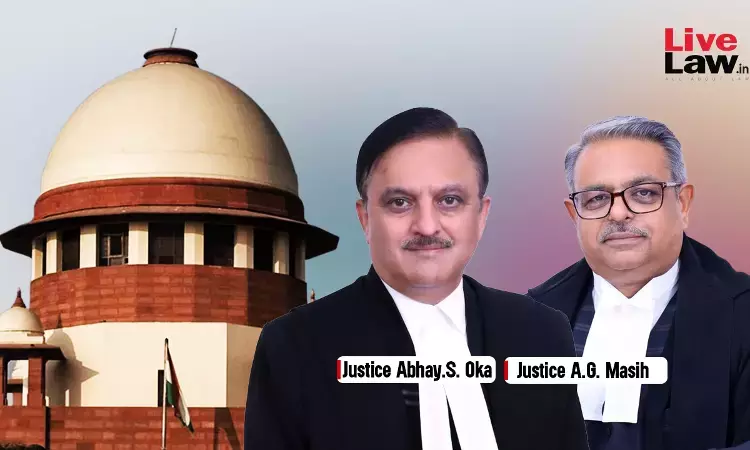
The Supreme Court today (May 26) clarified that there was no impediment in raising the retirement age of District Judges to 61 years and asked the Madhya Pradesh High Court to take an administrative decision on enhancing the retirement age within 3 months. The bench of CJI BR Gavai and Justice AG Masih was hearing the petition by the Madhya Pradesh Judges Association seeking enhancement of...
Prosecution Can Be Allowed To Produce Documents Which Were Omitted To Be Submitted Along With Chargesheet : Supreme Court
The Supreme Court held that a bona fide omission by the prosecution to submit relied-upon documents to the magistrate does not prevent it from producing those documents after the charge sheet is filed, regardless of whether they were gathered before or after the investigation. The court said that procedural lapses in submitting evidence can be remedied post-chargesheet, provided there is...
Supreme Court Daily Round-Up - May 24 & 25, 2025
Standard Form Employment Contracts : Supreme Court Lays Down Principles Of InterpretationJustice Abhay S Oka : One Of The Finest Judges, Rare Beacon Of Judicial IndependencePharmacy Council Of India Must Act Responsibly : Supreme Court Slams Arbitrary Rejection Of Pharma Colleges' ApprovalsAfter Rejection Of Objection To Impleadment, Subsequent Application To Delete Party Barred By Res Judicata...

PC Act | Mere Recovery Of Tainted Money Not Enough For Conviction Without Proof Of Bribe Demand : Supreme Court
The Supreme Court held that the mere recovery of tainted money is insufficient to trigger the presumption of guilt under Section 20 of the Prevention of Corruption Act, 1988, unless the entire chain of events i.e., the demand, acceptance, and recovery is established. Holding thus, the bench comprising Justices Pankaj Mithal and Ahsanuddin Amanullah acquitted a public servant accused of...
AP Land Grabbing Act | Peaceful Possession Without Legal Right Still Constitutes 'Land Grabbing' : Supreme Court
In a significant ruling interpreting the scope of land grabbing under the Andhra Pradesh Land Grabbing (Prohibition) Act (“the Act”), the Supreme Court clarified that violence is not a prerequisite for an act to amount to land grabbing. The Court held that even peaceful or “non-violent” unauthorized possession of land falls within the ambit of the Act. Affirming the decision of the...

Supreme Court Seeks Centre's View On Suggestions To Improve Sex Education & Real-Time Tracking Of POCSO Cases
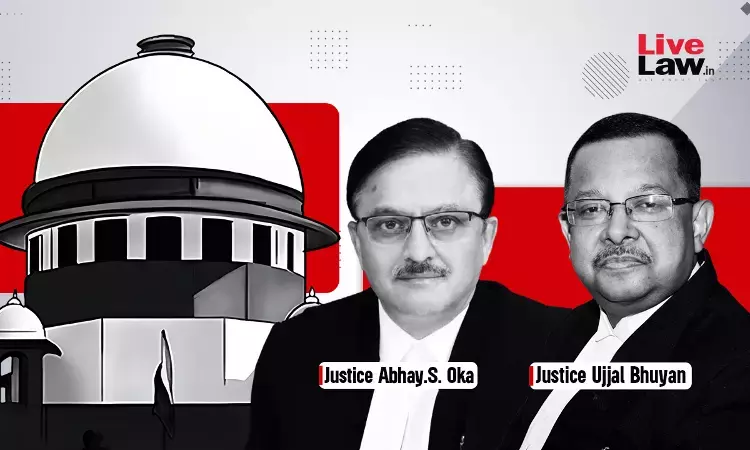
The Supreme Court has sought the views of the Central Government on the suggestions made by amici curiae on reforms in the sex education policy and real-time tracking and data collection of cases under the Protection of Children from Sexual Offences (POCSO) Act, 2012.A bench comprising Justice Abhay S Oka and Justice Ujjal Bhuyan was considering a peculiar case - relating to the conviction of...
Describing Any Court "Lower Court" Against Constitution's Ethos; Don't Call Trial Court Record "Lower Court Record" : Supreme Court
The Supreme Court recently observed that the records of the Trial Court should not be called "Lower Court Records" as describing any Court as a Lower Court was against the ethos of the Constitution."The record of the Trial Court should not be referred to as “Lower Court Record”. Describing any Court as a “Lower Court” is against the ethos of our Constitution," observed the...
CAPFs Entitled To All Benefits Of Organised Group-A Services, Gradually Reduce Deputation Of IPS Officers To CAPFs : Supreme Court
The Supreme Court held the Central Armed Police Forces (CAPFs) must be treated as part of Organised Group-A Services (OGAS) not only for the purpose of granting Non-Functional Financial Upgradation (NFFU) but also for all cadre-related matters, including cadre review.“Now that the Central Government has accepted that CAPFs are included in OGAS, the natural consequences should follow....