


Supreme court
Arbitral Tribunal Can Proceed Against Party Though They Weren't Served With S.21 Notice Or Made Party In S.11 Application : Supreme Court
The Supreme Court recently observed that not being served with the notice invoking arbitration under Section 21 of the Arbitration and Conciliation Act, and not being made a party in the Section 11 application (for appointment of arbitrator), are not sufficient grounds to hold that a person cannot be made party to arbitral proceedings. "A notice invoking arbitration under Section 21 of the ACA...
Proposed Purchaser Under Agreement To Sell Can't Sue Third Party Who Claims Title & Possession Of Property : Supreme Court
The Supreme Court recently held that a proposed purchaser under an agreement to sell cannot file a suit for a permanent injunction seeking the protection of the vendor's interest in the property against a third party with whom there exists no privity of contract. The Court clarified that only the vendor has the right to seek protection of their interest in the property, as an agreement to...
Dealing With Substance Mentioned In NDPS Act Schedule Is An Offence Though It's Not Listed In Schedule Of NDPS Rules : Supreme Court
The Supreme Court observed that activities involving a psychotropic substance listed in the NDPS Act's Schedule, but not in Schedule I of the NDPS Rules, constitute an offence under Section 8(c) of the NDPS Act. The bench comprising Justices JB Pardiwala and Manoj Misra heard the case where the Respondent-accused was found in possession of Buprenorphine Hydrochloride, a psychotropic...
Res Judicata Principle Applies In Criminal Proceedings; Findings In One Case Bind Parties In Subsequent Case : Supreme Court
The Supreme Court recently explained that the principle of res judicata is applicable to criminal proceedings, and hence, the findings of fact recorded by a criminal court would be binding on both parties in any subsequent proceedings involving the same issue.In holding so, the Court explained the perceived divergence between two lines of decision.One line of cases, with the leading case...


Charges Framed Cannot Be Deleted Invoking S.216 CrPC/S.239 BNSS : Supreme Court
The Supreme Court today (April 17) held that the power under Section 216 of the Criminal Procedure Code (Cr.P.C.) cannot be invoked to delete charges already framed against an accused, as it can only be used to add or alter the existing charges.The analogous provision to Section 216 CrPC in the BNSS is Section 239.“We are in agreement with the view that once charges have been framed by...
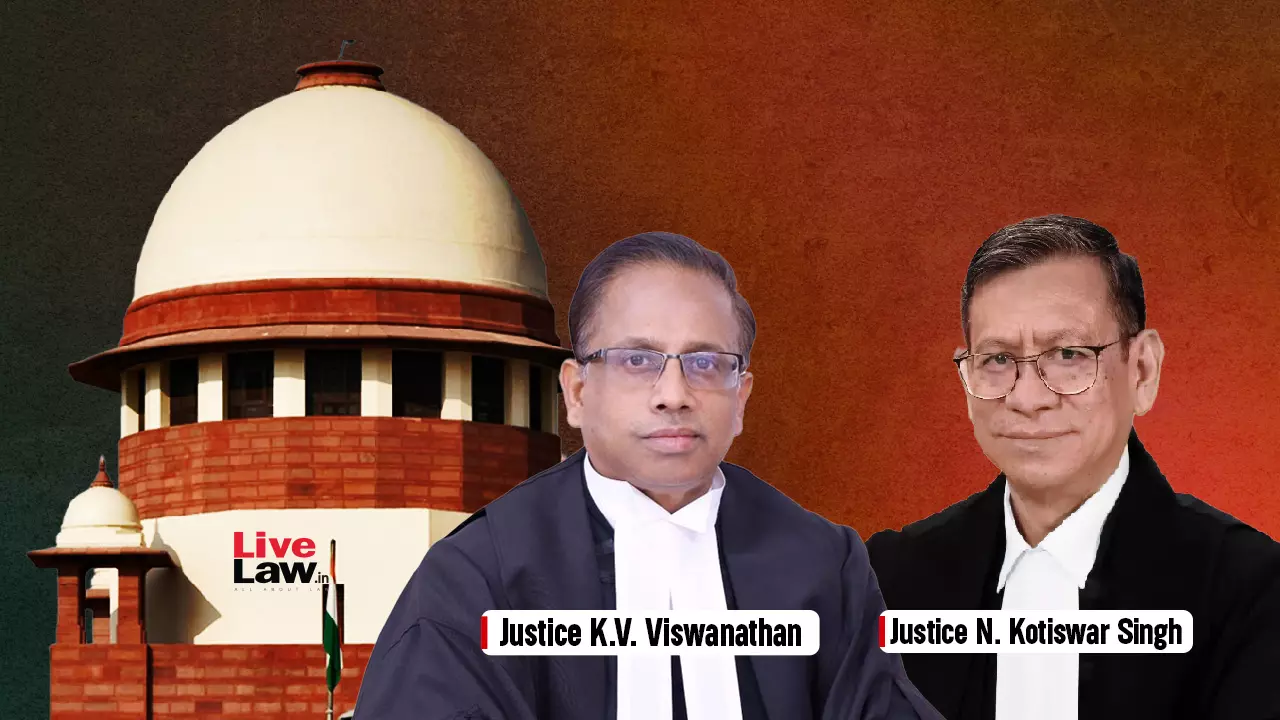

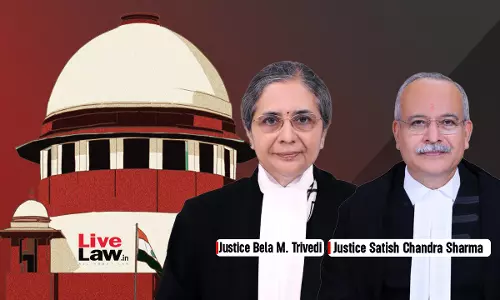
Supreme Court Judges Differ On Action Against AoR & Advocate For Misconduct In Filing Petition
The Supreme Court today (April 17) delivered a split verdict on the disciplinary action to be taken against an Advocate-on-Record (AoR) and his assisting Advocate for filing a petition that involved serious suppression of facts.Although the lawyers tendered an unconditional apology, the judges were divided on whether they should be let off without further consequences.A bench of Justices Bela...
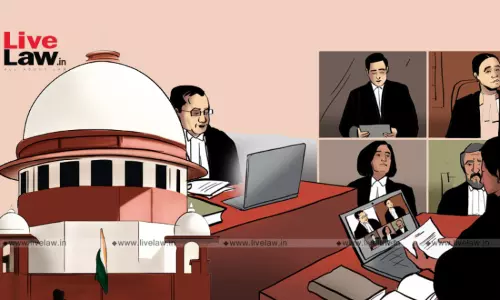
Supreme Court Asks HC Committees To Examine Grievances Regarding VC Access To Lawyers & Litigants
The Supreme Court today(April 17) disposed of a batch of petitions, originally filed during the COVID-19 pandemic seeking access to courtroom proceedings through virtual court links. The Court disposed of the petitions, giving liberty to the petitioners to approach the concerned High Courts and the various E-Committees constituted to deal with the issue.Today, the petitioner particularly...
State Rules Can't Be Inconsistent With Central Rules Under CST Act : Supreme Court Rejects Rajasthan's Appeal
The Supreme Court upheld the Rajasthan High Court's decision striking down Rule 17(20) of the Central Sales Tax (Rajasthan) Rules, 1957 (Rajasthan CST Rules) as ultra vires the Central Sales Tax Act, 1956, noting that the State Government cannot exceed its delegated powers by authorizing cancellation of Form C, which the Central Rules do not permit. The bench comprising Justices Abhay S Oka...