


Supreme court
S. 34 IPC | Mere Presence At Crime Scene As Spectator Doesn't Establish Common Intention Unless Active Participation Proven: Supreme Court
Observing that mere presence at the crime scene doesn't establish common intention unless active participation is proven, the Supreme Court recently acquitted the husband alleged to have actively participated with his mother in setting his wife ablaze.“A person present on the scene might or might not be guilty by the application of Section 34, IPC. If he is present on the scene for the...
Contractor Can't Be Blacklisted On Mere Allegation Of Contractual Breach Without Anything More : Supreme Court
The Supreme Court recently observed that though an authority has inherent power to blacklist a contractor, such power must be exercised on a reasonable ground. It also observed that even at the stage of issuing a show cause notice, the guiding principles laid by the Court should be followed. “Therefore, the Authority is expected to be very careful before issuing a show cause notice....
Supreme Court Quashes Criminal Defamation Case Over Times Of India Article, Advises Media To Exercise Caution Before Publishing Content
The Supreme Court today(February 18) quashed a 2014 criminal defamation case against Jaideep Bose, the Editorial Director of Bennett Coleman and Co Ltd, which publishes the newspaper Times of India. The Court also quashed the proceedings against co-accused Nergish Sunavala, Swati Deshpande and Neelam Raj, who were working as correspondents/editors at the Times of India then.The Supreme Court...
Test Identification Parade Loses Evidentiary Value When Witness Who Identified Accused Wasn't Examined In Trial : Supreme Court
The Supreme Court recently acquitted an accused after noting that the person who witnessed the accused during the Test Identification Parade (“TIP”) was not examined during the trial. The Court stressed that unless the person who witnessed the accused during the TIP is not examined in trial, then the TIP report which may be useful to corroborate or contradict the witness would lose...

Charitable Trust's Registration For Income Tax Exemption To Be Decided Based On Proposed Activities & Not Actual Activities : Supreme Court
The Supreme Court reiterated that when a charitable trust applies under Section 12-AA of the Income Tax Act (“Act”) for income tax exemptions (under Sections 10 and 11), the tax authorities should decide on the registration based on the charity's "proposed activities" than its actual activities, as stated in the Ananda Social case. The Court, however, clarified that mere registration...
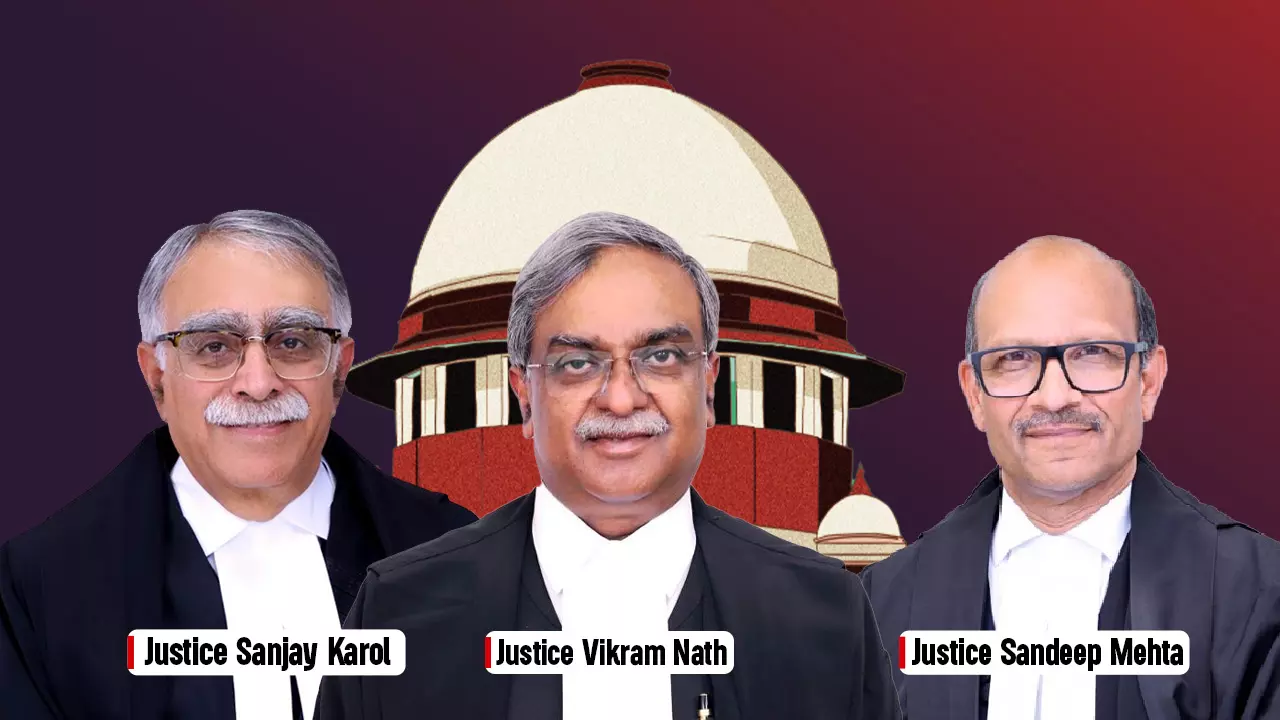
'Even Person Accused Of Heinous Crimes Entitled To Basic Protection Of Law' : Supreme Court Sets Aside Death Penalty For Lack Of Fair Trial
The Supreme Court recently set aside the death sentence of a man accused of killing his wife and 12-year-old daughter, after noting that he was denied a fair trial guaranteed under Article 21 of the Constitution. A bench comprising Justices Vikram Nath, Sanjay Karol, and Sandeep Mehta allowed the man's appeal, overturning the Allahabad High Court's decision that had convicted him of murder...
Against Wrongful Dismissal, Lumpsum Compensation Could Be Better Remedy Than Reinstatement With Backwages In Certain Cases : Supreme Court
The Supreme Court observed that a grant of lumpsum compensation could be the more appropriate remedy in cases of wrongful dismissal of an employee instead of reinstatement with back wages in certain cases. While directing such compensation, the courts are required to justify their approach, keeping in mind the interests of the employee and the employer. Placing reliance on several...
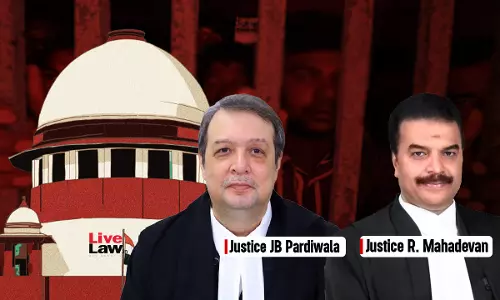
If Accused Is To Get Final Verdict After 6-7 Years In Jail As Undertrial, It Means Right To Speedy Trial Is Violated : Supreme Court
"Howsoever serious a crime may be, the accused has a fundamental right of speedy trial as enshrined in Article 21 of the Constitution," expressed the Supreme Court while granting bail to an accused charged under the UAPA who has been under custody for over five years.A bench of Justices JB Pardiwala and R Mahadevan granted bail to the accused who was arrested by the Chhattisgarh Police on...

26 Principles Relating To Compassionate Appointment : Supreme Court Explains
In a recent judgment, the Supreme Court (bench of Justice Dipankar Datta and Justice PK Mishra) summarised the principles relating to compassionate appointment.a) Appointment on compassionate ground, which is offered on humanitarian grounds, is an exception to the rule of equality in the matter of public employment [see General Manager, State Bank of India v Anju Jain (2008) 8 SCC...

Marks Of Other Candidates In Public Examination Can Be Disclosed Under RTI In Public Interest: Supreme Court
The Supreme Court recently upheld an order of the Bombay High Court, wherein it was observed that a request to disclose the marks obtained by other candidates in a public examination under the Right to Information Act, 2005, in the public interest, cannot be declined. By an order dated November 11, 2024, passed in a writ petition, the High Court allowed Respondent's plea seeking disclosure...

Supreme Court Annual Digest 2024 | Transfer of Property Act, 1882
Section 54 - Ownership of an immovable property does not get transferred until the sale deed is registered. Mere transfer of possession and payment of consideration will not transfer ownership, unless the sale deed is registered. Sanjay Sharma v. Kotak Mahindra Bank Ltd; 2024 LiveLaw (SC) 1054Section 54 - In the case concerning the auction sale of a property conducted under the SARFAESI Act,...