




Supreme court
Multiplier Method Under Motor Vehicles Act Cannot Be Applied To Electrocution Death Cases : Supreme Court
The Supreme Court recently clarified that the multiplier method used in computing compensation in motor accident claim cases cannot be applied for computing compensation in electrocution death cases. “…the multiplier method cannot be applied to determine compensation in cases of electrocution. Since the calculation paradigm as provided for in connection with the Motor Vehicles Act, 1988...
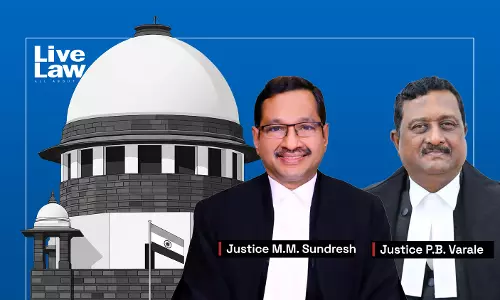
Reserved Candidate Selected On Open Merit Can Claim Better Reserved-Category Post Than Reserved Candidate Having Lower Marks: Supreme Court
The Supreme Court recently observed that a candidate belonging to a reserved category, who is otherwise eligible and has been selected in the open category on merit, is entitled to a better post under the reserved category than a reserved-category candidate who has secured lower marks.The bench of Justice MM Sundresh and Justice Prasanna B Varale said the legal position was settled and had...
Contract Act | Limits Of Agent's Authority : Supreme Court Explains Law Of Agency
The Supreme Court has held that an agent's implied authority cannot extend to enlarging a risk or dispensing with a statutory precondition which the principal itself is not permitted to assume. The observation was made while hearing an appeal filed against an order passed by the National Consumer Disputes Redressal Commission (NCDRC), wherein the Commission had directed the appellant to pay...
Advocate Cannot Disclose Client's Confidential Information Even If She Turns Adversary : Supreme Court Upholds Lawyers' Suspension
Advocate's duty of confidentiality survives even if client turns adversary, the Court said.
LiveLaw Supreme Court Half-Yearly Digest 2026 - Constitution Of India
Constitution of India Constitutional & Administrative Law — Correlative Public Duties of Local Authorities — Maintenance of Pedestrian Infrastructure – The Supreme Court ruled that the fundamental right to walk on demarcated footpaths carries a corresponding, enforceable legal duty upon public authorities - Wherever a road exists, there is a strict public duty to ensure...
Supreme Court Rejects Plea To Treat Post-Graduation As Equivalent To Practice At Bar For Civil Judge Recruitment
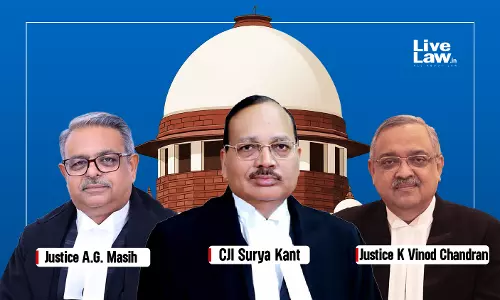
The Supreme Court has rejected the contention that post-graduation in law should be treated as equivalent to practice at the Bar for the purpose of eligibility for recruitment as Civil Judge (Junior Division).A bench of Chief Justice of India Surya Kant, Justice Augustine George Masih and Justice K Vinod Chandran rejected the contention while deciding review petitions challenging the Court's...

Wife Earning No Reason To Reduce Father's Liability To Maintain Children : Supreme Court
"The obligation to maintain the children is shared by both parents,but it cannot be divided by arithmetic alone," the Court said.
Supreme Court Waives Prior Practice Requirement For Civil Judge (Junior Division) Exams Till March 2027
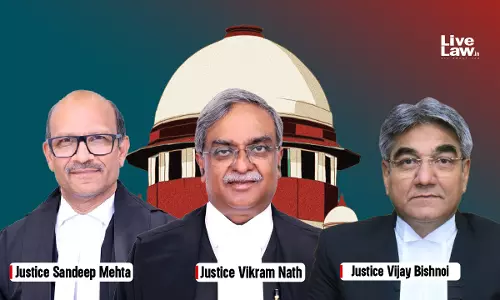
The Supreme Court has waived the three-year practice requirement for candidates applying for Civil Judge (Junior Division) examinations pursuant to recruitment notifications issued between May 20, 2025 and March 31, 2027.A bench of Chief Justice of India Surya Kant, Justice Augustine George Masih and Justice K Vinod Chandran (dissenting) said all law graduates would be eligible to apply...
Supreme Court Reduces Practice Condition For Judicial Service To 1 Year; Adds 1 Year Each Training & Clerkship
The Court also waived the practice condition for candidates from May 20, 2025 till March 31, 2027.
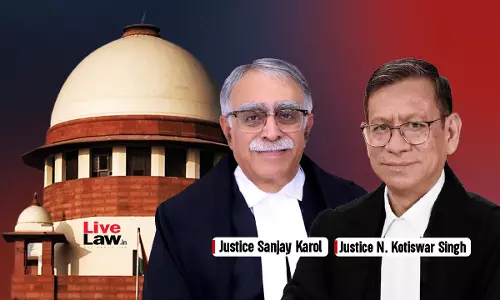
Once Service Rules Say PSC's Decision Is Final, Govt Cannot Inquire Into Candidate's Eligibility: Supreme Court
The Supreme Court has held that where service rules expressly make the Public Service Commission's decision on a candidate's eligibility final, the government cannot independently reopen and exhaustively reassess the candidate's eligibility after the Commission has found the person eligible and recommended them for appointment.A bench of Justice Sanjay Karol and Justice Nongmeikapam...