


Supreme court

'Poor Litigant Harassed For 22 Years' : Supreme Court Imposes Rs 10 Lakh Cost On Rajashtan Govt For Refusing To Reinstate Labourer
The Supreme Court on Friday (February 16) imposed a cost of Rs. 10,00,000/- (Ten Lakhs only) on the State of Rajasthan for harassing the poor litigant, who was compelled to file repeated litigation to get the fruits of the award of the Labour Court.Terming the plea filed by the State as frivolous litigation, the Bench Comprising Justices Vikram Nath and Satish Chandra Sharma dismissed the...
![Supreme Court Weekly Digest With Subject/Statute Wise Index [February 1 to 11]](https://www.livelaw.in/h-upload/2024/02/06/500x300_520735-supreme-court-weekly-digest.webp "Supreme Court Weekly Digest With Subject/Statute Wise Index [February 1 to 11]")
Supreme Court Weekly Digest With Subject/Statute Wise Index [February 1 to 11]
Armed Forces Tribunal Act, 2007Armed Forces Tribunal Act, 2007; Section 31 - The recruitment was not confined to the priority / reserved class rather it was open for general category also in case vacancies remain available. The Recruitment application(s) clearly establishes that the appellants have applied as a general category candidate(s) against the surplus seats/vacancies remaining...
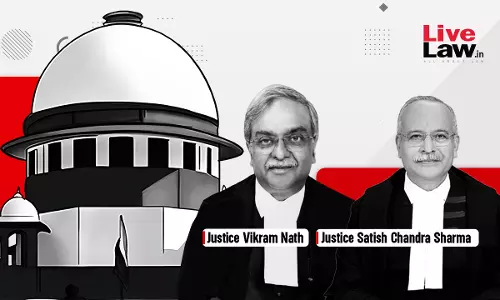
'Right To Defend Oneself A Fundamental Right' : Supreme Court Quashes Bar Association's Resolution To Not Represent A Party
Recently, the Supreme Court observed that the right to defend oneself is a fundamental right under the Constitution of India, and no resolution could be passed by the Bar Association to forbid other members of the bar to appear on behalf of the petitioner who appeared in person to defend its case. The aforesaid observation of the Supreme Court Bench comprising Justices Vikram Nath and...
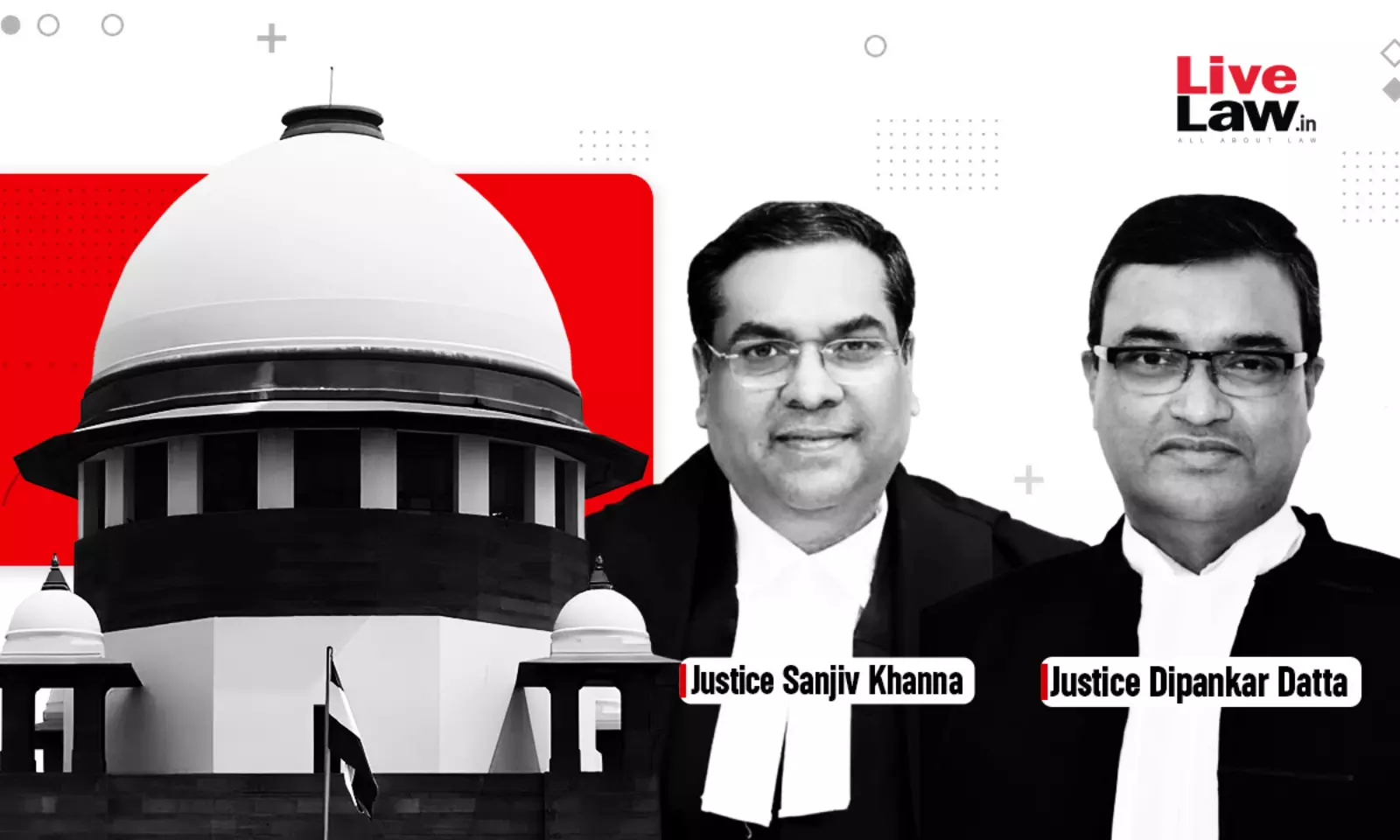
Bank Cannot Be Held Responsible For Illegal Activities Conducted By Borrower In Mortgaged Premises: Supreme Court
The Supreme Court (on February 09), while setting aside the impugned order passed by the NGT, Delhi, held that a Bank cannot be held responsible for illegal activities carried out by the borrower in mortgaged premises. The Division bench of Justices Sanjiv Khanna and Dipankar Datta said that this position is not only unacceptable but also not maintainable in law. “…we are unable...
Most Women Inmates Of West Bengal Prisons Were Already Pregnant When Brought To Jail: Amicus Tells Supreme Court
An application filed by Senior Advocate Gaurav Agrawal revealed that there were 62 children born in the jails in West Bengal during the last four years. However, the application added that most of these women inmates 'were already expecting at the time when they were brought to the jails.' “In some cases, the women prisoners had gone out on parole and returned back expecting," Agarwal,...
Roster Notified By Chief Justice Binding On All Judges; No Bench Can Hear A Case Unless Assigned By CJ: Supreme Court
Recently, the Supreme Court observed that a Bench, after releasing the case, is not competent to re-hear the case unless the case is assigned back to the Bench by the Chief Justice as the master of the roster. Setting aside that part of the Bombay High Court's Bench order which granted bail to the accused despite the case being not assigned to the Bench, the Supreme Court Bench...

Prison Reforms : Supreme Court Expands Scope Of District Committees To Address Pregnancies & Related Health Measures Of Women Inmates
The Supreme Court (on February 16) resumed its hearing in the matter relating to conditions in prisons. Last week, the Court had taken suo motu notice of the alarming number of pregnancies occurring among women inmates in prisons across the country. The Court, in today's order, expanded the scope of the district-level committees, which are to be constituted by the States/ UTs to...
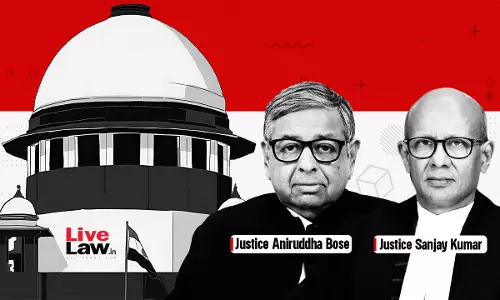
Elder Sister Has No Legal Right To Exercise Guardianship Over Younger Sister, Unless There's A Court Order : Supreme Court
In a habeas corpus case filed by a woman for the production of her younger sister, the Supreme Court recently held that an elder sister does not have a legal right to exercise guardianship except when there is an order by a competent Court. Dismissing the petitioner's case, the Bench of Justices Aniruddha Bose and Sanjay Kumar said, “we do not think the writ petition seeking relief...

'Medicines Weren't For Sale' : Supreme Court Sets Aside Sentence Of Imprisonment Imposed On Doctor For Not Disclosing Manufacturer, Imposes Fine
The Supreme Court recently set aside the sentence of imprisonment imposed on a doctor for the offence under Section 18(A) read with Section 28 of the Drugs and Cosmetics Act, 1940, for not disclosing the name of the manufacturer/persons from whom the medicines in his clinic were procured.While maintaining the conviction, the Court converted the sentence of imprisonment of 6 months into a...

Supreme Court Sets Aside Dismissal Of Class-IV Court Staff For Sending Representations Directly To HC & CM On Salary Greivances
The Supreme Court on Thursday (February 15) observed that an employee cannot be terminated from the post merely because he sent a representation to his superior officers flouting the proper channel.“In this regard, it is suffice to observe that Class-IV employee, when in financial hardship, may represent directly to the superior but that by itself cannot amount to major misconduct for...
Hasn't Encroached Judiciary's Land In Delhi, Party's Plot Was Subsequently Earmarked For Court Expansion : AAP Tells Supreme Court
The Aam Aadmi Party (AAP) has told the Supreme Court that it is not in encroachment of any land meant for the judiciary in Delhi. In response to the Supreme Court's direction to remove the encroachment by a "political party" in a land meant for Delhi judiciary, the AAP has filed an affidavit in the Court stating that the said plot had been allotted to it by the Delhi Government in...

Electoral Bonds | Supreme Court Rejects Union's Argument That Citizens Have No Right To Know About Political Funding
Today (February 15), the Supreme Court delivered a historic judgment, holding that anonymous electoral bonds violate the right to information under Article 19(1)(a) of the Constitution. While holding this, the Constitution Bench also upheld the voter's Right to Information about funding to a political party. The Court reasoned that such information is essential for a voter's freedom...