




Supreme court
LiveLaw Supreme Court Monthly Digest: August 2026
Abuse of Process of Court — Imposition of Exemplary Costs- The machinery of justice cannot be deployed as a facility to settle personal scores or salvage reputations imperiled by the parties' own actions. Where both litigants engaged in suppression, embellishment, and afterthought, and consumed institutional time of disciplinary bodies and constitutional courts for eleven years, costs...

Supreme Court Daily Round-Up : September 30, 2026
Links to the reports of September 30 :CAPF Contempt Matter Shifted To Special Bench Of Justice Misra & Justice Bhuyan'Will Dismiss It' : Supreme Court On West Bengal Plea Against Interim Bail To Congress Nandigram By-Poll Candidate Milan PradhanSupreme Court Special Bench Criticises Manner Of CAPF Contempt Case Listing; Centre Says Request Was Made Before CJIJournalist Ajit Anjum Seeks...
Compromise Decree Obtained Without Impleading Necessary Party Is Nullity : Supreme Court
The affected party is entitled to seek recall of the compromise decreee which was obtained behind their back.
Judges Must Avoid Personal Views On Morality While Hearing Bail Pleas Or Criminal Trials: Supreme Court
The Court sets aside the MP High Court order denying bail on grounds of the 'Morals' of the victim's family.

Supreme Court Daily Round-Up : September 29, 2026
Links to the reports of September 29, 2026 :Kunal Kamra Seeks To Intervene In Supreme Court Reference On Legislative Privileges, Says Free Speech Must PrevailSupreme Court Quashes NSA Detention Of Sambhal Violence Accused, Imposes Rs 10 Lakh Cost On UP GovtECI Row : Supreme Court To Hear Next Week Plea Against CEC Gyanesh Kumar & SIR DecisionsJustice Dipankar Datta Pays Tribute To Law...
Hearing Of Accused Necessary When Cognizance Taken After BNSS Came Into Force, Though Complaint Filed Earlier: Supreme Court
The Supreme Court recently held that where a Magistrate applied judicial mind and found a prima facie case only after the Bharatiya Nagarik Suraksha Sanhita, 2023 (BNSS) came into force, cognizance is deemed to have been taken on that date. The accused, therefore, had to be heard first, as the proviso to Section 223 of the BNSS requires.A bench of Justice JB Pardiwala and Justice K Vinod...
Accused Entitled To Seek Production Of Prosecution's Unrelied Documents At Appropriate Stage In Trial : Supreme Court
The Supreme Court has clarified the manner in which an accused can seek access to documents seized during investigation but not relied upon by the prosecution, holding that while an accused is entitled to documents available with the prosecuting agency to shape his defence, the stage at which such documents can be sought would depend on the nature of the documents.The Court made the...

Preventive Detention Can't Be Solely Based On Custodial Confession: Supreme Court
The Supreme Court today(September 29) held that authorities can't pass a preventive detention order solely relying on the confessional statement of the accused. It thereby quashed the detention of Mulla Afroz, who was accused of being the mastermind behind the 2024 Sambhal violence, under the National Security Act, 1980."Therefore, we are of the considered opinion that a confessional...
O. 2 R. 2 CPC | Omitted Relief Remains Barred Despite Order 23 Liberty To File Fresh Suit : Supreme Court
The Supreme Court on Tuesday (September 29) has observed that an injunction suit simpliciter filed without the Court's leave under Order 2 Rule 2 of the Code of Civil Procedure, while omitting the relief of specific performance, cannot be withdrawn to file a fresh suit seeking that omitted relief under Order 23 Rule 1 of the CPC. The Court held that even where leave to file a fresh suit...
IBC | Failure To Pay Balance Sale Consideration Invites EMD Forfeiture If Auction Terms So Provide : Supreme Court
The Supreme Court on Monday (September 28) ruled that where auction terms provide for it, a successful bidder's failure to pay the balance sale consideration in a liquidation proceeding will result in forfeiture of the Earnest Money Deposit, even though the Liquidation Process Regulations do not expressly provide for such forfeiture.The successful auction bidder, Appellant, relying on...
S. 17 Arbitration Act | Arbitral Tribunal Does Not Exercise Appellate Jurisdiction Over Section 9 Orders: Supreme Court
The Supreme Court recently held that a High Court hearing an appeal under Section 37 of the Arbitration and Conciliation Act against an interim order passed under Section 9 cannot, even with the consent of the parties, delegate its appellate authority to the Arbitral Tribunal by directing it to hear the challenge to the Section 9 order under its Section 17 jurisdiction to grant interim...
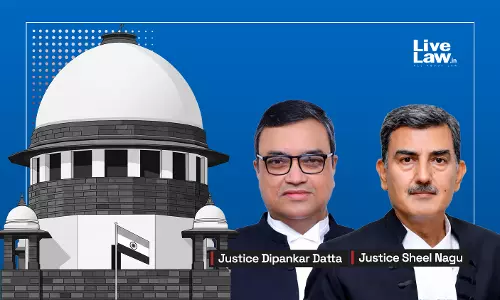
Supreme Court Quashes NSA Detention Of Sambhal Violence Accused, Imposes Rs 10 Lakh Cost On UP Govt
The Supreme Court today(September 29) quashed the preventive detention of Mulla Afroz, accused of being the mastermind of the 2024 Sambhal violence, under the National Security Act, 1980. It set aside the judgment of the Allahabad High Court, which had upheld the detention order. A bench comprising Justice Dipankar Datta and Justice Sheel Nagu held that the Uttar Pradesh government couldn't...