




Supreme court
Preventive Detention Can't Be Solely Based On Custodial Confession: Supreme Court
The Supreme Court today(September 29) held that authorities can't pass a preventive detention order solely relying on the confessional statement of the accused. It thereby quashed the detention of Mulla Afroz, who was accused of being the mastermind behind the 2024 Sambhal violence, under the National Security Act, 1980."Therefore, we are of the considered opinion that a confessional...
O. 2 R. 2 CPC | Omitted Relief Remains Barred Despite Order 23 Liberty To File Fresh Suit : Supreme Court
The Supreme Court on Tuesday (September 29) has observed that an injunction suit simpliciter filed without the Court's leave under Order 2 Rule 2 of the Code of Civil Procedure, while omitting the relief of specific performance, cannot be withdrawn to file a fresh suit seeking that omitted relief under Order 23 Rule 1 of the CPC. The Court held that even where leave to file a fresh suit...
IBC | Failure To Pay Balance Sale Consideration Invites EMD Forfeiture If Auction Terms So Provide : Supreme Court
The Supreme Court on Monday (September 28) ruled that where auction terms provide for it, a successful bidder's failure to pay the balance sale consideration in a liquidation proceeding will result in forfeiture of the Earnest Money Deposit, even though the Liquidation Process Regulations do not expressly provide for such forfeiture.The successful auction bidder, Appellant, relying on...
S. 17 Arbitration Act | Arbitral Tribunal Does Not Exercise Appellate Jurisdiction Over Section 9 Orders: Supreme Court
The Supreme Court recently held that a High Court hearing an appeal under Section 37 of the Arbitration and Conciliation Act against an interim order passed under Section 9 cannot, even with the consent of the parties, delegate its appellate authority to the Arbitral Tribunal by directing it to hear the challenge to the Section 9 order under its Section 17 jurisdiction to grant interim...
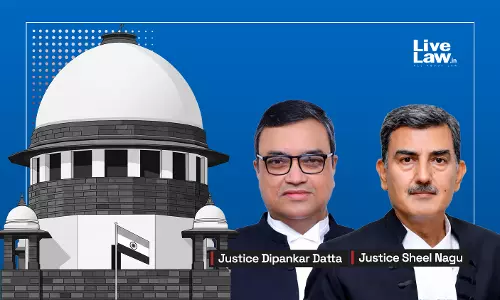
Supreme Court Quashes NSA Detention Of Sambhal Violence Accused, Imposes Rs 10 Lakh Cost On UP Govt
The Supreme Court today(September 29) quashed the preventive detention of Mulla Afroz, accused of being the mastermind of the 2024 Sambhal violence, under the National Security Act, 1980. It set aside the judgment of the Allahabad High Court, which had upheld the detention order. A bench comprising Justice Dipankar Datta and Justice Sheel Nagu held that the Uttar Pradesh government couldn't...

Supreme Court Daily Round-Up : September 28, 2026
Links to the reports of September 28Rape Cases In Delhi-NCR Show Systematic Failure Of Police & Administration : Supreme Court Takes Suo Motu CognizanceKeralam Power Crisis : State Urges Supreme Court To Urgently Hear Appeal Against APTEL RulingSupreme Court Urges West Bengal Speaker To Decide Disqualification Pleas Against 10 Rebel Trinamool MLAs By October 8Notice To Student Over...
Suo Motu Case On Delhi Rapes | Supreme Court Issues Directions To Make Public Spaces Safer; Orders Safety Audit Within 4 Weeks
The Court sought the data on Fast Track Courts from the Delhi High Court Registrar General
LiveLaw Supreme Court Weekly Digest: August 19 - 31, 2026
Abuse of Process of Court — Imposition of Exemplary Costs- The machinery of justice cannot be deployed as a facility to settle personal scores or salvage reputations imperiled by the parties' own actions. Where both litigants engaged in suppression, embellishment, and afterthought, and consumed institutional time of disciplinary bodies and constitutional courts for eleven years, costs...
Supreme Court Directs ₹1 Lakh Compensation For Daily-Wage Workers In 25-Year-Old Bihar Workmen Dues Case
The Supreme Court on Monday (September 28) has directed the States of Bihar and Jharkhand to pay a one-time sum of ₹1 lakh to each concerned daily-wage employee/workman of five defunct State-owned corporations, while ordering 12% simple interest per annum on delayed EPF dues and 6% interest on delayed salary/wages and other monetary dues. “…we deem it appropriate to direct the States...
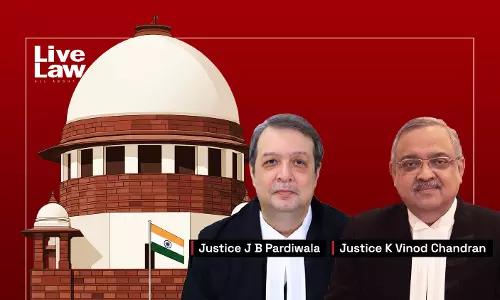
Rape Cases In Delhi-NCR Show Systematic Failure Of Police & Administration : Supreme Court Takes Suo Motu Cognizance
Expressing solidarity is not a solution to this social evil; accountability must be fixed upon authorities, the Court said.

Know The Law | When Can An Issue Be Tried First Under Order XIV Rule 2 CPC As Preliminary Issue?
The Supreme Court has recently held that an issue can be tried first only if it is a pure issue of law relating to jurisdiction or a statutory bar, and only before the court has begun trying all the issues together.A bench of Justice KV Viswanathan and Justice Arun Palli ruled so while setting aside the orders of the trial court, the first appellate court and the Kerala High Court. The...
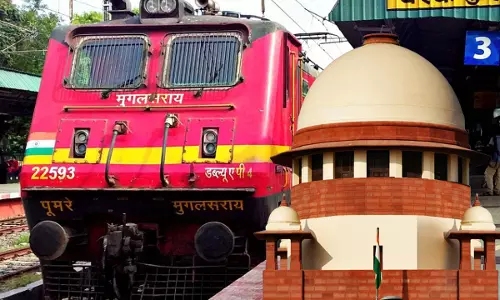
Mere Absence Of Train Ticket Cannot Defeat Railway Compensation Claim : Supreme Court Reiterates
The Supreme Court on Friday (25 September) has held that mere absence of a railway ticket with an accident victim cannot by itself defeat a claim for compensation, especially where the victim remained hospitalised for over a month before succumbing to his injuries, making it “quite unlikely” that the ticket would have survived. A bench of Justice Ujjal Bhuyan and Justice Atul S...