


Supreme court
Supreme Court Half Yearly Digest 2025: Evidence Act & BSA
SUPREME COURT HALF YEARLY DIGEST 2025BHARATIYA SAKSHYA ADHINIYAM, 2023, (BSA) / INDIAN EVIDENCE ACT, 1872, (IEA)Section 6. Motive, preparation and previous or subsequent conductSection 8 IEA - Circumstantial Evidence and Motive - In murder trials relying on circumstantial evidence, the prosecution must establish a complete chain of evidence that eliminates reasonable doubt, but proof of motive...
Supreme Court Weekly Round-Up: August 18, 2025 to August 24, 2025
Reports/JudgmentsS. 306 IPC | For Abetment Of Suicide, Test Is Whether Accused Intended By His Action To Drive Victim To Suicide : Supreme CourtCause Title: Abhinav Mohan Delkar v. The State Of Maharashtra & Ors.Citation: 2025 Livelaw (SC) 812The Supreme Court (Aug. 18) upheld the Bombay High Court's decision to quash the abetment to suicide case against the Dadra & Nagar...
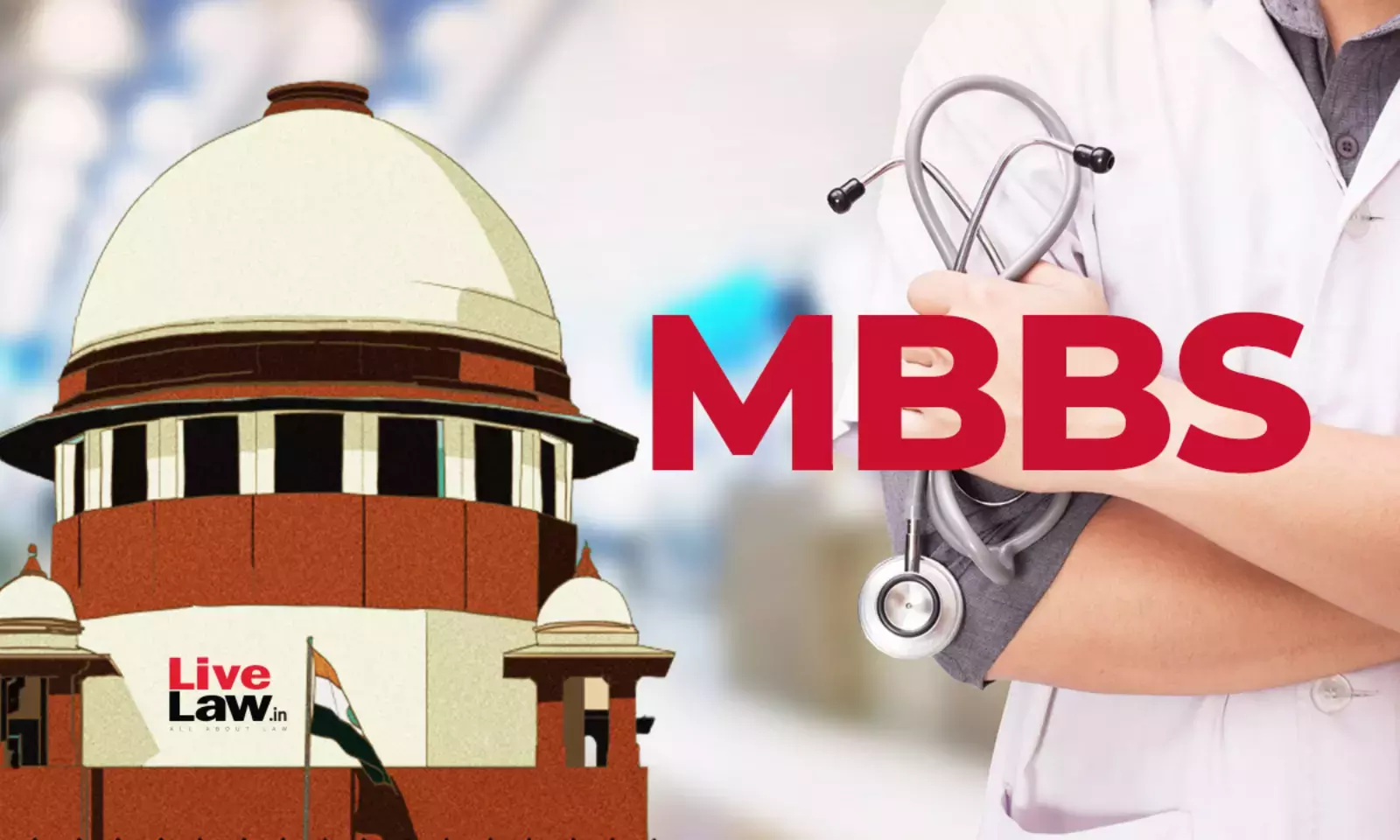
Supreme Court Regularises MBBS Degree Of Student Whose ST Certificate Was Cancelled After Her Course, Imposes Rs 5 Lakh Cost On Father
The Supreme Court recently safeguarded the academic career of a medical student by regularizing her MBBS degree, even though it had been obtained on the basis of a Scheduled Tribe certificate submitted by her father, which was later invalidated by the Caste Scrutiny Committee. The Court also imposed Rs. 5 Lakhs cost on the father for his fraudulent actions of concealing the invalidation of...
Supreme Court Weekly Digest: August 1 - 10, 2025
Citations 2025 LiveLaw (SC) 761 to 2025 LiveLaw (SC) 786Advocates Act, 1961 - Enrolment Fees - Contempt Petition - Bar Councils can't collect any amount as “optional fee” during enrolment - Supreme Court closed a contempt petition after the Bar Council of India (BCI) affirmed its commitment to ensuring State Bar Councils (SBCs) comply with judgment in Gaurav Kumar v. Union of India,...
Vehicles Plying Only Within Enclosed Premises Of Factory/Plant Not Liable To Pay Motor Vehicle Tax : Supreme Court
The Supreme Court on Friday (Aug. 29) ruled that the vehicles operating exclusively within the enclosed premises of a factory or plant are not liable to pay motor vehicle tax, as such areas do not constitute a "public place." “Motor vehicle tax is compensatory in nature. It has a direct nexus with the end use. The rationale for levy of motor vehicle tax is that a person who is using...

Supreme Court Monthly Digest July 2025
Citations 2025 LiveLaw (SC) 693 - 2025 LiveLaw (SC) 760Advocates Act, 1961 - High Court of Orissa (Designation of Senior Advocate) Rules, 2019- Rule 6(9)- Suo moto power to the full court of High Court to designate an advocate as 'Senior Advocate'- the 2019 Rules were formulated in the backdrop of the Indira Jaising v Supreme Court of India (2017)- High Court held Rule 6(9) to be ultra vires...
Supreme Court Daily Round-Up : August 29, 2025
Links of today's reports from Supreme Court.Four Women Senior Advocates Express Solidarity With Justice Nagarathna's Collegium Dissent, Raise Concerns About Lack Of TransparencyJustices Alok Aradhe & Vipul Pancholi Take Oath As Supreme Court JudgesBihar SIR | Supreme Court Agrees To Hear On Monday Pleas To Extend September 1 Deadline For Claims & Objections'You Don't Allow Lawyers...
Supreme Court Pulls Up Income Tax Dept For Launching Prosecution For Tax Evasion Without ITAT Confirmation, Imposes Rs 2 Lakh Cost
The Supreme Court on Thursday (Aug. 28) imposed Rs. 2 Lakhs cost on Income Tax Department for 'grossly abusing its position' to continue a prosecution against an assessee alleging willful tax evasion.The bench comprising Justices JK Maheshwari and Vijay Bishnoi set aside the Madras High Court's decision, which refused to quash the prosecution case initiated by the department. The Court...
Recruitment Process Carried Out As Per Statute Can't Be Arbitrarily Scrapped Midway Through Govt Order : Supreme Court
Setting aside the Tripura Government's decision to scrap ongoing recruitments midway and replace them with a fresh process under the New Recruitment Policy, 2018 (“NRP”), the Supreme Court on Thursday (Aug. 28) ruled that executive instructions cannot override statutory recruitment processes and the rules governing them. The Court said that “executive instructions issued under...
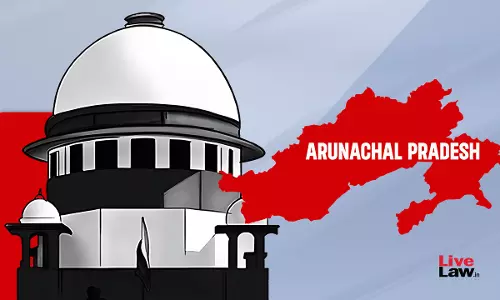
Supreme Court Exonerates Arunachal Pradesh PSC Member Mepung Tadar Bage In 2022 Paper Leak Case
The Supreme Court on Thursday (Aug. 28) exonerated Mepung Tadar Bage, a Member of the Arunachal Pradesh Public Service Commission (APPSC), of all allegations of “misbehaviour” in connection with the 2022 Assistant Engineer (Civil) mains examination paper leak. Answering the Presidential reference under Article 317(1) of the Constitution, the Court conducted a fact-finding inquiry into...

Supreme Court Asks HC To Decide If Bank Or EPFO Gets First Charge Over Defaulter's Assets
The Supreme Court has directed the Karnataka High Court to adjudicate the critical question of who holds priority over the proceeds from the sale of a defaulter's assets, the Employees' Provident Fund Organisation (EPFO), claiming provident fund dues under the Employees' Provident Funds and Miscellaneous Provisions Act, 1952 (PF Act), or secured financial creditors enforcing recovery under...
Delay In Compliance Without Wilful Intent Does Not Amount To Contempt Of Court : Supreme Court
The Supreme Court recently held that the delay in complying with the Court's direction without any willful or contumacious intent doesn't invite contempt of court. The bench of Chief Justice of India BR Gavai and Justice AG Masih heard the contempt petition filed by an ex-bank manager, against the non-compliance of the Court's order which directed the Bank to disburse the outstanding amount...