



- Home
- /
- Supreme court
- /
- Res Judicata Applies To Successive...
Res Judicata Applies To Successive Impleadment Applications Under Different CPC Provisions: Supreme Court
Yash Mittal
28 July 2026 2:23 PM IST
The Supreme Court on Monday (July 27) held that where an application for impleadment has been rejected on merits under Order I Rule 10 of the CPC, a subsequent application seeking the same relief under Order XXII Rule 10 of the CPC would be barred by the doctrine of res judicata, provided it is based on the same cause, between the same parties litigating under the same title, and is decided by...
This is a premium content
Available exclusively to
Our subscribers
Subscribe Premium 
INR 1099+GST
Your support helps us to bring you more content at
an affordable subscription scheme !!!
All payment options available
The Supreme Court on Monday (July 27) held that where an application for impleadment has been rejected on merits under Order I Rule 10 of the CPC, a subsequent application seeking the same relief under Order XXII Rule 10 of the CPC would be barred by the doctrine of res judicata, provided it is based on the same cause, between the same parties litigating under the same title, and is decided by a court of competent jurisdiction.
"Where the Order I Rule 10 application was considered and rejected on its merits i.e., the court actually examined the transferee's claim, the genuineness/bona fides of the transfer, and the nature of the interest, and that order was not appealed or reviewed, a second application under Order XXII Rule 10 raising the claim based on the same transfer, same interest, same facts would ordinarily be barred by the principles of res judicata as issue has been decided on merits and attained finality.”, the Court observed.
The Court, however, clarified the bar of res judicata would not be applicable on a subsequent application for an impleadment, when the rejection of an earlier application “…was on a technical or procedural ground without an adjudication on the merits of the transferee's interest, or there is a fresh devolution or assignment after the rejection of an application under Order I Rule 10, giving rise to a distinct cause not earlier considered, or when the earlier order is itself under challenge and has not attained finality.”
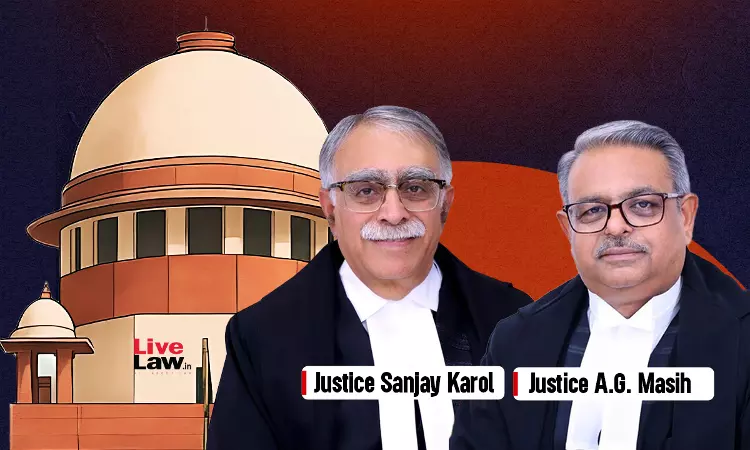
A bench comprising of Justice Sanjay Karol and Justice Augustine George Masih heard the case where the Appellant was aggrieved by the part of the Punjab and Haryana High Court's judgment which had allowed the impleadment of the Respondents in two different proceedings i.e., the main appeals and cross-objections preferred by the Appellant, by allowing the Respondents application under Order XXII Rule 10 CPC, despite their earlier application filed under Order I Rule 10 CPC seeking impleadment in main appeal was dismissed on merits.
The dispute arose from a long-pending property litigation involving rival claims over property left behind by Girdhari Lal. During the pendency of the proceedings, two purchasers acquired part of the property through a registered sale deed and sought to be impleaded in the litigation. Their earlier application under Order I Rule 10 of the Code of Civil Procedure (CPC) had been dismissed by the High Court in 2000. Years later, after the main appeal had been dismissed for non-prosecution and the cross-objections alone were restored, the purchasers again sought impleadment under Order XXII Rule 10 CPC. The High Court allowed their plea, and restored the main appeal as well.
The Appellant in the Supreme Court contended that the subsequent application filed by the Respondents under Order XXII Rule 10 CPC was nothing but reagitating of the identical relief of impleadment sought in an earlier application under Order I Rule 10 CPC, based upon the same registered sale deed executed in their favour.
Finding force in the Appellant's contention, the judgment authored by Justice Masih observed that the High Court erred in allowing the Respondent's subsequent application under Order XXII Rule 10 CPC seeking impleadment in the main appeals, ignoring the fact that the same was a reagitation of the identical relief of impleadment sought in an earlier application under Order I Rule 10 CPC.
“The record reveals that the subsequent purchasers had previously sought an identical relief of impleadment under Order I Rule 10 of the CPC, predicated upon the same registered sale deed executed in their favour. The right to seek substitution or impleadment, if any under Order XXII Rule 10 of the CPC, had squarely accrued and was triggered at the time of filing the initial application. Therefore, in the present case, the remedies under Order I Rule 10 and Order XXII Rule 10 are overlapping as they are addressing the same underlying question as to whether a person who has acquired an interest pendente lite should be brought on record. They are not different causes of action; rather they are different procedural doors to the same relief.”, the court observed.
“Consequently, the underlying issue regarding the subsequent buyer's right to be impleaded on the strength of the said title was earlier directly and substantially in issue between the same parties, litigating under the same title, before a court of competent jurisdiction, and was conclusively decided against them. The subsequent application under Order XXII Rule 10 of the CPC is nothing but a re-agitation of a settled issue under a different statutory provision, which is impermissible and hit by the principles of res judicata.”, the Court added.
However, the Court upheld the High Court's decision insofar as it permitted the respondents to be impleaded in the cross-objections under Order XXII Rule 10 CPC, holding that the earlier dismissal of their application under Order I Rule 10 CPC for impleadment in the main appeal did not bar their impleadment in the cross-objections.
“…as noted above the earlier application under Order I Rule 10 of the CPC was filed for impleadment in the main appeal only and not in the cross-objections. Therefore, the principle of res judicata will not apply qua the application filed under Order XXII Rule 10 of the CPC in the cross-objections preferred by the Appellant.”, the Court observed.
In terms of the aforesaid, the appeal was partly allowed.
Headnote
Civil Procedure Code, 1908 (CPC) - Section 11 & Explanation IV – Res Judicata – Interlocutory Orders – Erroneous Findings of Fact - The doctrine of res judicata applies to subsequent stages of the same proceeding if a question or issue has been decided at an earlier stage - An judicial decision, whether right or wrong, binds the parties unless it relates to a matter of jurisdiction - Where an earlier application for impleadment under Order I Rule 10 CPC was adjudicated and dismissed on merits, the findings carry binding effect upon the parties even if based upon an erroneous consideration of facts. [Relied on Mathura Prasad Bajoo Jaiswal v. Dossibai N.B. Jeejeebhoy, (1970) 1 SCC 613; State of West Bengal v. Hemant Kumar Bhattacharjee, 1962 SCC OnLine SC 319; S. Ramachandra Rao v. S. Nagabhushana Rao, (2024) 17 SCC 361; Dr. Shah Faesal v. Union of India, (2020) 4 SCC 1; Sulthan Said Ibrahim v. Prakasan, 2025 SCC OnLine SC 1218; Distinguished on Allahabad Development Authority v. Nasiruzzaman, (1996) 6 SCC 424]
Order I Rule 10, Order XXII Rule 10 & Section 146 – Impleadment vs. Devolution of Interest – Constructive Res Judicata - Although Order I Rule 10 CPC (joinder of proper/necessary parties ab initio) and Order XXII Rule 10 CPC (devolution of interest pendente lite) govern distinct situations, their procedural scope overlaps when determining whether a transferee pendente lite should be brought on record - Once an application for impleadment under Order I Rule 10 CPC filed by a transferee pendente lite is conclusively decided on merits against them, a subsequent application under Order XXII Rule 10 CPC predicated upon the exact same registered sale deed and interest is barred by the principles of res judicata - Litigants cannot re-agitate a settled issue merely by switching the specific statutory provision. [Relied on Sulthan Said Ibrahim v. Prakasan, 2025 SCC OnLine SC 1218; B.S. Lalitha v. Bhuvanesh, 2026 SCC OnLine SC 860]
Order XXII Rule 10 & Section 146 – Transferee Pendente Lite – Impleadment in Cross-Objections – Fresh Cause of Action - The bar of res judicata does not extend to proceedings/cross-objections where no prior application for impleadment was instituted - Where the main appeal is dismissed for non-prosecution and the transferors fail/refuse to seek its restoration while the opposing party restores the cross-objections concerning the assigned suit property, a material change in circumstances and a fresh cause of action arises - Since the transferor loses interest and the threat of collusion exists, the transferee pendente lite is entitled to be impleaded under Order XXII Rule 10 CPC to safeguard their acquired rights in the cross-objections. [Relied on: Thomson Press (India) Ltd. v. Nanak Builders and Investors Pvt. Ltd., (2013) 5 SCC 397; Amit Kumar Shaw v. Farida Khatoon, (2005) 11 SCC 403; Paras 27-38]
Cause Title: SANJIV KUMAR VERSUS SHAKUNTLA DEVI AND OTHERS
Citation : 2026 LiveLaw (SC) 726
Click here to download judgment
Appearance:
For Petitioner(s) : Mr. Rajive Bhalla, Sr. Adv. Mr. Yash, Adv. Mr. Damanjeet Singh Sangar, Adv. Mrs. Gauri Bedi, Adv. Mr. Amitoj Bir Singh, Adv. Ms. Neha Verma, Adv. Mr. Rohit Pandey, Adv. Mr. Shubham Bhalla, AOR
For Respondent(s) :Mr. Sumeet Mahajan, Sr. Adv. Mr. Chritarth Palli, AOR Mr. Saksham Mahajan, Adv.
Tags

Yash Mittal
Yash Mittal is a Correspondent with LiveLaw, covering the Supreme Court of India

