




Supreme court
Supreme Court Daily Round-Up : October 9, 2026
Links to the reports of October 9 :'Shocking' : Supreme Court Questions MP High Court For Reducing Murder Conviction In Cryptic & Casual MannerSupreme Court Orders Integration Of Digital Portals On Road Accidents To Curb Fake ClaimsVictim Also Has Right To Seek Speedy Trial Like Accused : Supreme Court'We Are Conscious' : Supreme Court To Consider Plea To Prioritise SIR-Deleted Voters' Appeals Ahead Of Kolkata, Howrah Municipal ElectionsSupreme Court Dismisses Andhra Pradesh Govt Plea...
Once Prima Facie Existence Of Arbitration Agreement Shown, Dispute Must Be Referred To Arbitration : Supreme Court
The Supreme Court has held that once the prima facie existence of an arbitration agreement is established before a referral court, it ought to appoint an arbitrator and refer the parties to arbitration, reiterating that judicial scrutiny at the stage of referring disputes to arbitration is limited.A bench of Chief Justice of India Surya Kant, Justice Joymalya Bagchi and Justice V. Mohana observed that Section 11(6-A) of the Arbitration and Conciliation Act, 1996, mandates minimal judicial...
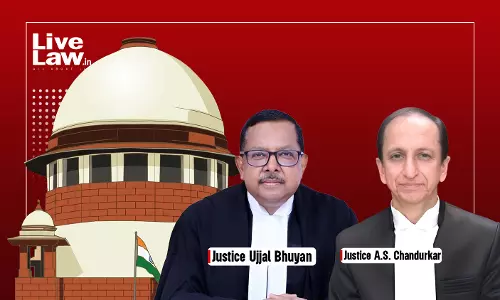
Victim Also Has Right To Seek Speedy Trial Like Accused : Supreme Court
The Supreme Court has held that a victim of an offence has the locus standi to approach the High Court seeking expeditious disposal of a criminal trial, ruling that the right to a speedy trial is not the exclusive prerogative of the accused but is equally available to the victim.A Bench of Justice Ujjal Bhuyan and Justice Atul S. Chandurkar set aside a Delhi High Court order that had dismissed a complainant's petition seeking an expedited trial as frivolous and imposed costs of ₹10,000 on her....
Supreme Court Daily Round-Up : October 8, 2026
Links to the reports of October 8 : 'ASI Lost Credibility': Supreme Court Lambasts Agency After Lodhi-Era Monument Found Used As Cow Shed, Dumping YardFreebies To Doctors : Supreme Court Asks Union To Form Committee To Recommend Regulations On Pharma Marketing PracticesSupreme Court Adjourns Punjab Plea Challenging CBI Probe Against CM Bhagwant Mann's OSD Till TomorrowIf Breakup Ends Up...
Procedural Violation Will Not Vitiate Seizure But Can Affect Evidentiary Value : Supreme Court
"The burden of proving a valid seizure of the articles is on the prosecution"
Proof Of Robbery Or Attempted Robbery Essential Component For Conviction Under S. 394 IPC : Supreme Court
The Supreme Court on Wednesday (October 7) held that a conviction under Section 394 IPC / Section 309 (6) of BNS cannot be sustained unless it is proved that robbery or an attempt to rob took place. “The robbery or attempted robbery is not at all a peripheral circumstance and is rather an essential component of the offense.”, observed a bench of Justice Prashant Kumar Mishra and...
Delhi Women Safety | Supreme Court Orders To Step Up Police Patrol, Verify Cab-Bus Drivers & Close Unauthorised Liquor Outlets
In the suo motu case on recent rape incidents in Delhi-NCR, the Supreme Court has on Monday (October 05) directed the Delhi Police, the local administration and the Transport Department to take immediate preventive measures. The directions include enhanced beat patrolling, strict verification of public transport drivers, and action against unauthorised liquor shops.A bench of Justice JB...
If Breakup Ends Up With Suicide, It Cannot Always Be Termed Abetment To Suicide : Supreme Court
Refusal to marry must be accompanied by intention or knowledge to drive a woman to suicide, the Court said.
Freebies To Doctors : Supreme Court Asks Union To Form Committee To Recommend Regulations On Pharma Marketing Practices
The Supreme Court today directed the Union of India to constitute a committee to recommend statutory regulations to curb unethical marketing practices by pharmaceutical companies."The committee will consider the suggestions and representations and give its recommendations to the Union. The matter is directed to be listed on 29th January for consideration of compliance affidavit by the Union,"...
Supreme Court Daily Round-Up : October 7, 2026
Links to the reports of October 7, 2026 :Shiv Sena Row | ECI's Symbol Allotment May Have To Be Revisited If Speaker's Refusal To Disqualify Is Found Erroneous, Says Supreme CourtMarks In Exam Cannot Cure Lack Of Essential Qualification Under Recruitment Rules: Supreme CourtSupreme Court Rebukes UP Govt For Not Paying Pension To Retired Peon For 10 Years, Calls For Chief Secretary's...
Supreme Court Quashes Cheating Case Over Unpaid Steel Dues, Calls Criminal Cases In Civil Disputes An Abuse Of Process Of Law
The Supreme Court has recently quashed a criminal case for cheating against two company directors, holding that the complainant's grievance over unpaid dues was civil in nature and that he had misused criminal proceedings to recover money.A bench of Justice Ujjal Bhuyan and Justice Atul S Chandurkar held so while setting aside the Gujarat High Court's order, which had discharged the appellants...

Income Tax | Subsidy Can Become Taxable Depending On Purpose Test : Supreme Court
The Supreme Court on Wednesday (October 7) held that an electricity subsidy calculated based on power charges incurred by an industrial undertaking is a revenue receipt liable to tax when it is intended to reduce operational costs rather than contribute to capital investment. A bench of Justice Prashant Kumar Mishra and Justice Shree Chandrashekhar dismissed an appeal filed by an...