


Tax
Activity Of “Chilling Of Milk” Is A Service, Leviable To Service Tax: CESTAT
The New Delhi Bench of Customs, Excise, and Service Tax Appellate Tribunal (CESTAT) has stated that activity of chilling of milk is leviable to service tax. The Bench of Binu Tamta (Judicial Member) and P.V. Subba Rao (Technical Member) has observed that “the activity of chilling of milk during the post negative period amounts to rendering 'services' as defined in section 65B...

NRI's Entitled To Benefits Provided To 'Eligible Passengers' Under 2016 Baggage Rules: Delhi High Court
The Delhi High Court has held that a non-resident Indian is fully entitled to the benefit provided to an “eligible passenger” under the Baggage Rules, 2016 for the purposes of Customs on arrival to India.Eligible passenger was defined by the Finance Ministry via a Notification dated June 30, 2017, to mean a passenger of Indian origin or a passenger holding a valid Indian passport, coming...
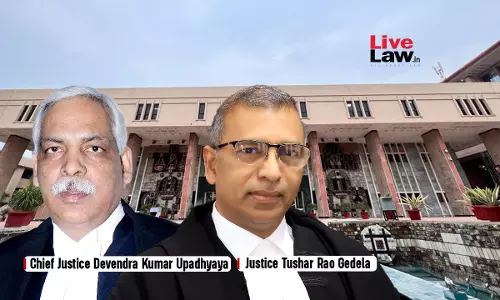
'Proof Beyond Reasonable Doubt' Is A Principle Of Criminal Law, Not Applicable To Tax Law: Delhi High Court
The Delhi High Court has made it clear that the principle of 'proof beyond reasonable doubt' cannot be made applicable to Section 148 of the Income Tax Act, 1961 which enables an assessing officer to open an assessment if he has 'reason to believe' that an assessee's income escaped assessment.A division bench of Chief Justice Devendra Kumar Upadhyaya and Justice Tushar Rao Gedela observed,...
Transfer Pricing | 'Resale Price Method' Most Appropriate To Determine ALP Where Distributor Makes No Value Addition To Imported Products: Delhi HC
The Delhi High Court has made it clear that where the distributor of an imported product makes no value addition to it before sale, Resale Price Method is the most appropriate method to determine the arm's length price in relation to its business with an Associated Enterprise.A division bench of Chief Justice Devendra Kumar Upadhyaya and Justice Tushar Rao Gedela thus dismissed the...

Notification Cannot Be Given Retrospective Effect To Deny Refund On Unutilised ITC Claimed Within Limitation Period: Madras HC Allows Gillette's Plea
Finding that the refund claim was filed within two years from the “relevant date” as defined in Explanation 2(a) to Section 54(14) of CGST Act , the Madras High Court recently clarified that a refund claim cannot be denied on the basis of retrospective operation of the Proviso to Rule 90(3) pf the CGST Rules.The High Court clarified this upon finding that the refund claims filed in the...

Delhi High Court Slams Directorate General Of Foreign Trade For Cancelling Trader's DEPB License 15 Yrs After SCN Was Issued
The Delhi High Court recently quashed a Directorate General of Foreign Trade (DGFT) communication cancelling the license issued to a trader involved in import and export of goods, citing almost fifteen years delay in culminating the show cause notice.Justice Sachin Datta cited Vos Technologies India Pvt. Ltd. v. The Principal Additional Director General & Anr. (2024) where the Delhi...
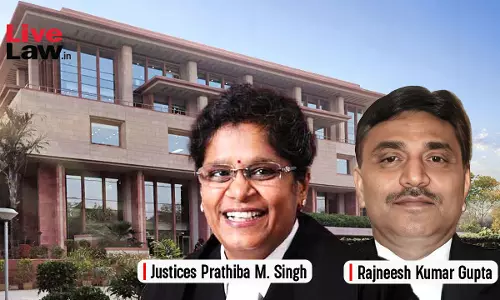
Delhi High Court To Examine Scope Of Customs Jurisdiction Under E-Cigarettes Act After Seizure Of "De-Addiction" Devices
The Delhi High Court is set to examine the extent of jurisdiction which can be exercised by the Customs Department under the Prohibition of Electronic Cigarettes (Production, Manufacture, Import, Transport, Sale, Distribution, Storage and Advertisement) Act, 2019.A division bench of Justices Prathiba M. Singh and Rajneesh Kumar Gupta have sought the authority's response on a private...

Retracted Statement Can't Be Termed As Incriminating Material, No Addition Can Be Made In Respect Of Completed Assessment: Gauhati High Court
The Gauhati High Court stated that retracted statement cannot be termed as incriminating material and no addition can be made in respect of completed assessment. The Commissioner of Income Tax (Appeals) and the ITAT were of the view that the said piece of evidence, i.e. retracted statement cannot be termed as incriminating material, noted the Division Bench of Chief...
Assessees Claim For ITC Cannot Be Denied For Being Disadvantageous To State Exchequer: Karnataka HC Clarifies Principles On Input Tax Credit Claims
The Karnataka High Court while laying down vital guidelines on Input Tax Credit stated that if the Assessee during the course of reassessment proceedings makes a claim for Input Tax Credit, the same cannot be disallowed only on the ground that the claim of the Assessee is disadvantageous to the State Exchequer. The Division Bench of Justices Krishna S Dixit and G....
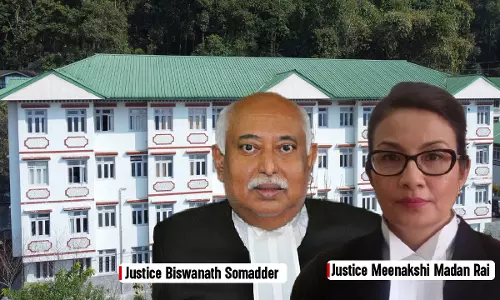
Expansion Of Definition Of 'Sikkimese' In S.10(26AAA) Of Income Tax Act Doesn't Affect Rights Of Indigenous People: Sikkim High Court
The Sikkim High Court has upheld the constitutional validity of the definition 'Sikkimese' under the Income Tax Act, which was slightly expanded by way of an amendment in terms of the Finance Act, 2023.A division bench of Chief Justice Biswanath Somadder and Justice Meenakshi Madan Rai upheld the vires of Explanation (v) contained under clause (26AAA) of section 10 of the Income Tax Act,...
Tax Weekly Round-Up: March 10 - March 16, 2025
HIGH COURTSAndhra Pradesh HCNotice Under Rule 142(1)(A) Of CGST Rules Must Be Issued Before Issuing Proper SCN: Andhra Pradesh High CourtCase Title: Sri Durga Granites v. The Deputy Assistant Commissioner and OthersCase Number: W.P.Nos.3480 & 6504 of 2020The Andhra Pradesh High Court stated that a notice under Rule 142(1)(A) of CGST Rules must be issued before issuing proper show...

Customs Dept Repeatedly Told To Serve Notices, Orders On Assessee Via Email: Delhi High Court Seeks Compliance
The Delhi High Court has asked the Customs Department to scrupulously comply with its “repeated” direction to serve notices, orders on an assessee under the Customs Act, 1962 via email.Traditionally, correspondence related to any violation of the Act is made via post. However, with advent of technology and to avoid delays, Court had in Bonanza Enterprises vs. The Assistant Commissioner...