



- Home
- /
- Top Stories
- /
- Law Does Not Favour The Indolent:...
Law Does Not Favour The Indolent: Supreme Court Sets Aside Arbitration Initiated After 21-Year Delay
Amisha Shrivastava
14 April 2026 4:28 PM IST
The Supreme Court recently quashed arbitration proceedings between the State of West Bengal and a contractor, holding that the claim was ex facie time barred as the notice invoking arbitration was issued after 21 years from completion of work.“Arbitration though is an alternate dispute resolution system, which has to be encouraged, it cannot deviate from the fundamental principle that...
This is a premium content
Available exclusively to
Our subscribers
Subscribe Premium 
INR 1099+GST
Your support helps us to bring you more content at
an affordable subscription scheme !!!
All payment options available
The Supreme Court recently quashed arbitration proceedings between the State of West Bengal and a contractor, holding that the claim was ex facie time barred as the notice invoking arbitration was issued after 21 years from completion of work.
“Arbitration though is an alternate dispute resolution system, which has to be encouraged, it cannot deviate from the fundamental principle that law favours the diligent and not the indolent”, the Court said.
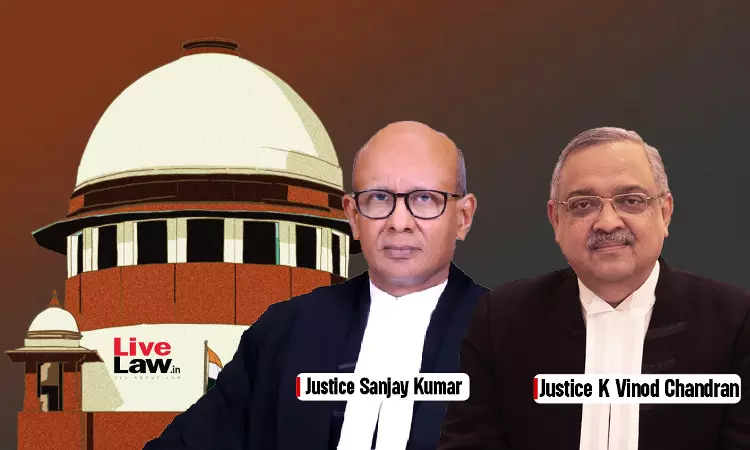
A bench of Justice Sanjay Kumar and Justice K. Vinod Chandran was dealing with a dispute arising from a contract where the work had been completed on July 30, 2000. The contractor issued a notice seeking commencement of arbitration only on June 02, 2022.
The Calcutta High Court, while exercising powers under Section 11 of the Arbitration and Conciliation Act, 1996, found ambiguity in a clause of the agreement.
It held that since the Engineer-in-Charge did not issue a certificate determining the final amount payable and only a part payment was reflected in a communication dated January 04, 2001, the dispute could still be referred to arbitration. It also held that limitation would not bar the claim because final measurement and determination had not taken place.
The state appealed the decision before the Supreme Court. The Supreme Court examined the principles laid down in Arif Azim Company Limited v. Aptech Limited, where it was held that the Limitation Act, 1963 applies to arbitration proceedings, and Article 137 applies to applications for appointment of arbitrator under Section 11(6).
The Court noted that while limitation for filing a Section 11 petition is three years from expiry of 30 days after receipt of notice invoking arbitration, the limitation for the substantive claim is distinct and must also be satisfied. Referring to earlier precedents, the Supreme Court reiterated that courts must prima facie reject dead claims to prevent parties from being drawn into time-consuming arbitration.
The Court held that in the present case, there was no need for any detailed evidentiary inquiry. After the communication dated January 04, 2001, the contractor took no steps for 21 years before issuing the arbitration notice.
“However, in the present case there is no intricate evidentiary inquiry to be done. After Annexure P9 of 04.01.2001, whether it be the interim determination of dues or not, the appellant slept over its claim for 21 years before the notice seeking arbitration was issued on 02.06.2022; an ex-facie dead claim”, the Court said.
The Court further held that arbitration, though encouraged as an alternate dispute resolution mechanism, cannot override the principles of limitation. It noted that Section 43 of the Arbitration Act applies the Limitation Act to arbitration proceedings, and for recovery of money, Article 18 of the Limitation Act prescribes a limitation period of three years.
The Court rejected the High Court's reasoning that failure of the Engineer-in-Charge to determine the final bill extended limitation. It held that if such failure existed, the contractor should have invoked arbitration at that time. The contractor neither raised a final bill nor issued any notice invoking arbitration until 2022.
Holding that there was no reason to sustain the order initiating arbitration, the Court set aside the High Court's order.
Headnote
Arbitration and Conciliation Act, 1996; Section 11(6) and Section 43 — Limitation Act, 1963; Article 137 and Article 18 — Appointment of Arbitrator — Dead Claims — The period of limitation for filing a petition seeking appointment of an arbitrator cannot be conflated with the limitation period applicable to the substantive claims under the underlying contract - While Courts must generally leave intricate evidentiary inquiries regarding limitation to the Arbitrator, they have a duty to prima facie examine and reject "dead claims" that are ex-facie and hopelessly time-barred to protect parties from costly and frivolous arbitration. [Paras 4, 5, 6]
Arbitration and Conciliation Act, 1996; Section 21 — Commencement of Proceedings — Arbitration proceedings commence on the date the request for initiation of arbitration is received by the respondent - Where a contractor completes work in July 2000 but issues the notice seeking arbitration only in June 2022 (after 21 years), the claim is hopelessly time-barred under the Limitation Act - The failure of the Engineer-in-Charge to issue a final measurement certificate does not indefinitely extend the limitation period; the contractor is expected to be diligent and initiate arbitration within the prescribed three-year period from the accrual of the cause of action. [Relied on Arif Azim Company Limited v. Aptech Limited (2024) 5 SCC 313; Vishram Varu and Company v. Union of India (2023) 12 SCC 588; Bharat Sanchar Nigam Limited and Anr. v. Nortel Networks India Private Limited (2021) 5 SCC 738; Aslam Ismail Khan Deshmukh v. ASAP Fluids Private Limited (2025) 1 SCC 502; Paras 6, 7]
Case no. – Civil Appeal No.4320 of 2026
Case Title – State of West Bengal & Ors. v. M/S B.B.M. Enterprises
Citation : 2026 LiveLaw (SC) 369
Tags

Amisha Shrivastava
Amisha Shrivastava is a Senior Correspondent with LiveLaw, covering the Supreme Court of India. She can be reached at amisha@livelaw.in

