Lawyers' Body Moves Supreme Court; Says Protests Cannot Paralyse Delhi, Impede Lawyers' Livelihood
Nupur Thapliyal
11 Oct 2026 4:21 PM IST
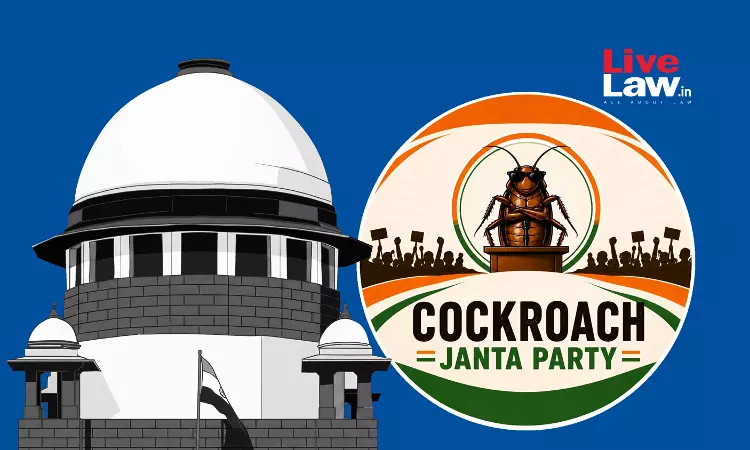
A lawyers' body has moved the Supreme Court alleging that successive demonstrations by Cockroach Janta Party (CJP) in Delhi are aimed at attracting media attention and are disrupting the livelihood and professional functioning of advocates.
The plea has been filed by Lawyers Voice seeking permission to intervene in contempt proceedings arising out of a plea concerning protests called by CJP.
The contempt plea alleges that metro services in the national capital remained substantially shut on October 10 despite the Court's earlier order that metro and rail services in the capital can be regulated, but not stopped.
In its intervention application filed today, Lawyers' Voice has urged the Apex Court to issue appropriate directions to ensure that the right to protest is exercised within the bounds of law and does not paralyse the national capital or infringe the fundamental rights of others.
The intervenor, represented through its Secretary Neeraj, has submitted that the livelihood of its members depends on the smooth and uninterrupted functioning of courts and the free movement of lawyers, litigants and court staff across Delhi.


It has alleged that prolonged protests restricting public spaces, roads and metro connectivity directly affect the professional rights of practising advocates.
The application acknowledges that the right to protest is a fundamental right enabling individuals and groups to express grievances against governmental action or inaction. However, it contends that the right is neither absolute nor unrestricted and cannot be exercised in a manner that holds the national capital hostage.
“Dissent is an integral part of democracy, but the manner of protest must remain within the bounds of law,” the application states.
Lawyers' Voice has alleged that the CJP has been organising successive protests primarily to capture media attention, remain politically relevant and push the system towards a state of disorder.
Referring to the party's recent call for a protest demanding the resignation of Chief Election Commissioner Gyanesh Kumar, the application has contended that grievances concerning the verification of election records must be pursued through established statutory and constitutional remedies.
It has further stated that the issue is sub judice and that any person or political party aggrieved by the matter is free to approach the appropriate forum in accordance with law.
The application states that on October 09, the police communicated that the proposed protest was not permitted and informed the organisers that Section 163 of the Bharatiya Nagarik Suraksha Sanhita, 2023, was in force.
According to the lawyers' body, the organisers were expected to call off the protest and disperse, with the responsibility for maintaining law and order resting primarily with the administration and police authorities.
Referring to media reports, the application claims that approximately 7,000 persons were detained to prevent an unauthorised protest and were released by late evening. It alleges that the protest continued despite these measures.
“Large-scale deployment of police and paramilitary forces, erection of barricades, disruption of metro services, and the virtual shutdown of the city are back in the National Capital again. All these measures directly impede the free movement of lawyers and litigants and thereby cause serious prejudice to the livelihood and professional functioning of the members of the Applicant-Intervenor,” the plea states.
Lawyers' Voice has thus stated that it seeks to place before the Top Court the difficulties faced by practising advocates due to the alleged disruption of public movement and access to courts.
The application has been filed through Advocate-on-Record Shoumendu Mukherji.
Earlier today, the Supreme Court, in special Sunday sitting, directed that there shall be no detention of any person except in accordance with the procedure established by law, particularly with respect to any assembly of peaceful and unarmed persons beyond the area where Section 163 of BNSS prohibitory orders are in operation.
It further directed that metro and rail facilities shall function normally unless restrictions are required to be imposed keeping in mind disturbances to public order, as contemplated under Article 19(2) of the Constitution of India.