'One Community Being Appeased' : Ex-CJI Gavai Writes To President Complaining Of Lack Of Diversity In Judges' Appointments
Amisha Shrivastava
27 Nov 2026 1:45 PM IST
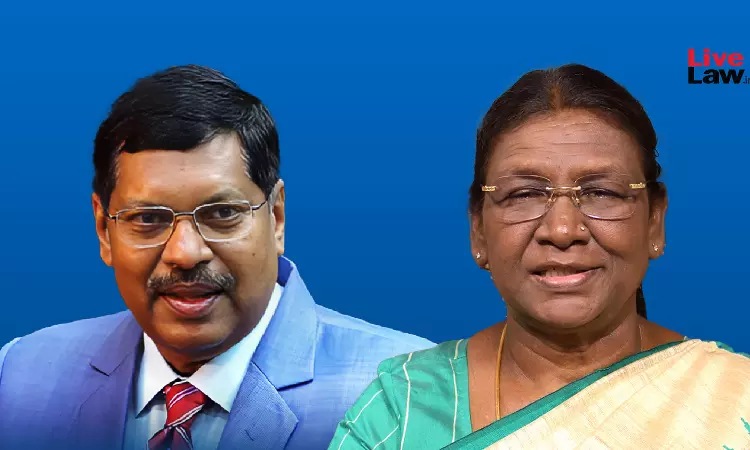
A community constituting less than five per cent of the country's population has secured over 40 per cent representation in the Supreme Court in the recent past, the ex-CJI said.
Former Chief Justice of India BR Gavai has written to President Droupadi Murmu expressing concern over “a growing disregard for diversity, inclusion and merit in judicial appointments and transfers”, alleging that recent collegium recommendations increasingly favour a particular community at the cost of representation of marginalised groups.
Gavai has urged the President to intervene in the matter, stating that the developments warrant remedial measures by all stakeholders, including the executive, Parliament and the judiciary.
He has claimed that preference is being given to one community in appointments to the Supreme Court, saying that "a community constituting less than five per cent of the country's population has secured over 40 per cent representation in the Supreme Court in the recent past."
The former CJI has said that during his tenure in the collegium, he consistently followed principles of diversity and inclusion while considering candidates for elevation to the High Courts and the Supreme Court. He said adequate representation was sought for various sections of society, including Scheduled Castes, Scheduled Tribes, Other Backward Classes, minorities, women and persons from forward communities.


However, recent developments have given rise to a perception that candidates belonging to one particular section are being favoured for judicial appointments, to the exclusion of other communities, including marginalised groups and women, he has said.
“However, in the recent past disturbing events have unfolded, showing complete disregard to principles of merit and inclusivity. Candidates belonging to one particular section of the society are being favoured for recommendation/elevation to the exclusion of everyone else including marginalized communities including scheduled casts, tribes, other backward classes, minorities, women and even persons from forward sections of the society who are not from a particular community. I may not be misunderstood as being opposed to any section of the society in so far as the candidate belonging to forward section are duly considered and my endeavour has always been to strike balance between all the sections. However, now there compelling circumstances which support the perception that increasingly recommendations are being made with a focus on appeasing and rewarding a single community”, he has said.
In the letter, Justice Gavai has referred to data cited by Union Law Minister Arjun Ram Meghwal in the Rajya Sabha in March 2025, according to which, of the 715 High Court judges appointed since 2018, 22 belonged to Scheduled Castes, 16 to Scheduled Tribes, 89 to Other Backward Classes and 37 to minorities. He has noted that roughly three out of every four appointees came from the general category.
Gavai has further cited figures concerning appointments between January 2021 and January 2026, observing that the share of judges belonging to forward communities was close to 80 per cent, while representation of Other Backward Classes may have been around 40 to 50 per cent of the population but had received less than 14 per cent representation among appointments.
Referring to a study by Professor George Gadbois on the Supreme Court's first four decades, Gavai has highlighted that a community constituting about one-nineteenth of the population held over a third of Supreme Court judgeships between 1950 and 1989. He has said that the profile of the Court has changed little over the years, partly because of persistent social networks, familiarity and unexamined notions of who "looks like" a Supreme Court judge.
Recent transfers and elevation recommendations questioned
The former CJI has also raised concerns over recent judicial transfers and appointments, citing two instances which he says have raised questions about the weight given to merit and other factors in collegium decisions.
“Even in the case of recent recommendation of transfer from one high court to another high court there is a perception that merit has been ignored and other similar factors have weighed in”, he has said.
He has referred to a recommendation involving a Chief Justice who was transferred from a High Court to another smaller High Court and was subsequently recommended for appointment as Chief Justice of a prominent High Court. Justice Gavai has highlighted that, at the same time, a meritorious and hard-working Chief Justice was transferred to a smaller High Court to make way for the appointment.
He has said he was part of the collegium that had recommended the first Chief Justice's transfer to a smaller High Court and had subsequently headed the collegium when the transfer recommendation was made.
“I am aware of the factors that prevailed at the relevant time with the collegium for recommending such an appointment/transfer. However, on account of propriety and judicial disciple I refrain from divulging these reasons”, he has stated in the letter.
He also referred to another instance, claiming that a judge was transferred from his parent High Court to another High Court on what Gavai described as punitive considerations, and was subsequently rewarded with appointment as Chief Justice of a large and prominent High Court.
“In another instance, a judge was transferred from his parent high court to another high court on punitive consideration and was subsequently rewarded by appointment as Chief Justice of a large and a prominent High Court”, the letter states.
Justice Gavai has sought the President's intervention, pointing out that Article 124(2) of the Constitution vests the appointment of Supreme Court judges in the President, while judicial convention developed over several decades has made collegium recommendations decisive in the process.
“Therefore, I am constrained to voice my dissent and disappointment as evidently appointments and transfers are being done in complete disregard to ethos of diversity, inclusion and merits taking into consideration other irrelevant factors.”
He has stressed that the collegium's influence in the appointment process does not make it unaccountable, and the President's office has a constitutional responsibility to preserve and defend the Constitution.
Acknowledging that the executive and Parliament are also stakeholders in judicial appointments and transfers, Gavai has highlighted that the executive and legislature have in the past proactively requested the collegium and High Courts to consider candidates from marginalised sections of society to restore balance in representation.
He has urged President Murmu to acknowledge the issue and intervene, as she may deem appropriate, to ensure that constitutional duties concerning equal representation are fulfilled in the judiciary.