



Right To Protest Cannot Be Abolished For Students; Peaceful Dharna Is Not Grammar Of Anarchy: Ex-HC Judge K Babu
LIVELAW NEWS NETWORK
11 Nov 2026 8:50 PM IST
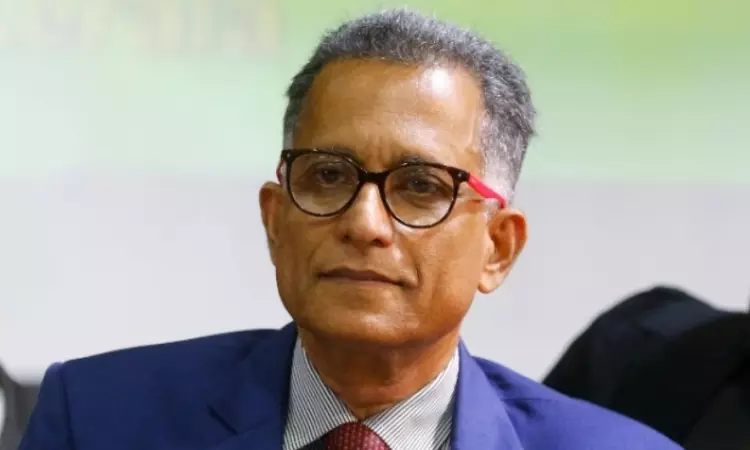
“Expulsion should never be the price of a peaceful protest,” he said.
The right to protest cannot be abolished for students, and a peaceful dharna is not the “grammar of anarchy”, former Kerala High Court Judge Justice K Babu has said, emphasising that peaceful dissent is an integral part of constitutional democracy.
“A peaceful dharna is not the grammar of anarchy. It is the grammar of Article 19,” Justice K. Babu said.
He was delivering an address at the International Conference on Digital Threats & Gender Justice organised by Mar Gregorios College of Law, Thiruvananthapuram, on November 11.
Babu, presently a Senior Advocate at the Supreme Court, was referring to a recent Division Bench judgment of the Kerala High Court, which, while setting aside an interim order concerning suspended students of the Sree Sankaracharya University of Sanskrit at Kalady, reiterated an observation that political activities such as dharna, hunger strikes and satyagraha have no place in a constitutional democracy, much less in academic institutions.


The observation was originally made by another Division Bench in 2017 in Dr. Antony Thomas v. V.M. Muhammed Rafique.
Since the Kalady University students matter is sub judice, Babu refrained from commenting on the factual merits of the case. However, he said the constitutional principle concerning the right to peaceful protest deserved open examination.
“With the deepest respect, I wish to submit why I believe that students must have the right to protest peacefully if our democracy is to remain fruitful,” he said.
Ambedkar's 'Grammar Of Anarchy' Warning Does Not Bar Peaceful Protest
Referring to Dr. B.R. Ambedkar's closing speech in the Constituent Assembly on November 25, 1949, he said Ambedkar's warning against the “grammar of anarchy” was directed at unconstitutional methods of struggle when constitutional avenues were available.
He argued that peaceful assembly, petition and demonstration were themselves constitutional methods and could not be equated with anarchy.
Contextualising Dr Amedkar's speech, which was quoted by the Kerala High Court, he said :
"In the same speech, Dr. Ambedkar warned us against something else: against laying our liberties at the feet of even a great man, and against a political democracy that does not rest on social democracy. He wanted citizens who think for themselves. A student who sits quietly in protest against an unfair fee, a broken hostel or an injustice to a classmate is doing precisely what Dr. Ambedkar hoped free Indians would do."
Article 19(1)(a) of the Constitution guarantees freedom of speech and expression, while Article 19(1)(b) guarantees the right to assemble peaceably and without arms, he noted.
Justice K. Babu also referred to several Supreme Court judgments recognising the right to peaceful protest, including Kameshwar Prasad v. State of Bihar (1962), Ramlila Maidan Incident (2012), Mazdoor Kisan Shakti Sangathan v. Union of India (2018) and Amit Sahni v. Commissioner of Police (2020).
While the manner of protest could be regulated to protect public order and the rights of others, the right itself could not be abolished, he said.
“The right itself cannot be abolished, and certainly not for an entire class of citizens because they happen to be students,” he said.
Six Philosophical Arguments In Support Of Student Protests
He outlined six philosophical arguments in support of the right to protest.
The first argument concerned power and consent. He said established institutions often seek to make existing arrangements appear natural and inevitable, with educational institutions potentially becoming instruments of obedience rather than independent thought. A student who peacefully questions authority, he said, performs the highest function of education.
The second argument concerned history and inheritance. Students inherit institutions, fees and rules that they did not design or determine. Peaceful protest, he said, enables them to participate in reshaping the order they inherit.
The third argument concerned the true measure of freedom. He said freedom was meaningful only when it extended to those who disagreed with authority.
“Freedom is always, above all, freedom for the one who thinks differently,” he observed, adding that an authority's tolerance of dissent demonstrated its commitment to liberty.
The fourth argument concerned the complacency of a comfortable society. He said a prosperous and well-managed society could gradually lose its ability to imagine anything better, with young people often being the ones who continue to challenge injustice.
The fifth argument concerned the legitimacy of the State. A constitutional democracy, he said, derived its authority from open public reasoning among free and equal citizens. Principled, non-violent dissent was therefore a test of the State's maturity, while its inability to tolerate peaceful protest reflected fear.
The sixth argument concerned the nature of education itself. Education was a process of dialogue rather than the passive depositing of facts into students' minds. Dialogue was impossible if one side was prohibited from disagreeing. Even mistaken dissent, he said, served the cause of truth by forcing it to defend itself.
“When thinkers who begin from opposite premises arrive at the same destination, we should take that destination seriously,” he said.
He emphasised that dissent was not a disease of democracy, but its immune system.
'Democracy Needs Young People Who Have Practised Dissent Responsibly'
He stressed that universities were not merely institutions for transmitting information, but spaces where citizens were shaped.
“A democracy needs young people who have practised dissent responsibly, in an institution that respected them enough to listen,” he said.
He also referred to the Supreme Court's judgment in Bijoe Emmanuel v. State of Kerala (1986), in which the Court protected the rights of schoolchildren who respectfully declined to sing the National Anthem on religious grounds.
Quoting Justice O. Chinnappa Reddy's observation in the case, Justice K. Babu said:
“Our tradition teaches tolerance; our philosophy preaches tolerance; our Constitution practices tolerance; let us not dilute it.”
Referring to the role of student movements in India's freedom struggle and during the Emergency, he said generations of students had contributed to the country's political and social life.
While acknowledging that campus politics had its excesses, Babu said the solution was better expression, fairer rules and firm action against actual wrongdoing, rather than the abolition of expression.
Babu outlined the balance that educational institutions should maintain between the right to protest and the rights of other students.
Protests, he said, must remain peaceful and non-violent and should not prevent other students from attending classes or writing examinations, or involve threats, confinement or assault of teachers and officers.
Institutions, in turn, should provide designated spaces and times for assembly, effective grievance redressal mechanisms, elected student bodies and a willingness to listen to students.
Disciplinary action, he said, must follow principles of natural justice and be proportionate to the misconduct proved, rather than the student's ideology or the inconvenience caused by dissent.
“Expulsion should never be the price of a peaceful protest,” Justice K. Babu said.
Concluding his address, he urged students to exercise their right to protest with restraint and dignity, while cautioning against attempts to portray peaceful dissent as anti-democratic.
“The right to protest is not a licence; it is a responsibility,” he said.
“A democracy that cannot bear the peaceful voice of its own students will one day find that it cannot bear any voice at all,” he added.


