Supreme Court Issues Notice On Manoj Jha's Plea Challenging Lifetime Immunity To CEC, Says No More Petition Be Filed
Amisha Shrivastava
4 Nov 2026 6:17 PM IST
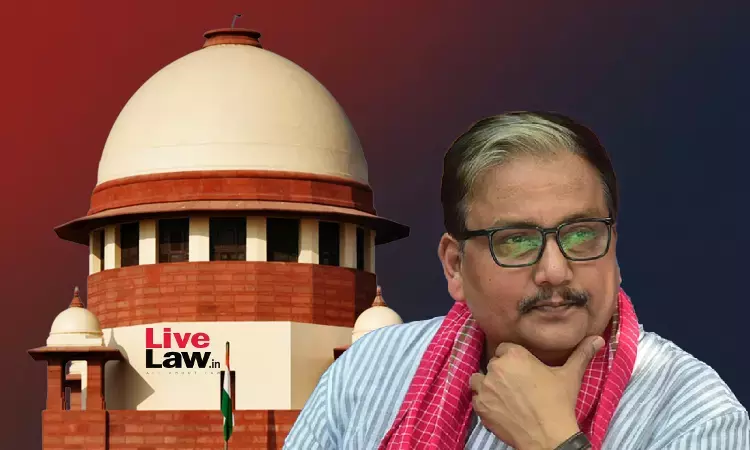
The Supreme Court on Wednesday issued notice on petitions filed by RJD MP Manoj Kumar Jha and activist-advocate Arun Agrawal challenging the constitutional validity of Section 16 of the Chief Election Commissioner and Other Election Commissioners (Appointment, Conditions of Service and Term of Office) Act, 2023, which grants civil and criminal immunity to the Chief Election Commissioner (CEC) and Election Commissioners for acts done in the discharge of official duties.
Section 16 bars courts from entertaining or continuing civil or criminal proceedings against any person who is or was a CEC or Election Commissioner for any act, thing or word committed, done or spoken in the course of acting or purporting to act in discharge of official duties.
The petitions contend that Section 16 is unconstitutional and void for being violative of Articles 14, 21, 32, 129, 215, 226 and 324 of the Constitution.


A bench of Chief Justice of India Surya Kant, Justice Joymalya Bagchi and Justice Mohana issued notice and tagged the petitions with the pending challenge filed by NGO Lok Prahari. The matters have been listed for hearing on December 18.
During the hearing, the CJI discouraged filing of multiple petitions raising substantially similar issues, observing that repeated filings delay the completion of pleadings and divert the Court's attention from the principal challenge.
“Our only request is that now stop filing petitions otherwise pleadings will never get complete. No need to file more cases because all the points are exhaustively taken. We will never get a chance to concentrate on the main issue,” the CJI remarked.
He said that if a genuinely important point had been missed in the existing petition, a fresh petition could be considered. However, he suggested that seeking impleadment in the pending proceedings and raising the additional issue could be an alternative.
“We will not stop anyone but repeating the same...We hope bar members can be persuaded to avoid that, otherwise it will delay the main issue” the CJI said.
Section 16 'fraud' on Constitution: Manoj Jha's plea
Jha's petition terms Section 16 a "fraud" on the Constitution, arguing that it confers an unprecedented, lifelong immunity on election commissioners through an ordinary statute.
Jha contends that the immunity is wider than protections granted to the President, Governors, legislators or judges of constitutional courts. He argues that Article 324 does not contemplate such protection and that Parliament cannot use its power to prescribe conditions of service to place election commissioners beyond judicial scrutiny for their lifetime.
The petition also alleges that Section 16 was introduced through an official amendment shortly before Parliament passed the 2023 legislation, without adequate scrutiny or public consultation. It further argues that the provision substantially copies the Judges (Protection) Act, 1985, while omitting safeguards that preserve the power of constitutional courts and the government to initiate proceedings against judges.
Advocate Fauzia Shakil appeared for Jha.
Agrawal's petition similarly argues that the Constitution does not grant such absolute immunity even to the President, legislators or judges of constitutional courts. It contends that the tenure of Election Commissioners is already protected and there is no justification for granting them blanket immunity from accountability. The petition argues that the provision takes away civil and criminal remedies from voters, candidates and other citizens aggrieved by alleged wrongdoing by election commissioners.
Advocate Neha Rathi appeared for Agrawal.
Earlier challenges by Lok Prahari and ADR
The Supreme Court is already seized of challenges to Section 16 filed by Lok Prahari and the Association for Democratic Reforms (ADR).
In January 2026, the Court issued notice on Lok Prahari's petition, which contends that such lifelong immunity could not have been granted within the constitutional scheme.
Lok Prahari has earlier argued that Article 324 does not elevate the Election Commission to a position beyond the law and the impugned provision grants the CEC and Election Commissioners unprecedented immunity not even available to the President and Governors.
It has also highlighted that Section 16 was absent from the original Bill and was introduced at the last minute, despite the legislation being defended as one enacted under Article 324(2), which concerns the appointment of the CEC and Election Commissioners.
In January, Lok Prahari sought an interim stay of the provision, citing continuing irreparable harm to the cause of free and fair elections. The Court declined to stay Section 16 at that stage but issued notice on whether such immunity could be granted within the constitutional framework.
The Court issued notice on ADR's petition challenging the constitutional validity of Section 16 on October 13, 2026. ADR has sought revival of civil and criminal proceedings against serving and former Election Commissioners that were brought to an end following the provision's enactment.