''Is There An Undeclared Emergency?': Sr Adv Menaka Guruswamy Flags Mass Detentions; Reminds Supreme Court Of ADM Jabalpur Verdict
Debby Jain
11 Oct 2026 10:10 PM IST
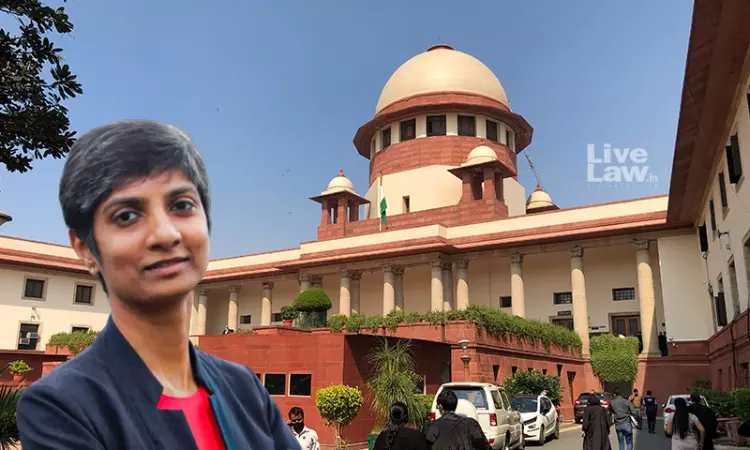
During the hearing of the CEC protest matter, Senior Advocate Menaka Guruswamy today alleged several fundamental rights' violations by police authorities and questioned whether the State had indirectly imposed an undeclared Emergency.
The senior counsel reminded the court of its decades-old ADM Jabalpur decision, while relying on other judicial precedents which ruled that Article 19 rights, such as freedom of speech and expression, can be restricted only during an Emergency.
"The Constitution says in Article 358 that Article 19 rights can be restricted only in the case when an Emergency is imposed. Is the State saying that they have brought in an un-imposed Emergency? In the past, there were judgments passed that only in case of Emergency, Article 19 rights can be suspended. You are assembled here today because something graver is at stake. Suspension of citizens' right to peacefully protest. The last time the Court had to consider such challenges was at the time of Emergency. We come back 50 years later - your lordships had (then) passed ADM Jabalpur" Guruswamy said before a bench of Justice Joymalya Bagchi and Justice V Mohana.


She was arguing the habeas corpus petition filed by her challenging the detentions carried out by the Delhi police, especially of political leaders, during the protests against the Chief Election Commissioner.
The ADM Jabalpur case allowed the suspension of writ of habeas corpus during the 1975 Emergency imposed under Prime Minister Indira Gandhi. During this period, political leaders and activists were detained under the MISA (Maintenance of Internal Security Act). A Constitution Bench of the Supreme Court, by 4:1 majority, ruled that during Emergency, no person had the locus standi to move a Court for enforcement of fundamental right under Article 21. Justice HR Khanna, who is known for his dissent in the case, opined that right to life and liberty was a standalone right, which they could not be stripped off without the authority of law. This dissent is known to have costed Justice Khanna Chief-Justiceship.
Among other things, Guruswamy urged that it was not 'just' for the State to have disrupted metro services (thereby affecting the ability to move across the city), suspend internet, detain about 7000 people without providing official numbers, etc. She pointed to reports that about 45 detention centres had been setup across the capital ahead of the protest, while atleast 3 former Chief Ministers were picked up from their houses and several MPs barricaded in their houses.
"Young people have decided to lawfully protest, because they feel election system is not fair. Habeas is the classic relief [in such cases]. When we filed, we were not aware of the magnitude of detention, as internet was not working", she urged.
Ultimately, the Court issued notice on the habeas corpus petition filed by her in connection with the protest to secure the rights of all - not just "known personalities".
Also from the hearing - CEC Protest: Supreme Court Directs No Illegal Detention Of Peaceful Protesters, Normal Metro & Rail Services, Free Movement, Undisturbed Internet