




Trending
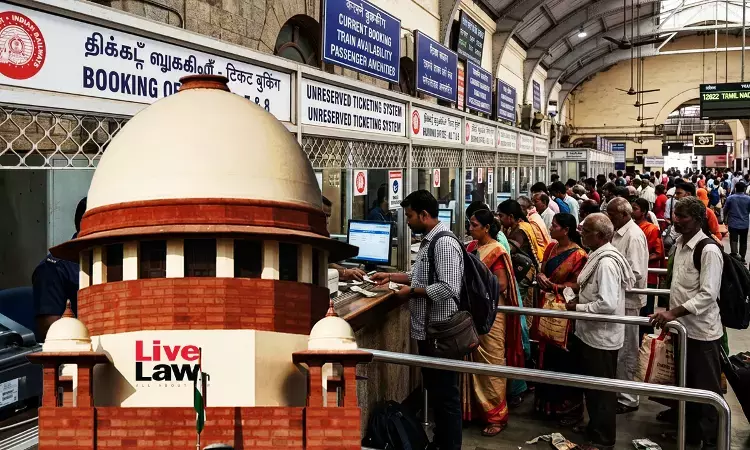
Give Insurance Cover To Tickets Sold Over Counter Like Online Tickets : Supreme Court Directs Railways
In a significant case, the Supreme Court has ordered Indian Railways to provide insurance coverage to tickets purchased at the railway reservation counters within two weeks, with effect from October 27. It said the insurance coverage should be the same as when tickets are purchased online. A bench comprising Justice Ahsanuddhin Amanullah and Justice R. Mahadevan passed this order while hearing...
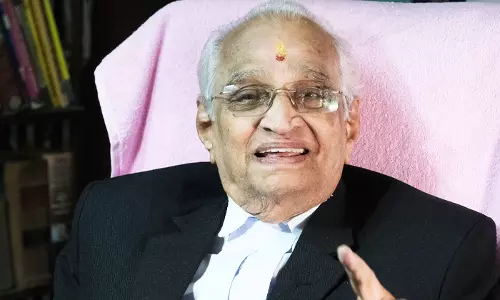
Kerala High Court Designates Longest-Serving Lawyer And Guinness World Record Holder P.B. Menon As Senior Advocate
The Kerala High Court on Monday (October 11) designated Guinness World Record holding lawyer P.B. Menon as a senior advocate with effect from October 12.The notification reads thus:"In exercise of the powers conferred by Section 16(2) of the Advocates Act, 1961 (Central Act 25 of 1961) read with Rule 2 of the High Court of Kerala (Designation of Senior Advocates) Rules, 2026, the Honorable...
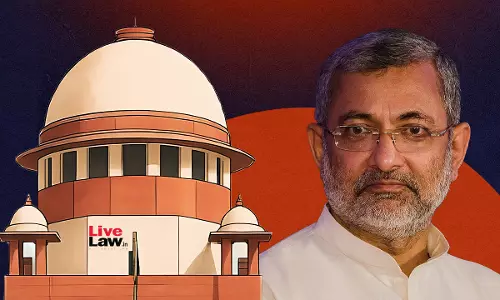
'Watchdog Must Bite If Barking Doesn't Work': Justice Kurian Joseph On Supreme Court's Role As Guardian Of Constitution
Former Supreme Court judge Justice Kurian Joseph today emphasised that constitutional courts, particularly the Supreme Court, must act as watchdogs of the Constitution and intervene when constitutional vision is threatened.“The barking dog seldom bites. But this barking dog, the custodian, the watchdog, the guardian is bound to bite also if the barking does not lead to the desired...
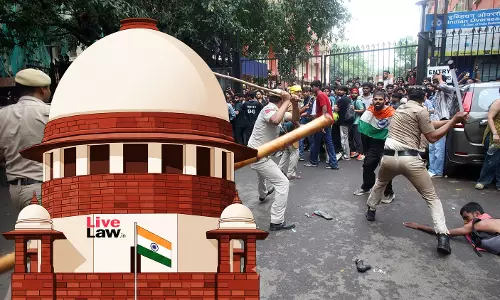
July Student Protests: Complaints Portal Ready For Launch, High-Powered Enquiry Committee Tells Supreme Court
The High-Powered Enquiry Committee constituted by the Supreme Court to inquire into allegations pertaining to violence during the Gen Z Protests in July, over NEET-Paper Leak and other education system irregularities, has informed the Court that the complaints portal is ready for launch. After launch of the portal, public notices would be published in major newspapers to widely announce...
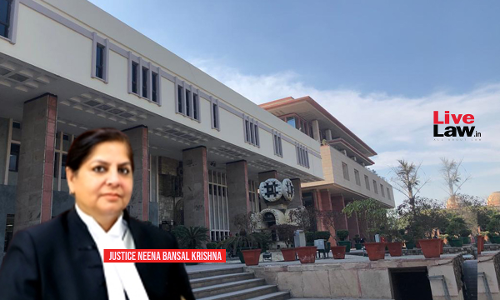
Father-In-Law Has 'Pious Obligation' To Maintain Widowed Daughter-In-Law If She Can't Maintain Herself: Delhi High Court
The Delhi High Court has held that a father-in-law has a “pious obligation” to maintain his widowed daughter-in-law if she is unable to maintain herself from her own earnings, property or the estate of her deceased husband.Justice Neena Bansal Krishna observed that the statutory scheme under the Hindu Adoptions and Maintenance Act, 1956 (HAMA) recognises a widowed daughter-in-law as a...

LiveLaw Himachal Pradesh High Court Monthly Digest : September 2026
Himachal Pradesh High Court Strikes Down State Rules On VC Appointments In Agricultural Universities, Says UGC Regulations PrevailCase Name: Narender Kumar Sankhyan, Sanjeev Kumar Sankhyan v/s State of H.P. & Ors.Citation:2026 LiveLaw (HP) 109The Himachal Pradesh High Court has struck down provisions of the State's amended Universities Act governing the appointment of...
LiveLaw Delhi High Court Weekly Round-Up: October 05 To October 10, 2026
Citations 2026 LiveLaw (Del) 959 to 2026 LiveLaw (Del) 990NOMINAL INDEXZUBER ALI v. UNION OF INDIA AND ANR 2026 LiveLaw (Del) 959 SHAIKH MUJTABA FAROOQ & ORS v. UNION OF INDIA & ORS and other connected matters 2026 LiveLaw (Del) 960 MS. PRIYA SAHANI @ POOJA & ORS v. THE STATE (NCT OF DELHI) & ORS 2026 LiveLaw (Del) 961 ABHAY GUPTA v. UNION OF INDIA & ORS 2026 LiveLaw...
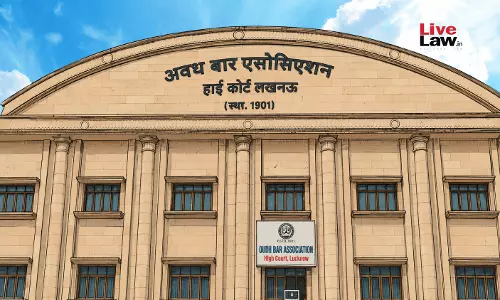
'Oudh Bar Must Lead By Example In Democratic Conduct': Allahabad High Court Calls For Free, Fair & Peaceful Bar Elections
Elections to bar bodies must reflect the highest standards of integrity, fairness and transparency : HC said
Juvenile's Bail Cannot Be Rejected With Mere Liberty To Renew Plea After 6 Months Without Change In Circumstances: Patna High Court
The Patna High Court has held that a Children Court cannot reject a juvenile's bail application while merely giving him liberty to renew the application after six months if the trial has not concluded, observing that such an approach is not permissible under the Juvenile Justice (Care and Protection of Children) Act, 2015.A Single Judge Bench of Justice Jitendra Kumar was hearing an appeal...

2026 LiveLaw (SC) 1046 | ORISSA RURAL HOUSING DEVELOPMENT CORPORATION LTD. VERSUS THE ASST. COMMISSIONER OF INCOME TAX & ORS.
Income Tax | Fresh Claim Cannot Be Raised Before Revisional Authority Without Timely Revised Return : Supreme...

Income Tax | Fresh Claim Cannot Be Raised Before Revisional Authority Without Timely Revised Return : Supreme Court
The Supreme Court has held that a fresh claim before the Revisional authority cannot be filed by the assessee without filing a revised return in accordance with law. A bench of Justice Prashant Kumar Mishra and Justice Shree Chandrashekhar dismissed an assessee's plea against the Orissa High Court's decision to uphold the income tax authority's decision to decline the fresh claim of...
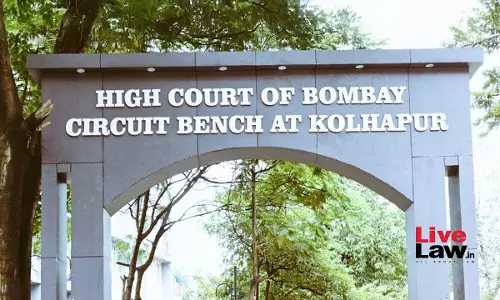
Asking Daughter-In-Law To Do Household Chores Like Washing Clothes, Utensils Is Not Cruelty U/S 498A IPC: Bombay High Court
In-laws asking daughter-in-law to do household chores like washing clothes and utensils would not amount to cruelty under section 498-A of the Indian Penal Code (IPC) and they cannot be prosecuted on this allegation, held the Bombay High Court while quashing FIR against six members of a family. Sitting at the Kolhapur seat, single-judge Justice Abhay Mantri noted the allegation made by...