




Articles

Healthcare Reforms And Insurance Law- Judicial Analysis
Recent healthcare and regulatory reforms in India have fundamentally reshaped the legal landscape for health insurance providers by curtailing insurer discretion, expanding mandatory coverage obligations, and enforcing strict procedural compliance. Rooted in the constitutional expansion of the right to health under Article 21 of the Constitution of India and executed through statutory mandates under the Insurance Act, 1938 and the Insurance Regulatory and Development Authority Act, 1999 (IRDAI...

Institutionalizing Trust: Role Of Arbitration Council Of India
In lieu of the writ petition filed by the Anil Kalyandas Thanvi, the Supreme Court of India has sought a response from the Central Government regarding the establishment of an Arbitration Council of India (ACI). Although the provision for the establishment of said Council is provided for by the 2019 Amendment to the Arbitration and Conciliation Act, 1996, six years have passed without any affirmative action in this direction. The petition draws our attention to the lapses and issues that exist...

Was She “Victim” Enough? Perfect Victim Myth In Indian Rape Trials
On August 6, 2026, the Bombay High Court overturned the trial court's decision in State of Goa vs Tarunjit Tejpal 2026 LiveLaw (Bom) 366 and found Tarunjit Tejpal guilty of rape. This decision was based on new evidence rather than outdated beliefs. The trial court had judged the survivor's credibility using an unspoken standard: a woman who does not fight back, leaves the attack scene instead of staying, and struggles to cope in the days that follow. Justice Gokhale labeled this standard a myth,...

When Artificial Intelligence Becomes Witness: Who Bears Responsibility For AI-Generated Evidence?
Testifying from memory, documents, or expert opinion have long been accepted as types of evidence in court. The third category is generated by AI — a product that resembles testimony, reads like a document and is confident of being an authority, but isn't in the law. A facial recognition match, a predictive policing risk score, a detection report of the ability to clone a voice, AI-generated CCTV footage and a generative reconstruction of a crime scene are increasingly being arresting items in...
Governance Challenges Under Proposed CIIRP Framework
The Insolvency and Bankruptcy Code, 2016 (“IBC”) was conceived as a time-bound, creditor-driven mechanism to preserve enterprise value and impose market discipline on distressed firms. Over time, however, the functioning of the Corporate Insolvency Resolution Process (“CIRP”) has revealed structural stress. Admission delays, repeated adjournments, litigation at every stage, and information asymmetry between creditors and debtors have diluted the promise of speed. Empirical data published by the...
Can Magistrate Suo Motu Order Investigation Or Further Investigations Under Section 175 BNSS?
UNLIKE SECTION 156 (3) OF THE NOW REPEALED Cr.P.C., THERE IS NO GENERAL POWER AVAILABLE TO THE MAGISTRATE TO SUO MOTU ORDER “INVESTIGATION” OR “FURTHER INVESTIGATION' UNDER SECTION 175 OR ANY OTHER PROVISION IN THE BNSS For a better comprehension of the matter, it is necessary to examine the two provisions in the Cr.P.C as well as BNSS.Cr.P.C, 1973BNSS, 2023Section 156 - Police officer's power to investigate cognizable cases (1) Any officer in charge of a police station may, without the...
Has Section 193(9) BNSS Changed Law On Further Investigation?
The power of the police to conduct further investigation after filing a police report has long occupied an uneasy space between investigative autonomy and judicial control. Section 173(8) of the Code of Criminal Procedure, 1973 (CrPC) expressly preserved the power of further investigation even after a report under Section 173(2) had been submitted. Yet the provision did not require prior permission of the Magistrate. Over time, the Supreme Court supplied that safeguard judicially. Section 193(9)...

From Checkbox To Control: Operationalising Consent Under DPDP Act
As companies prepare for the full implementation of the Digital Personal Data Protection Act, 2023 (“DPDP Act”), one dimension that is frequently underestimated in this preparation is consent management. The common assumption is that a Data Fiduciary - the organisation that determines why and how personal data is processed - has fulfilled its obligation to obtain the user's consent once the user clicks 'I Agree' on the concerned privacy notice. However, that is just the start of the data...

When Acquittal Isn't Really Acquittal: Section 300 CrPC And Second Cheque-Bounce Complaint
Under the Indian legal system, every law student learns Sec. 300(1) of the Code of Criminal Procedure (CrPC) , 1973, Sec. 337 of the Bhartiya Nagarik Suraksha Sanhita, 2023 (BNSS) almost as an article of faith. Once a person has been acquitted or convicted by a competent court, he cannot, subject to the statutory conditions, be tried again for the same offence. The doctrines of autrefois acquit and autrefois convict are firmly entrenched in our criminal jurisprudence, with Article 20(2) of the...
What Ails Our Democracy
India is a constitutional democracy governed by a written constitution with a parliamentary system of government. 79 years after we won our freedom and over 76 years since the Constitution came into force, it is appropriate and essential to reflect upon how we have worked our democracy and its most vital institution, Parliament.Democracy may be defined as the dwelling place which man has built for the spirit of liberty. It is founded on the principle that every person has equal value. What we...
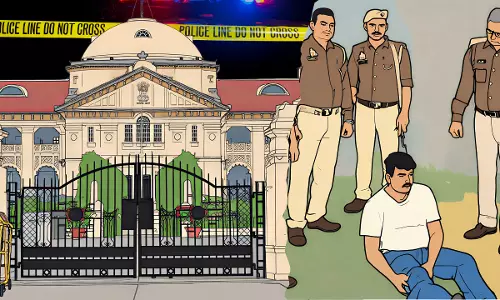
How Allahabad High Court Has Been Exposing UP Police's Encounter Narratives
Recently, the versions presented by the UP Police to justify encounters failed to pass judicial scrutiny.
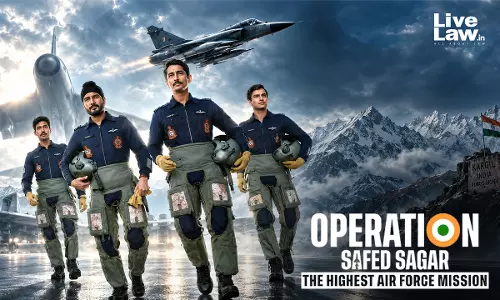
Operation Safed Sagar -Untold Courage Behind Kargil's Skies
The 1999 Kargil War remains etched in the Indian consciousness as a saga of raw, unyielding grit. For decades, the public memory of that conflict has been dominated by the iconic, harrowing images of Indian Army soldiers scrambling up near vertical Himalaya's exposed mountain faces under a continuous rain of enemy fire. The Indian Air Force's extraordinary contribution from the skies, codenamed Operation Safed Sagar, was a decisive force multiplier that altered the trajectory of the war....