




Articles

Your Name Is On Bank's Screen Before You Say Hello: What DPDPA Says About Call-Centre Data
A practical guide for banks on consent, caller data and purpose limitation under the DPDPALet's start with a scenario. Rohan is thinking of applying for a personal loan. He finds a toll-free number on a bank's website, dials it, and within three rings, the call connects. Before he even asks his first question, his mobile number has been captured and if he is an existing customer, his name may already be visible on the agent's screen. If not, the agent may key it in as the call begins. Nobody...

From Data Privacy To Mental Privacy: What UNESCO's Neurotechnology Recommendation Means For India
On 11 November 2025, The 43rd session of UNESCO's General Conference, which took place at Samarkand, adopted the Recommendation on the Ethics of Neurotechnology for the first time at the global level, thereby recognising neural data and data capable of enabling inferences about mental states and which requires heightened protection. Two days later, India's Ministry of Electronics and Information Technology notified the Digital Personal Data Protection Rules, 2025, finally giving operative shape,...
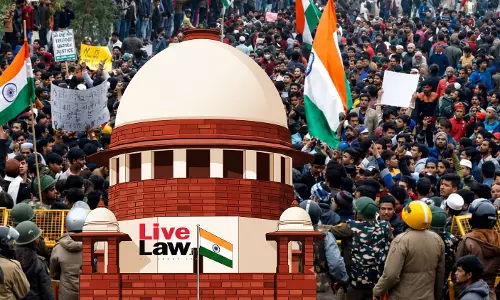
India Needs Law For Protest, Not Law Against Protest
Constitutional ProtectionA citizen can be arrested for a great many things in India. Peacefully standing at Jantar Mantar with a placard should not, in law, be one of them. Peaceful protest enjoys constitutional protection. It flows from Article 19(1)(a) (free speech and expression), and 19(1)(b) (the freedom to assemble peaceably and unarmed), both qualified by the reasonable restrictions under Articles 19(2) and 19(3).The Supreme Court has affirmed this repeatedly. In Ramlila Maidan Incident,...

Who Is A Law Teacher?
During 2000s, many wittingly used to say that in India, 'those who cannot do anything, do law'. Where the popular aspirations of law students were either judiciary or litigation- corporate, or advocacy with a family support, no one willingly opted for teaching law. It would be difficult to imagine anyone who studies law by choice ,without an exposure to the glory of law visualised through a red beacon car in movies, or name plate bearing cars in reality. If one chooses law, it would further be...
Aid Of Third Parties In Inspecting Documents Under RTI Act
Recently, in Vala Jodhubhai Golanbhai v. RTI Officer,[1] the Gujarat High Court (“GHC”) has held that it is impermissible for an information seeker under the Right to Information Act, 2005 (“Act”) to be accompanied by third parties during the inspection of documents accessed through the Act. In the case, the nature of the application filed under the Act necessitated the applicant's inspection of bulky records to cull out the information they desired. Since the applicant was not conversant with...
Examining Bar Council's Role: Profession, Pedagogy And Dual Mandate
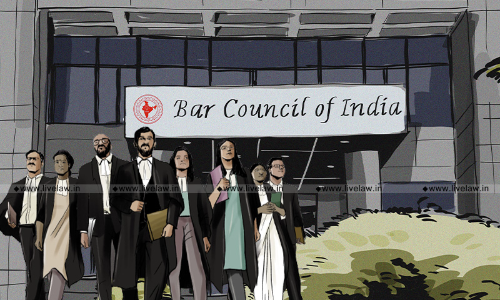
In the wake of the recent controversy created by the Bar Council of India, which imposed a blanket ban on the 2026 batch of NALSAR University, withdrew it within an hour, and later apologised to the students, there are calls for a larger enquiry. Do we need a Bar Council? The Bar Council of India, constituted under the Advocates Act of 1961, discharges dual functions: on one hand, regulation and supervision over the legal profession and, on the other, regulatory control over legal education. But...

Punitive & Stigmatic Termination Of Temporary And Probationary Employees
What most attracts our general populace to government jobs is job security, in other words, Right to Hold the Post. A permanent government employee has a right to hold the post and cannot be removed or dismissed without following the procedure prescribed in Article 311(2) of the Constitution of India, 1950. Such employees can only be removed or discharged, when the post is abolished or he or she is declared to be guilty of misconduct, negligence or inefficiency that too after carrying out...
Undermining The Law
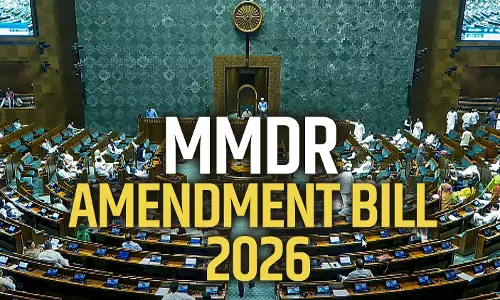
On 17th August this year, the President gave assent to the Mines and Minerals (Development and Regulation) Amendment Act, 2026,[1] and with it the Parliament completed what can fairly be called a rescue operation. It was an attempt to claw back ground the Union lost in the Supreme Court's mineral royalty verdict of July 2024. The Bill had cleared both Houses on 13th August, with remarkably little of the sustained public debate that a reordering of Centre-State fiscal power might be expected to...

Glorifying Duty Amidst Administrative Accountability: Eroded Baseline Of Indian Governance
The recent news reports across Maharashtra have been dominated by headlines of senior IAS officer Tukaram Mundhe for his aggressive stand- “Safe Food, Safe Maharashtra.” Mundhe as the Commissioner of Food Safety, surfaced to fanhood followed by surprise raids across Mumbai and neighboring districts. News headlines have showcased the zeal as "heroic" interventions by the Commissioner. While the strict enforcement of food safety standards is undeniably vital for public health, but the nation's...

Eighteen Billion Dollars And An Empty Chair: Meta's Settlement And Global South's Missing Leverage
On Wednesday, Meta agreed to pay somewhere between $16 and $18 billion, the exact figure depends on which filing you read and how you count the contingent tranches, to settle claims brought by a coalition of roughly fifty-one US state attorneys general who accused the company of designing Facebook and Instagram to hook teenagers, mine their data, and lie about what it knew while doing so. It is, by a wide margin, the largest settlement any social media company has ever paid over harm to...
Caste Insult Behind Closed Doors: Meaning Of 'Place Within Public View' Under SC/ST Act”
The Supreme Court on August 20, 2026, quashed proceedings under Section 3(1)(r) and 3(1)(s) of the Scheduled Castes and the Scheduled Tribes (Prevention of Atrocities) Act. 1989 (SC/ST Act). Once again the definition of “place within public view” under the SC/ST Act came into spotlight through this judgment. The Supreme Court has previously delineated the scope of the term “place within public view” from various judgments. But is this explanation or interpretation really achieve the ultimate...
Swadeshi Jurisprudence And Recurring Legal Fallacy In Criminal Procedure
In 'Swadeshi Jurisprudence and the Colonial Afterlife of Order XXI', published in LiveLaw, it is observed that we have been handed a bamboo pole and told to dance upon it, and that we labour only at the dancing, falling and rising and adjusting our steps, each generation of practitioners trying to perform a little better than the last, but never asking whether the pole was ever a fit place to dance. Many prevalent laws and procedures exhibit the same discipline, out of which two loci classici...