




Articles
When State Defeats Its Own Case: Police Lapses, Procedural Safeguards, And Crisis Of Criminal Justice
When the State's own procedural failures begin to threaten an otherwise sustainable prosecution, the question is no longer whether constitutional safeguards are too protective of the accused. It is whether the institutions enforcing criminal law are capable of complying with the law themselves. The Raja Raghuvanshi murder case brought the constitutional question of communicating the grounds of arrest into sharp focus. The Supreme Court subsequently clarified that an inadequacy in communicating...

Section 74 Of Indian Contract Act And Its Application To Earnest Money: An Endless Saga
'Earnest money or deposit' is some amount given at the execution of the contract, which serves two purposes- (a) it acts as a guarantee that the contract will be honoured by the person who gives it and is forfeited in case he defaults; (b) it also serves as part- payment if the contract goes through. The issue which needs consideration is whether section 74 of the Indian Contract Act, 1872(ICA) is applicable to forfeiture of earnest money or not?Position of English law regarding forfeiture of...
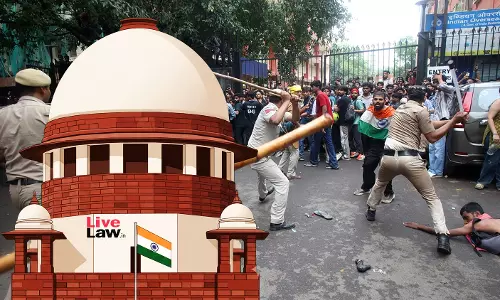
Crowd, Database And Citizen: Protest And Preventive State
What the Jantar Mantar protests reveal about citizenship, protest and the preventive StateIn a participative democracy, can the State treat protesters differently based on their criminal records, when nothing has been alleged about what they did at the protest itself? The events at Jantar Mantar in July 2026 force the question.Delhi Police registered 13 FIRs in connection with NEET protests and the events that followed. While the protest was on, facial recognition vans identified 2,873...

Sentence Without Bridle: Community Service Gaps In BNS And BNSS
Community service introduced into Indian criminal law for the first time by the Bharatiya Nyaya Sanhita, 2023 (“BNS”) was handed no such channel and the absence shows up twice once when a court decides what the punishment will require and again when a convict fails to carry it out. Read together, Section 23 of the Bharatiya Nagarik Suraksha Sanhita, 2023 (“BNSS”) and Section 8 of the BNS leave this sentence to run loose from the day it is imposed to the day it collapses with nothing resembling...

Post Facto Environmental Clearance: Whose fault Is It Anyway?
What does a 962-bed AIIMS hospital in Odisha, a greenfield airport in Karnataka and a cancer research institute in Tamil Nadu have in common? These are all infrastructure projects that commenced construction or operations without obtaining the mandatory “prior environmental clearance” under the Environment Impact Assessment (EIA) Notification, 2006. On 29 July 2026, a three-judge Bench of the Supreme Court ('SC') saved these and several other non-compliant projects from potential closure or...
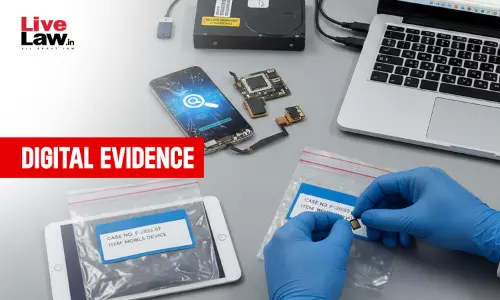
Unseen Burden Of Electronic Evidence
Today, digital evidence has changed the way criminal investigations are conducted. Mobile phones, laptops, CCTV cameras, emails, cloud storage and messaging applications have become important sources of evidence. The Bharatiya Sakshya Adhiniyam, 2023 (“BSA”) recognises electronic records as documentary evidence [Sections 2(1)(d) and 2(1)(e)] and provides a special mechanism for proving secondary electronic records u/s 63. Under Section 63(4), such records must be accompanied by a certificate in...
One Missing Judge, Many Missing Communities
On 20 August 2026, the Department of Justice notified nine advocates who will take the oath as Additional Judges of the Punjab and Haryana High Court. On 4 May, the Supreme Court Collegium had approved ten, on a list that began in the High Court collegium and carried the endorsement of every constitutional functionary consulted along the way. The nine who have taken oath deserve every good...

From Policy Deference To Disclosure: Shifting Legal Battle Over India's E20 Petrol Mandate
India does not have to borrow right to know from anywhere. Courts here have used Articles 19(1)(a) and 21 for decades to compel disclosure from manufacturers who would rather have avoided, from what a soft drink contains to whether a snack is vegetarian. The E20 controversy poses the question whether that same right reaches the fuel every vehicle owner must now buy. It rose through a dispute over what the government's own counsel had actually told the Court.During the hearing of a Special Leave...
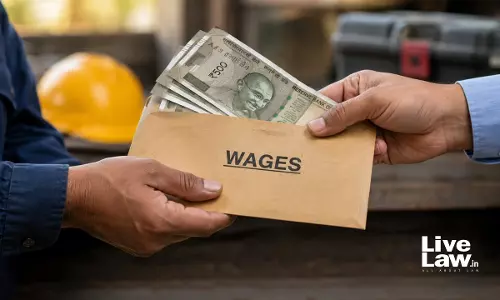
Parity In Pay
For the purpose of this article, parity in pay can be claimed for basic pay, pay scale, pay band, allowance, all of these, or just wages.Ordinarily, fixation of pay is in the domain of executive authorities, which can only be brought under the purview of judicial review if the fixation is improper, discriminatory, patently irrational, unjust and prejudicial. The courts generally approach such matters with restraint. Thus, when matters pertaining to parity in pay are entertained, the courts take...
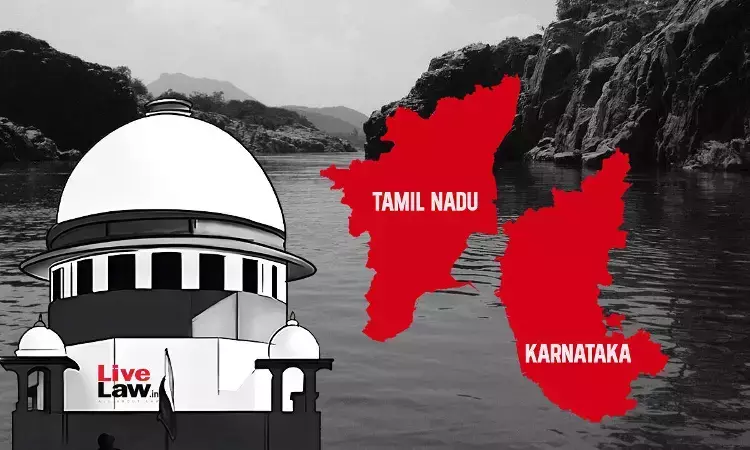
Cauvery 2026: Karnataka Owns River. Who Owns Drought?
On July 28, the Cauvery Water Regulation Committee met for the 139th time and did what such committees do in a deficient monsoon. It ordered Karnataka to release 3,500 cusecs of water a day to Tamil Nadu at Biligundlu, for fifteen days. The Cauvery Water Management Authority ratified the order two days later at an emergency sitting. Karnataka complied on paper and barely at all in practice - inflows at Biligundlu between July 29 and August 2 ranged between 158 and 550 cusecs, a fraction of what...
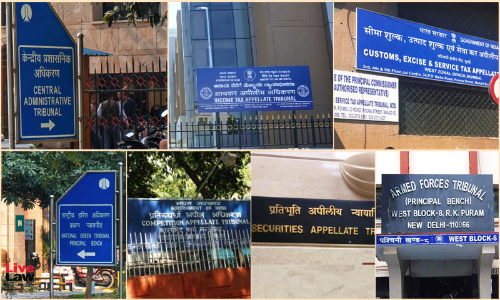
Tribunal Reform 2026: Old Wine, New Label, Same bottle?
Plus ça change, plus c'est la même chose, as the French critic Jean-Baptiste Alphonse Karr put it in Les Guêpes. The more things change, the more they remain the same. And in the case of NCLT, they haven't changed at all.There is something faintly Sisyphean about tribunal reform in India. Every few years, the Government rolls the stone up the hill, gives it a new name, changes a few provisions and sends it back down towards the Supreme Court. The bottle is old, the label is new. The real...

Digital Courts And Cyber Justice: Is India's Legal Infrastructure Ready For Future?
A litigant from a remote district could check the status of her case on her mobile phone. A lawyer from Chennai could argue in front of a bench in Delhi without getting on a plane. A law student from a small town could watch a hearing of the Constitution Bench, perhaps for the first time, without setting foot in a courtroom. None of this is incidental. It is the product of nearly two decades of meticulous planning and execution by India's judiciary and executive in one of the most ambitious...