




Articles
Tribunal Reform 2026: Old Wine, New Label, Same bottle?
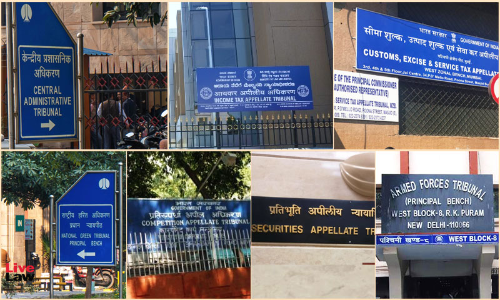
Plus ça change, plus c'est la même chose, as the French critic Jean-Baptiste Alphonse Karr put it in Les Guêpes. The more things change, the more they remain the same. And in the case of NCLT, they haven't changed at all.There is something faintly Sisyphean about tribunal reform in India. Every few years, the Government rolls the stone up the hill, gives it a new name, changes a few provisions and sends it back down towards the Supreme Court. The bottle is old, the label is new. The real...

Digital Courts And Cyber Justice: Is India's Legal Infrastructure Ready For Future?
A litigant from a remote district could check the status of her case on her mobile phone. A lawyer from Chennai could argue in front of a bench in Delhi without getting on a plane. A law student from a small town could watch a hearing of the Constitution Bench, perhaps for the first time, without setting foot in a courtroom. None of this is incidental. It is the product of nearly two decades of meticulous planning and execution by India's judiciary and executive in one of the most ambitious...
SEBI'S Proposed Settlement Regulations, 2026: Towards More Rational, Predictable And Effective Settlement Regime
The Securities and Exchange Board of India (“SEBI”) has released a consultation paper proposing a comprehensive overhaul of its settlement framework through the draft Securities and Exchange Board of India (Settlement of Proceedings) Regulations, 2026 (“Proposed Regulations”). The Proposed Regulations are intended to replace the SEBI (Settlement Proceedings) Regulations, 2018 (“2018 Regulations”) and are accompanied by a clause-by-clause list of changes and a full draft of the new...

Gender Sensitivity And Compassion In Writing Judgments
Last year, a judge in a POCSO matter asked the mother of a nine-year-old victim whether her daughter had been "playing outside unsupervised" at the time of the assault. The question was not about evidence. It was about blame. The mother understood what was being asked. So did I. The child's location was being treated as an explanation for the crime committed against her.That question would not survive the Supreme Court's new report. Whether the judge who asked it will read the report is a...
Register Or Not? Madras High Court's Long Road To Clarity Under TNRRRLT Act
'A roof over your head' has always been described as a core necessity for every individual. The importance of housing is evinced from the fact that it is judicially read into, as a fundamental right under Article 21 of the Constitution of India, and is also envisioned as directive principle of state policy, under Articles 38, 39(b) and 41 of the Constitution. Rent legislation in Tamil Nadu traces its lineage to the erstwhile Madras Presidency, where rent laws essentially emerged as an emergency...

CCTV In Hotel Restaurant Kitchens, Digital Extension Of FSS Act
Live streaming any process or event stands as a hallmark of transparency, fairness, and accountability, offering reassurance that actions are conducted directly in full view. Generally, restaurants and food establishments serve dishes designed to appear delicious and healthy. The professional appearance and uniforms of service staff further reassure consumers that food is prepared and served under strict safety and hygiene standards but in most of the cases, the picture is otherwise.The right to...

Unpacking Role Of Custodianship Over Natural Resources In Panchayats
The Economic Survey 2025-26 has addressed a policy blind spot by recognising what markets alone cannot see: the commons. It acknowledges that water bodies, grazing lands, and other assets covering nearly 15 per cent of India's geographic area are not idle, residual spaces waiting to be priced, diverted, or encroached upon. They are productive, living resources that sustain village economies and are maintained through local governance systems. This shift matters, because it reframes natural...

When Certificate Is Not Enough: Law On Reassessing Disability
Summary: The Bombay High Court has upheld the state's power to reassess disability certificates of government employees, but only as a one-time, evidence-based exercise, not a template for open-ended suspicion. This piece traces how Indian courts arrived at that balance and what it means for the people caught in between.This year, twenty-one schoolteachers in Pune were abruptly sent home. Not for any wrongdoing, but because the state demanded they prove, once again, a disability that had already...
Brahmaputra Floods: Assam's Unfinished Constitutional Promise
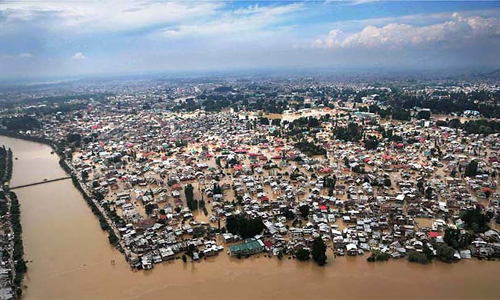
Every monsoon, the Brahmaputra Valley transforms into an inland sea, bringing an inevitable wave of devastation that struggles to capture sustained national attention. It is a common misconception that localized rainfall volume is the sole detriment of this catastrophic flooding. Indeed, the Western Ghats and regions like Meghalaya, home to Mawsynram, one of the wettest places on Earth, receive significantly higher annual precipitation than Assam. Yet, it is Assam that repeatedly bears the brunt...

Collegium Must Speak But With Institutional Restraint
Silence is not Neutral. A judge's professional life is built quietly. It is built through years spent reading records after court hours, writing judgments that may never attract headlines, resisting local pressures, and deciding causes involving liberty, livelihood and human dignity. When such a judge is considered for elevation, superseded, deferred or rejected without any publicly intelligible explanation, institutional silence can become its own form of judgment, one against which there is...
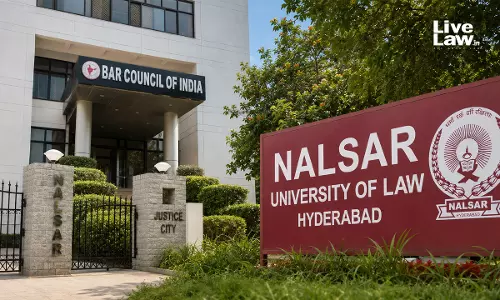
NALSAR-BCI: An Assault On Constitutional Values
Right to dissent is strongly favoured. The Supreme Court of India, in a strong stance in favour of the right to question, has heavily rebuked the Bar Council of India (BCI) for its efforts to curb the NALSAR University of Law graduates from being enrolled after their peaceful demonstration against the Chief Justice of India (CJI). A bench presided over by CJI Justice Surya Kant, which heard the petition, has expressed its dismay, stating that the BCI acting was “uncalled for”. The Court granted...

Overlooked 'Waiver Clause' In Construction Contracts And Effect Of Doctrine Of Acquiescence
In construction arbitration, one of the most routinely overlooked provisions is the Waiver Clause. Unlike standard commercial agreements, infrastructure contracts (such as NHAI Concession Agreements and EPC contracts) often prescribe strict conditions to give effect to a waiver. A standard waiver clause reads as follows:"1.1 Waiver, including partial or conditional waiver, by either Party of any default by the other Party in the observance and performance of any provision of or obligations under...