Articles

"Phishing – The Modern Day Techdemic"
With COVID-19 surmounting, there awaits something more. You may start wondering, what it is? So let me just introduce you to the new 'techdemic' that approaches us. Along with the ceaseless time came advancement which has been appreciated and facilitated all around the world, but as they say where there is a right, there is a wrong too. This global village which is connected with its internet highways enabling our access to anywhere anytime endangers our personal security by being...

Selective Activism And Public Faith In Regulators
On 24 March 2021, the Competition Commission of India passed an order that came as a shock to most Indian Competition Law enthusiasts. In a suo moto case, the Commission passed a 21-page order directing a probe into the recently updated WhatsApp privacy policy alleging it of abuse of dominance (copy of order available here). The Commission, inter alia, has recognised the competitive significance of 'non-price parameters of service like quality, customer service, innovation' etc, has taken...

Book Review – Ambedkar's Preamble
In the past decade, the ideas of Dr. Ambedkar have become the central point of debate in the political and legal corridors. These ideas of Dr. Ambedkar have aged like a fine wine, whether it be for interpretation of the Constitution or to assert a progressive thought. I see Ambedkar on two different notes: first, his struggle to ascertain legal rights in the Mahad Satyagraha. Secondly, his speech on 25 November 1949 in the Constituent Assembly emphasized giving up 'bandhs,' 'dharnas,' and...
Article 21 In Prison
What impels me to write this Article is a recent press report in Dainik Jagran which states that about 20000 bail applications are pending in Patna High Court. The bail applications filed in August -September 2020 have not yet been heard by the High Court, creating a new record of pending bail applications. Out of five working days, the High Court hears the bail applications for four days, but the number of such bail applications is not getting reduced because of fresh bail applications...
An Analysis Of Accessing High Courts During COVID Lockdown: March To August 2020
The pandemic caused by the coronavirus has seen widespread repercussions on the Indian legal system, with litigants and lawyers suffering from an almost shut down of courts across the country. Reeling from the effects of a countrywide lockdown in March 2020, which made physical hearings as well as filings difficult and extremely limited, different High Courts of India have responded to the pandemic problem differently. With this background, this article, which is the first of its...
Lt. Col. Nitisha vs Union of India: The Supreme Court Recognises Indirect Discrimination
In early 2020, the Supreme Court delivered judgment in Secretary, Ministry of Defence vs Babita Puniya, holding that the Indian Army's policy of denying women officers a permanent commission ["PC"] was discriminatory. Following this judgment, the Union Government put into place a procedure for the grant of PCs to eligible women officers. The results of this process – that involved 615 eligible women officers – spurred a second round of litigation before the Supreme Court. In a judgment delivered...
Article 21 In A Time Of Genocide: The Rohingya Case Before The Supreme Court
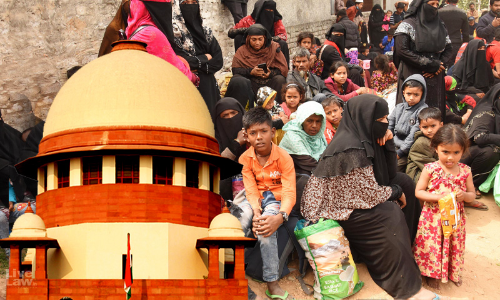
On Friday the Supreme Court reserved orders in a plea seeking interim directions to restrain the central government from deporting Rohingya refugees detained in Jammu and Kashmir. The application further urged the court to order the release of the detained refugees and to direct the government of J&K and the Union Home Ministry to grant these persons identification cards through the Foreigners Regional Registration Office. This petition for interim relief was filed on the back of a slew of...
Religious Beliefs; Closure Of Meat Shops And Article 19(1)(g) Of The Constitution Of India
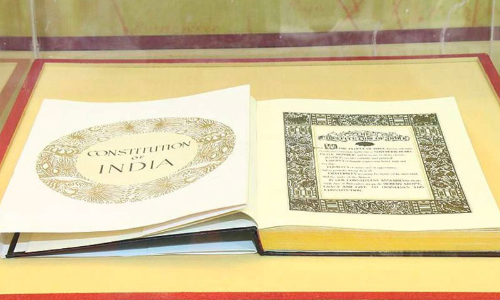
The emergence of IT companies and MNCs resulted in the rise in population in Gurugram, Haryana which prompted the establishment of the Municipal Corporation of Gurugram (MCG). The MCG, a Government body formed by the Haryana State Government was established under the provisions of the Haryana Municipal Corporation Act, 1994. The MCG is envisioned to oversee the basic needs of the citizens' welfare and also work towards the development of infrastructure for the betterment of the people. ...

Insolvency Law in Review – February 2021
The enactment of the Insolvency and Bankruptcy Code 2016 (Code) has had significant ramifications on the corporate insolvency landscape. Over time, the Code has witnessed a manifold increase in litigation, and consequently in the number of decisions. This has made it difficult for insolvency practitioners to stay updated with developments in the field. The purpose of this column is to fill this gap by providing brief summaries of latest decisions, from the various fora dealing with Insolvency...
Right Of Residence Of Daughter-In-Law In Wake Of The New Judgment By The Supreme Court
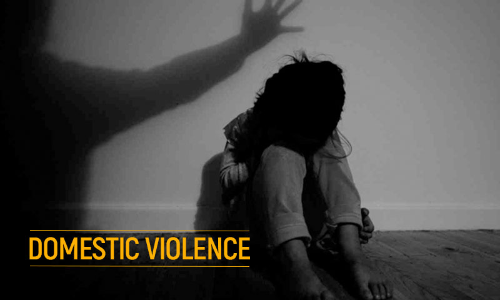
Pitaji(father), Mataji(mother), Bahu(daughter-in-law) and Beta(son) were all living together happilyafter the marriage of Bahu and Beta. Their house let's call it, Swarg, where they all stayed, was owned by Pitaji. Mataji and Bahu used to cook together in the common Rasoi(kitchen). After a few years, differences arose between Beta and Bahu. Now, Pitaji wanted Bahu to leave Swarg. The question that arises is whether Bahu can be asked to leave Swarg, since the property exclusively ...