




Articles
Delhi's Pecuniary Jurisdiction Debate: Why Question Is Bigger Than ₹10 Crore
The proposal to increase the pecuniary jurisdiction of Delhi's district courts from ₹2 crore to ₹10 crore triggered a strike by the Delhi High Court Bar Association and a wider debate on the future of Delhi's civil justice system. Much of the discussion has focused on whether the proposal would reduce the High Court's original work, affect legal practice or increase pendency in the district courts. While these concerns are legitimate, they overlook a more fundamental issue. The real question is...

Children, AI, And Online Safety: India's Next Digital Rights Challenge
Somewhere in India this evening, a child too young to legally sign a contract is confiding in a chatbot. Not asking it homework questions, but talking to it about loneliness, about a fight at school, about feelings an eleven-year-old rarely voices to an adult. The chatbot listens patiently, responds warmly, and remembers nothing of the legal architecture built to protect that child, because that architecture was not designed with this relationship in mind. This is the quiet frontier of India's...
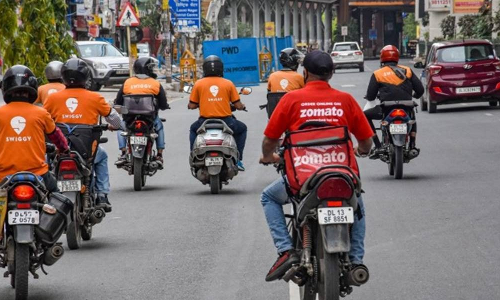
Gig And Platform Workers Under Code On Social Security, 2020: Coverage, Portability, And Enforcement Challenges
The nature of work has undergone paradigm shift. Earlier people chose traditional 9 to 5 jobs. In the 21st century there has been shift from 9 to 5 jobs to flexible working hours. The people are moving towards short-term, task-based, contractual work. People are giving priority to this kind of work called gig work. Gig work is a modern work arrangement where people themselves choose their working hours, work for multiple clients and are specialised in particular skill. Moreover, gig work is...
Democratising Corridor Justice – Insulating Supply Chain Beyond State-To-State: A Corridor ADR Architecture For Malaysia-India Trade Relationship
In October 2019, following remarks by then Prime Minister Tun Dr Mahathir Mohamad on India's position in Kashmir, Indian palm oil importers effectively suspended purchases from Malaysia.[1] No formal import restriction was ever notified. No consultations were requested under the Malaysia-India Comprehensive Economic Cooperation Agreement. No complaint was filed at the WTO; indeed, Malaysia's own government made clear it did not intend to raise the matter there. Malaysian export volumes to India,...
Why Does India's Dowry Prohibition Regime Fail?
I. Why Does DPA Fail?Twisha Sharma, an actor and model, was found dead, hanging at her matrimonial home on 12th May 2026 in Bhopal. The police registered an FIR under Sections 80(2) and 85 of the Bharatiya Nyaya Sanhita and Sections 3 and 4 of the Dowry Prohibition Act (DPA). Then the Central Bureau of Investigation took over. Her mother-in-law, retired judge Giribala Singh, obtained anticipatory bail and, according to the CBI, refused to cooperate with the investigation despite multiple...
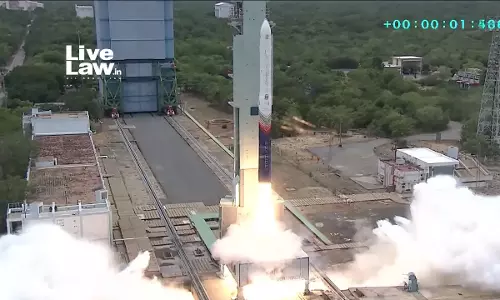
India's Space Law Vacuum
With Skyroot Aerospace's successful Vikram-1 rocket launch, India has become the third nation where a private entity has independently developed and successfully launched an orbital rocket into the outer space.An equally significant story lies behind the launch, which is the legal framework that allows private participation in India's space sector. At present, in absence of a comprehensive statutory enactment, the India's Space sector is only regulated by the following executive policies, norms...
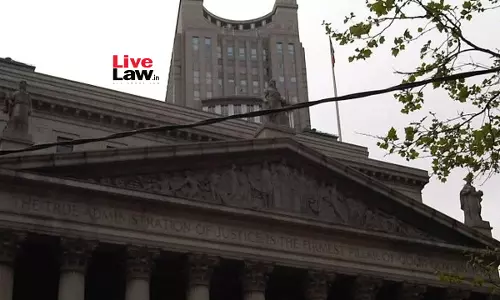
Indian Lawyer Goes To United States Court
Spending an Indian summer in New York when the World Cup is taking place is a treat. More so was my experience at Courtroom No. 1305, Thurgood Marshall United States Courthouse for Southern District of New York. A world away from snakes and ladders of New Delhi.Part I While walking up from Brooklyn Bridge and admiring the tall buildings of Manhattan, we come across a side entry for the 13-floor Thurgood Marshall United States Courthouse. The front of this federal courthouse faces the New York...
Criminalising Disrespect To Vande Mataram: What Prevention Of Insults To National Honour (Amendment) Bill, 2026 Actually Changes?
The Monsoon Session of Parliament has once again brought into focus a significant legislative proposal: the Prevention of Insults to National Honour (Amendment) Bill, 2026. The Bill's operative idea is simple to state: it extends to “Vande Mataram”, India's National Song, the same statutory protection currently reserved for the National Anthem, “Jana Gana Mana”, under the Prevention of Insults to National Honour Act, 1971. Intentional obstruction of, or insult during, the singing of Vande...
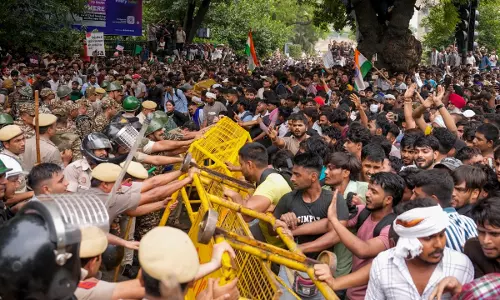
Police Force Meant To Disperse Crowd, Not To Punish Protesters
On July 20th, 2026, videos and clips of the student 'Chalo Sansad' march appeared across several online platforms. While an executive order under Section 163 of the Bharatiya Nagarik Suraksha Sanhita (BNSS), directing persons to abstain from certain acts to preserve public order, was in force in New Delhi, the brutal police action against students forces us to ask whether the same was justifiable. Even if students were said to have violated the order, whether the use of tear gas, lathis, pellets...

India's Data Protection Board: Established In Law, Absent In Fact
India's data protection framework now has a statute, a set of rules, a designated adjudicatory body, and a growing body of case law referring litigants to that body. What it does not have, eight months after the rules were notified, is a functioning regulator. The Digital Personal Data Protection Rules, 2025, were notified by the Ministry of Electronics and Information Technology on November 13, 2025, bringing into immediate effect the provisions establishing the Data Protection Board of India...
Right To Protest In India, A Failed Social Contract
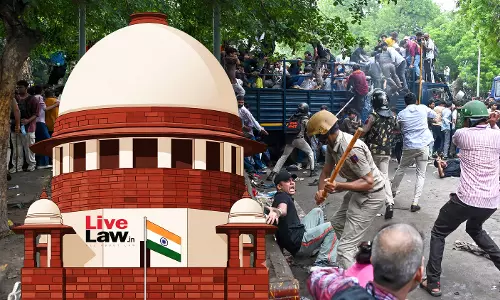
Marches, dharnas, sit-ins and other forms of protest are integral to the experience of the Indian freedom struggle. So much so that the fight for independence is often recounted in phases of public movements centred around expressing discontentment with the British. However, the democratisation of the right to protest in India has been whittled down from an inviolable guarantee to whimsical and arbitrary patronage. The Indian “Permit-Authorisation” regime which governs the right to protest...
Hunger Strike: In Perspective Of Section 226 Of BNS
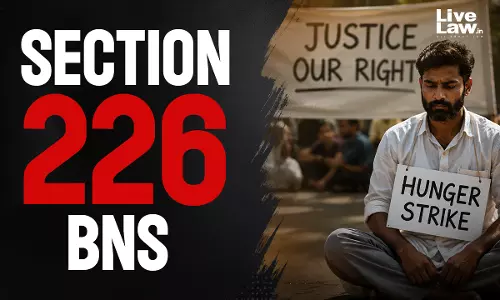
As per Madras High Court held in P. Chandrakumar Vs. State by the Inspector of Police,[1] sitting on 'Hunger Strike' is not an attempt to commit suicide within the meaning of Section 309 of IPC. Similarly Allahabad High Court in Ram Murat Pandey vs State of U.P. & Another[2] held, “Simply by sitting on dharna and going on indefinite hunger strike does not amount to an act towards attempt to commit suicide. The applicant wanted to highlight his grievances and for this purpose only such...