



Articles
Trading Supported By Blocked Amount (TSBA): New Settlement Framework For Investor Protection
The Indian securities market has undergone sustained structural reform through dematerialization (the process by which physical share certificates are converted into electronic records and credited to an investor's demat account, enabling the holding and transfer of securities in a paperless form), nationwide electronic trading, UPI (Unified Payments Interface) integration, T+1 settlement, that is, a settlement cycle in which trades are settled on the next business day following the trade date...

Persons With Disabilities And Right To Celebrate Pride Month
'The world works better with us' (Pride month (2026) theme)All persons with disabilities have the same human rights to socialize, celebrate and participate in cultural events (UNCRPD, RPWD Act,2016). The celebrations of pride and parades and its public visibility like 'Black Pride', the LGBT Pride (June) and the Disability Pride celebrations (July) are a collective identity to be acknowledged. These merriments are celebrations of uniqueness of being different and take pride in who they are. This...
Reels, Virality, And Manufacture Of A Hero
On 10 July 2026, the Supreme Court witnessed an unusual disruption. Prabal Pratap Singh, appearing as a petitioner-in-person before Justices K.V. Viswanathan and Alok Aradhe, reportedly called himself “the sovereign”, addressed the judges as “judicial servants”, and attempted to “order” the Court to direct registration of an FIR. He then allegedly threw his case papers and abused the Chief Justice of India. Security personnel escorted him out, while the Bench remained calm and dismissed the...

CU Punjab Hikes Law Fees By 30% - Before Its First Batch Has Even Graduated
The Central University of Punjab, Bathinda, established by Parliament under the Central Universities Act, 2009, introduced its five-year B.A.LL.B.(Hons.) programme only in 2024. The first batch has not yet reached its final year, let alone graduated. Even so, the University has already revised the fee structure for students joining in the 2026 academic session, and the revision is not a routine, inflation-linked adjustment. It is a structural change with a compounding effect that deserves a...

Why State Owes An Undertrial At Every Remand Hearing And Has Owed Since 2018.
Why Sukdeb Saha (2025 INSC 893) Elevated Section 103 of the Mental Healthcare Act from a Forgotten Statutory Mandate to an Article 21 Obligation and Why the Undertrial Cannot Wait for Parliament to Notice.Picture a remand hearing. A magistrate looks at a case diary. The police say the accused should stay in custody. A defence lawyer, if there is one, pushes back. The magistrate weighs flight risk, gravity of offence, stage of investigation, then signs the order. Custody extended. Nobody asks...
Why Meaningful Costs Adjudication Is Essential For Promoting Arbitration In India
Indian courts continue to grapple with an enormous and ever-increasing docket of cases. India's economic aspirations and its ambition to remain one of the world's fastest-growing economies are inextricably linked to the existence of a robust, efficient and credible dispute resolution framework. Investors and entrepreneurs, whether domestic or foreign, seek assurance that commercial disputes, will be resolved fairly, expeditiously and at a reasonable cost. The only viable alternative forum which...
Federalist Critique Of Viksit Bharat Shiksha Adhishtan Bill, 2025
The proposed Viksit Bharat Shiksha Adhishthan Bill, 2025, marks one of the most ambitious attempts to restructure India's higher education regulatory architecture since Independence. By proposing to replace multiple statutory regulators with a unified institutional framework, the Bill seeks to establish administrative efficiency, uniformity, and streamlined governance. While these objectives may appear commendable, the constitutional implications of the proposed legislation demand far greater...

Why Every Lawyer Should Learn Mediation
You do not have to want to become a mediator for it to change how you work.When lawyers ask me about mediation, the first thing they usually want to know is what the career prospects are. It is a fair question, but the wrong one to begin with. It treats mediation as a separate profession you either join or you do not. For a few people it is that. For most of us it is something more ordinary and more useful: a set of skills that changes how you handle the work you already do, whether in a trial...
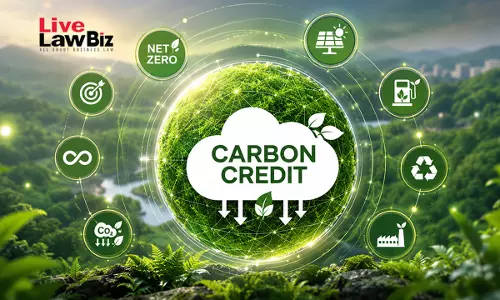
Carbon Credits, Not Carbon Prices: Why CCTS May Not Clear CBAM's Article 9 Bar
A carbon credit refers to the certificate that represents a tonne of greenhouse gases that has been successfully reduced, avoided, or offset. A company earns credits by cutting emissions below a defined target, and can trade or surrender them depending on the scheme's design. On the other hand, the concept of a “carbon price” is about putting a cost directly on carbon emissions in the form of tax, charge, or cap-and-trade system that makes companies pay per each tonne of carbon emitted. The EU's...
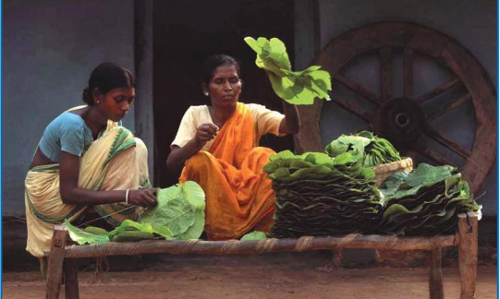
Bylaws And Custodianship: Strengthening Community Governance Of India's Commons
Indian's Commons comprise both forest and non-forest resources that not only support the livelihoods of thousands of communities but also offer rich ecological and cultural services. In this post, Rao and Singh discuss how panchayat byelaws can strengthen custodianship of Commons governance, and how existing legislative frameworks can be leveraged to improve the protection, access, and management of Commons in India. Commons play a crucial role in providing ecological, economic, and cultural...
Last In Line, First To Bleed: How Arbitration Fails Sub Contractors
Arbitration was marketed as faster, cheaper, more flexible than courts, and tailor‑made for commercial players. But, for sub‑contractors, the reality is brutally different. Escalating fees, narrow judicial review and structural barriers to even getting a fair hearing often turn arbitration into a high‑risk gamble rather than an effective remedy, leaving them in a worse position than if...
What You Tell Your AI Could End Up In Court
In February 2026, a New York federal court ordered Bradley Heppner, facing securities fraud charges, to hand over legal defence notes he drafted using Anthropic's Claude chatbot. Heppner had prepared these notes in anticipation of his arrest, and shared them with his lawyer beforehand. Since the notes drew on information received from counsel and informed Heppner's defence strategy, his lawyer argued the notes were protected by attorney-client privilege. This privilege bars disclosure of...