




Articles

Can India Force WhatsApp To Break End-To- End Encryption? Answer from Podchasov v. Russia
WhatsApp's challenge to Rule 4(2) of the Information Technology (Intermediary Guidelines and Digital Media Ethics Code) Rules, 2021 has been pending before the Delhi High Court since 2021. The government wants large messaging platforms (significant social media intermediary) like WhatsApp to help identify the “first originator” of any message, whenever a court or the government asks for it under Section 69 of the Information Technology Act, 2000. WhatsApp says it cannot do this without breaking...
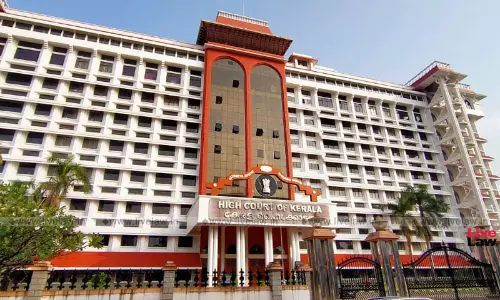
Union's Court In Renamed States: Why High Court Of Kerala May Outlast State's Name
It is now a done deal after the Union Cabinet accepted the name changes for the state of Kerala to “Keralam”, what it is called in Malayalam. There has been a decades old campaign for the same to change the name “Kerala”, a name inscribed in the First Schedule of the Constitution of India since 1956. The Union Cabinet has cleared the proposal for name change in February 2026, the President referred the draft Bill to the state legislature under Article 3, and in July the Kerala Assembly had...

LiveLaw Editorial Guidelines For Article Submissions
LiveLaw publishes original, timely legal article that offers clear value to practitioners, academics, students and litigants. Owing to the volume of submissions, articles are assessed against the following editorial standards.I. Submission Categoriesa) General ArticlesLegal developments, legislation, policy and other areas of law.b) Law Firm ArticlesContributions by law firm partners, associates, general counsel and other legal professionals.c) Law School ArticlesContributions by law...
Passport That Proves Nothing? MEA's Position And What It Costs Constitution
Two laws are now working against each other. The Passports Act, 1967 lets an officer refuse a passport on one ground above all others: that the applicant is not a citizen of India. The Citizenship Act, 1955 is the only law that decides who counts as a citizen. In June 2026, the Ministry of External Affairs said a passport is only a travel document, not proof of citizenship. That statement did more than clarify a technical point. It broke a link between two statutes that had worked together for...

Not Memory, Just Retrieval: Narrow Escape For OpenAI
In the first Indian decision to consider whether training a large language model on copyrighted material infringes copyright, Justice Amit Bansal of the Delhi High Court, in ANI Media Pvt. Ltd. v. OpenAI OpCo LLC, denied ANI Media's plea for an interim injunction against OpenAI on July 24, 2026. ANI, one of India's largest news agencies, raised both an output claim (that ChatGPT reproduced or misattributed its reporting) and an input claim (that OpenAI copied and stored its articles to train...

Habeas Corpus Is Not A Shortcut To Family Court
The writ was never meant to settle who gets Christmas with the kids. Habeas corpus was built to answer one question: has the State, or anyone else, confined a person without lawful authority? That is the whole of it. Article 32 and Article 226 preserve that function precisely because it stays narrow, a summary remedy for a stark wrong, not a mechanism for weighing competing claims of care. So looking at who actually is being named as respondent in habeas corpus petitions before High Courts...
Rethinking Section 11 Of SARFAESI Act: Is Statutory Arbitration Limited To Secured Creditors?
The existence of a security interest is not incidental but forms the foundation upon which the rights and remedies under the Securitisation and Reconstruction of Financial Assets and Enforcement of Security Interest Act, 2002 (“Act”) exist. The scheme of the Act allows for the enforcement and realization of security interests by those entities recognized as secured creditors. This starts with the definitions of a secured creditor and security interest as set out in Section 2(1)(zd) and 2(1)(zf)...
Bezboruah And Limits Of Article 227
Why staying silent during a Supreme Court reference may now cost a party its day in the writ court. Most reports on this ruling treat it as one more Supreme Court decision narrowing Article 227 review over arbitral tribunals. That is only half the story. In Manash Kamal Bezboruah v. M/s Bokahola Tea Company Pvt. Ltd. & Ors. the Court does something quieter too. It signals something else: a party who stays silent when the Supreme Court refers a dispute to arbitration may later find a...

Trade Parlance Is Supplementary: Supreme Court's New Roadmap For Customs Classification
Classification of goods under the Customs Tariff Act, 1975 (the Act), is one of the frequently litigated issues that arises due to the customs duty rate, eligibility for exemption, and compliance requirements that depend on the product's classification. A wrong classification can have financial consequences for the importer. A common dispute arises between the importer and authorities on the method of classification: whether the parlance test can be used to determine the classification or...

Constitution Never Approved Algorithmic Governance: Why India Needs Right To Human Decision-Making
In September 2017, an eleven-year-old girl named Santoshi Kumari died of starvation in Jharkhand's Simdega district after her family's ration card was cancelled because it could not be linked to Aadhaar. No official signed off on that cancellation in the way administrative law has traditionally understood a “decision.” A biometric authentication system flagged a mismatch, a database updated a status, and a family stopped receiving grain. Nobody applied their mind to Santoshi's case. That, in...
Regulation By Injunction: How Indian Courts Are Shaping India's AI Policy
Artificial intelligence has reached Indian courts before Indian law has fully decided how it should be governed. A person's voice can now be cloned, a face placed in a fabricated video, and familiar gestures reproduced without that person participating in the creation. The injury can be immediate and irreversible, while the legal framework remains dispersed across privacy, dignity, passing off, defamation, copyright, consumer protection and intermediary liability.India's position is therefore...

Why UN's Latest Warning On Women's Rights Should Concern Us All ?
Justice systems around the world are often described as impartial institutions that apply the law equally to everyone. Yet neutrality in law, does not necessarily produce equality in practice. Rules that appear gender-neutral, frequently operate within institutions shaped by patriarchal norms, unequal power relations, economic disparities and social prejudice. A woman walks into a police station to report domestic violence, she is asked to “adjust”. A young girl is married before she turns...