


Articles
COVID Lockdown- The Wheels of Justice May Turn Slower, But May Not Grind To A Halt
The government declares 21-day national lockdown, and the Supreme Court and all High Courts successively notify their (and that of their subordinate courts) respective shut-down. Some such as the Allahabad, Madras, Karnataka, Bombay, Delhi and Kerala High Courts had already taken leave or considerably restricted their functioning to one or two benches and "fresh matters of extremely urgent nature" even sooner. In all fairness, the Supreme Court has subsequently taken to continue hearing,...
Competition Policy Amid COVID-19
Introduction In light of the COVID-19 outbreak and the consequent impact being felt by the economy, the Finance Ministry recently announced a detailed policy providing number of relaxations to individuals and companies from statutory and regulatory compliance under various legislations ranging from the Income Tax Act to the Insolvency & Bankruptcy Code. Surprisingly, one area was left untouched: Competition Law. A number of jurisdictions around the world have announced...
The Law And The Lockdown
It is the first time, in the history of independent India, that the country has come to a complete standstill. Given the grave threat posed by the SARS CoV-2, the 21-day lockdown is undoubtedly, the need of the hour. However, many have questioned the Constitutional validity of such an action. At the outset, I would like to draw a distinction between the Constitutional validity of the lockdown itself and the measures taken to enforce it. In this article, I will deal with the former, and...
When CORONA Says 'See you in Court!': The Breadth Of Challenges Before The Indian Courts
They say that emergency situations are wake up calls. How are the Indian Courts holding up to their very first experience of a global pandemic and what lies ahead. Professor to 1st year law students : What is law, what is law? Is law relevant in emergency situations? Student : Prof., wouldn't we be concerned with Maslow's hierarchy of needs, especially in emergency situations and clearly law ain't one of them! Professor : Law is present at each hierarchical level -...

19 Key Relaxations In Corporate Laws In Times Of COVID-19
From China to Canada, from U.K. to U.S.A., from Senegal to Singapore, from Italy to India – the entire world has been fighting incessantly with the pandemic, the novel Corona Virus, that has been given the nomenclature of COVID-19 by the World Health Organization. It is a global health crisis, affecting all and sundry, and the numerous ways in which the countries worldwide are attempting to stymie the disease's outbreak are wide-ranging and commendable. The COVID-19 cases have...
Mediation And Jurisprudence - Aspiring To Complete Justice
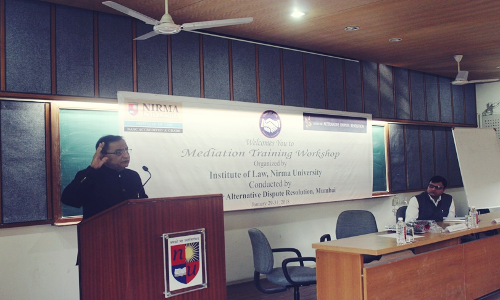
Gone are the days when you spoke of "mediation" and people would mistake it to be "meditation". Even my computer has stopped doing an auto correct. But have we gone far enough in understanding mediation? Mediation is still regarded as a poorer cousin of the conventional adversarial processes like litigation and arbitration. It is understood as an ad hoc process of settlement of disputes at best and a kangaroo court at worst, in sharp contrast to the gravitas associated with litigation and...

Demystifying The Circle Rate Conundrum
Circle rates notified by the State Government perform a very important function in the process of recovery of Stamp duty leviable on documents presented for registration. The fixation of a circle rate affords a ready reckoner to the process of valuation of immovable properties, introduces transparency and reduces the scope for exercise of discretion by the registering authority. The notification of a circle rate which is the product of a very detailed exercise has become an accepted norm...
Coronavirus And The Constitution – III: The Curfew And The Quarantine
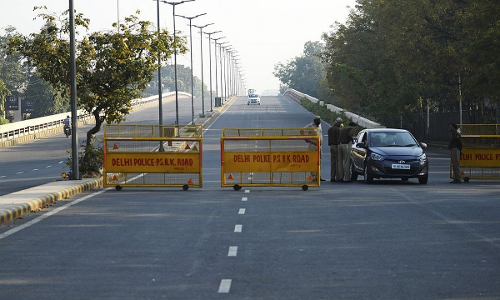
To talk about civil rights in the midst of a global pandemic may seem out of place. However, as the Kenyan legal scholar Joshua Maldizo Nyawa reminded us recently, Lord Atkin's legendary dictum – that "amidst the clash of arms, the laws are not silent" – applies as much to a public health crisis as it does to times of war or to Emergencies. In fact, it is precisely because of the sweeping powers that governments arrogate to themselves during times of crises, that it becomes even more important...

Corona Chaos And Test Of Collaborative Federalism
India's attempt to combat the Novel Coronavirus pandemic with an unprecedented total lockdown of the country has witnessed a major setback as millions of economically disadvantaged people, chiefly the daily wage earners in big cities are being forced to return to their ancestral places and hometowns, most of which are located in different states. They are helpless in this respect, as it's a matter of survival for them. Although a slew of initiatives have been announced by the Central and...

Take Over Of Unlisted Companies– Problematic Areas Of CAA Rules 2016 Framed Under Sec 230 Companies Act 2013
THE NEW RULES INTRODUCED IN THE ACT With the insertion of a new , brief Rule under the Companies (Compromise Arrangements and Amalgamations) Rules 2016, in the Companies Act 2013, (the Act) the Ministry of Corporate Affairs has empowered the majority shareholders of a company ,at their choice, to get rid of the minority shareholders of the company by buying out the latter's holding – analogous to compulsory acquisition of land by the government. Let us go through the...

Shreya Singhal v Union Of India Offers Us A North Star For Intermediary Liability
It has been more than five years since the Supreme Court's landmark decision in Shreya Singhal v Union of India. In Part 1, of this three part retrospective, we analyse the Court's decision to strike down Section 66A of the Information Technology Act ("IT Act"), 2000, and the deficits which subsist in terms of actual enforcement. Part 2 revisis the inadequacy of the Supreme Court's approach in deliberating the constitutionality of website and application blocking under the IT Act. In Part 3, we...

Issuance Of Telemedicine Practice Guidelines In India: A Long Due Piece Of Regulation
Telemedicine Practice Guidelines providing the much needed statutory cover to the practice of medicine by employing means of communication ( as opposed to in-person consultation) has been issued on March 25, 2020 ("the Guidelines) by the Ministry of Health and Family Welfare, Government of India by way of an amendment through the addition of Regulation 3.8 titled as 'Consultation by Telemedicine'. The Guidelines are appended as Appendix 5 to the Indian Medical Council (Professional...