


Articles

My Dear Judges And Politicians
I am an ordinary lawyer, with no professional aspirations and around age 65, so very vulnerable to the Coronavirus. I neither hope to live nor wish to die but were I to live I would certainly try to live a more meaningful life and were I to die I would want to make a last wish as is the custom. And my last wish would be to address Honorable Judges and Politicians of our country. I understand that despite technical advances of means of communication, the art of communication has...

Indian Pandemic Control Laws
From a 21-day curfew on 4 hours' notice and creating one of the biggest migrations in India's modern history to State's police beating and public shaming people coming out on road, a question which arises in this case is about legality of the powers exercised by the Central and State Governments. When COVID-19 (Coronavirus) is at its best and the whole world is fighting to curb its devastative effect, The Epidemic Diseases Act, 1897 is 123-year-old colonial legislation is helping the...

The Companies (Amendment) Bill, 2020: A Step Towards Ease Of Doing Business?
The Companies (Amendment) Bill has been introduced on 17th March in Lok Sabha. It was tabled by Minister of State for Finance Anurag Thakur. The cabinet has approved around 72 changes in the existing Companies Act. In this article we would look into how this bill is introduced with the aim of bringing ease of doing business in India. Ease of Doing Business Grand Challenge Recently, India achieved a ranking of 63 among 190 nations in World Bank's Ease of Doing Business Index; it...

Coronavirus And The Constitution – II: Household Staff And Employment Protection: Obligations, Not Charity
Over the last few days, concerns have been voiced over workers in India's informal sector and how restrictions imposed by the government due to covid-19 might impact them. In his address to the nation, the Prime Minister pleaded with citizens that they continue to pay their employees who would suffer disproportionately as a result of the ongoing situation. Gautam Bhatia has recently written on the rights of employees to a safe working environment under the constitutional framework (in...
COVID 19 And Patent - A Cautious Note
COVID -19 is now over 198 countries with a reported case of 492,465 and mounting day by day. WHO has declared the COVID 19 as pandemic. From a public health issue it is now driving the global economy into a recession. The Chief of International Monetary Fund stated that the rescission is started. Currently there is no vaccine for COVID-19 and a new vaccine is still at least another 12-18 months away for public use. Many a different treatment options have been proposed and some older...
![Allahabad High Court, Medical Facility, Compensation, Rape Survivor, Abortion, medical termination of pregnancy, keep baby till adoption, X vs. State Of U.P. And 4 Others 2023 LiveLaw (AB) 311 [WRIT - C No. - 30708 of 2023],](https://www.livelaw.in/h-upload/2019/08/01/500x300_362757-pregnancy-pregnant-3.jpg "Allahabad High Court, Medical Facility, Compensation, Rape Survivor, Abortion, medical termination of pregnancy, keep baby till adoption, X vs. State Of U.P. And 4 Others 2023 LiveLaw (AB) 311 [WRIT - C No. - 30708 of 2023],")
MTP (Amendment) Bill 2020 : Still A Long Way To Go In Recognizing Women's Autonomy
The Lok Sabha passed the Medical Termination of Pregnancy (MTP) Bill, 2020 on 17th March 2020 to amend section 3 of MTP Act, 1971. In its Statement of Objects and Reasons, the Bill identifies that with the advancement of medical technology there is a scope to increase the upper gestational limit for terminating pregnancies, which up till now stood at twenty weeks, but with the passing of the Bill, would stand at twenty-four weeks. The Bill does away with the anachronistic lower limit of twelve...
Courts Adopting Video Conferencing : A Welcome Change
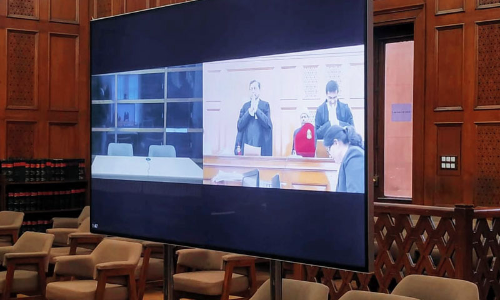
Covid-19 has been able to get cases across courts all over India adjourned for the next few weeks. Rightly so, the court crowd is an easy target for the monstrous corona virus. To contain its spread, courts all over the World are diverting courthouse traffic to virtual courts using remote video technology. In India, the Supreme Court is spearheading this change, with many High Courts following suit. It is arguable whether this technological breakthrough would have been introduced if not for...
Situating Death Penalty Discourse Beyond Abolition-Retention Discourse
A sufficiently just and analytically coherent system of criminal law is an unrealistic expectation- Allen NorrieAs was expected, the hanging of the convicts in Nirbhaya gang rape case has evoked sharp reactions and criticism from several quarters including the Amnesty International, the International Commission of Jurists and the United Nations. The same has reignited the debate on the tenability of death penalty in the modern society. On the other hand, the award of death penalty in the...
NCLAT Bench Chennai - Some FAQ's
The Ministry of Corporate Affairs (MCA) in a very relevant measure has announced the setting up of a Bench of the National Company Law Appellate Tribunal (NCLAT) Bench at Chennai a few days ago. This was done by the Ministry's notification dated 13th March 2020, notifying this constitution of a NCLAT Bench at Chennai vide its notification with Ref No. MCA N/No/S.O. 1060(E). The first NCLAT Bench is situated at Delhi and has been functional for about three years. This move has been by and...
Protection Of Interests Of Suppliers Of Goods And Services To Corporate Debtor Under Corporate Insolvency Resolution Process
Scope of the Study: The Insolvency and Bankruptcy Code, 2016 (Hereinafter referred to as "the Code") required the Resolution Professional to manage operations of the corporate debtor as a going concern during corporate insolvency resolution process[1] (Hereinafter referred to as "CIRP"). Receipt of supply of goods and services is imperative to maintain the corporate debtor as a going concern during CIRP. The business risk taken by such suppliers should be adequately protected. This...
CAA, Coronavirus, And Civil Rights At The Bar Of The High Courts
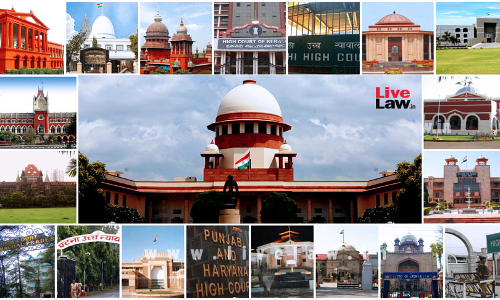
Amidst the continuing fall-out of the CAA/NRC/NPR protests, and the new fall-out of Covid-19, some of India's High Courts have delivered admirable judgments protecting civil rights in fraught times. In Kamil Siedczynski v Union of India, a single-judge bench of the Calcutta High Court set aside a "Leave India Notice" ["LIN"] issued by the government to the Petitioner, who was a Polish student studying in India. The ostensible basis of the Notice – issued under Section 3(2)(c) of the Foreigners...
Their Lordships Are "Also Humans"! : Justice Anand Venkatesh
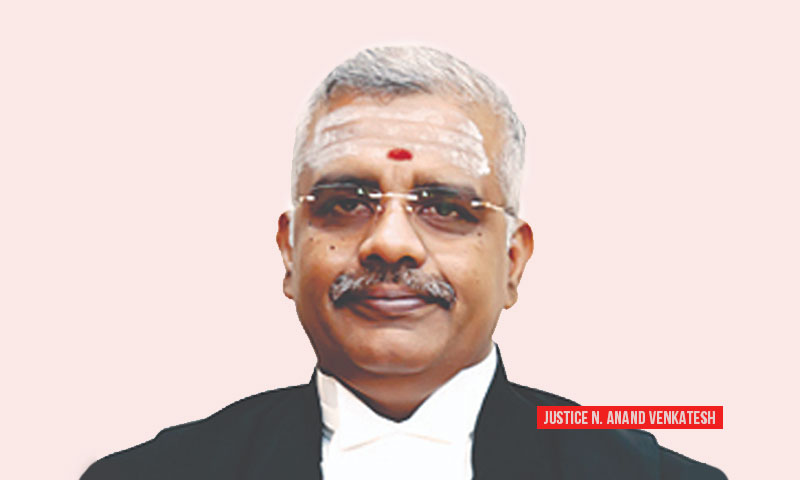
Mental Health in common parlance includes our emotional, psychological and social well-being. It affects how we think, feel and act. It also determines how we handle stress, relate to others and make choices. Mental health is important at every stage of life. Positive mental health allows people to realize their potential at its fullest capacity, cope with the stresses of life, work productively and make meaningful contributions to the community. Judges, in particular, undertake the difficult...