


Articles

Better praxis in judicial appointments
The Supreme Court has on 15th July, 2015 reserved the petitions challenging the law related to the National Judicial Appointment Commission (NJAC) for judgment. The finest part of the NJAC case is that it has succeeded in exposing the ‘strange creature’ of collegium system on the one hand and the equally unacceptable NJAC on the other. The arguments in the case and the media reports on the Court proceedings have been enormously instructive from the public’s point of view. The point,...
Adventures of Attorney General
It seems that the degeneration of constitutional functionaries goes unabated. The incident of a retired Chief Justice of India courting for a sinecure post of Governor and the recent episode of Attorney General of India accepting brief against State Government are symptomatic of the malaise afflicting the system. The run with rapacity, of persons adorning high constitutional posts for political and monetary ascendency, does not augur well for the system. The avarice for power and money by...
Appearance in Bar Case: Why Attorney General's action is deplorable?
The Attorney General’s appearance for a private bar owner in a challenge against the Kerala Government’s liquor policy is per se unconstitutional and therefore illegal. The gravity of illegality and impropriety is only aggravated by his action of seeking indulgence of the Centre in that regard. The further fact that the Centre readily granted the permission is again shocking. The subsequent justification of the act by the Attorney General and the Minister is highly unethical. In a Constitution...

Mediation; Justice for Whom ?
Recently (24th June 2015) a Judge of the Madras High Court (India) while hearing a bail appeal of a man convicted of raping a young girl, agreed to the bail request on condition that the man try “mediation” with the victim. Mediation is aimed at marriage. "The case before us is a fit case for attempting compromise between the parties...he [the rapist] should be enabled to participate in the deliberations as a free man and vent his feelings, open his mind and moorings. Where there is a will,...
Taking the President seriously: Indian President’s power to grant sanction of prosecution against the Prime Minister
1. The President of India is a constitutional head of the Union Government In India, it is generally assumed that the President has no specific powers and acts as per the aid and advice of the Council of Ministers headed by the Prime Minister in the exercise of his powers and functions and can only once send the advice back to the Council of Ministers for its reconsideration and thereafter he is bound to act as per the reconsidered advice of the Council of...
The Emergency of 1975: An Academic Inquest
Despite getting a conditional stay order from the vacation bench of Justice V. R. Krishna Iyer against the order of the Allahabad High Court, the then Prime Minister Mrs. Indira Gandhi was imposed the National Emergency on the night of 25 June 1975. It is said that she was not happy with the conditional stay as she was facing the protest of different political outfits led by Jai Prakash Narain who were demanding her resignation from the office of the Prime Minister. Mr. Morarji Desai was even...

Are Fraudulent Collective Investment Schemes taking SEBI for a ride?
Over the years, the aam aadmi of the country has been drenched into a series of crisis arising either due to nature’s fury or the greed of few fellow human beings and is often found at the receiving end without the possibility of recovery of lost ground. Disaster Management groups have been brought into existence by the State to tackle natural calamities. However, disasters which are man-made belong to the classes of their own. Investment companies had mushroomed in the last century comprising...
Advertising Politics: Common Cause v UOI
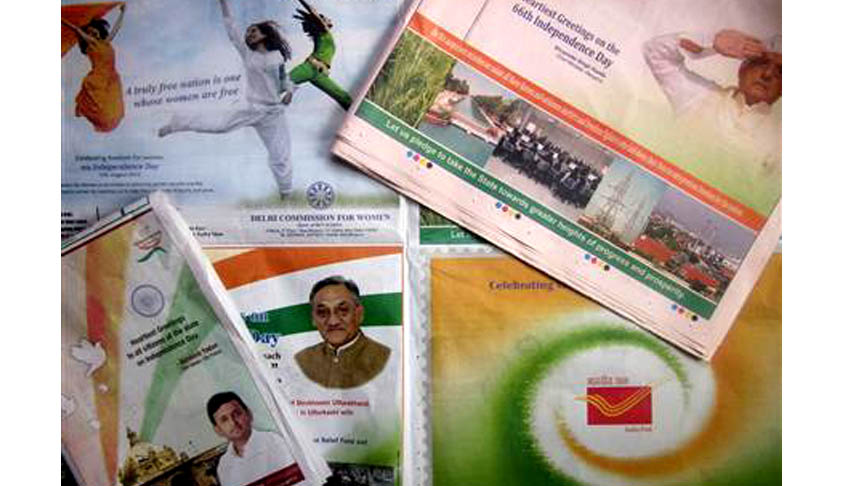
12 years ago, Common Cause and Centre for Public Interest Litigation had approached the Supreme Court under Article 32 of the Constitution seeking an appropriate writ to restrain the Union of India and all State Governments from using public funds on Government advertisements which are primarily intended to project individual functionaries of the Government or a political party. The writ petitioners had also prayed for laying down of appropriate guidelines by this Court to regulate Government...
A Tribute to Justice V. R. Krishna Iyer
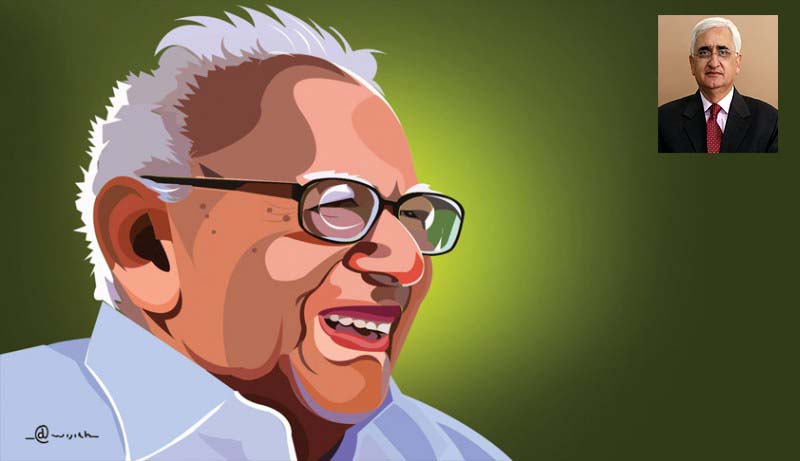
Justice Krishna Iyer, in whose demise the Indian Bar lost a towering and somewhat mythical figure in the legal profession was a remarkable multifaceted personality, having experienced life from varied angles – as a lawyer practicing for a number of years in a Sub-Court at Tellichery, thereafter, at the High Court of Kerala, then as a Minister of the legendary first Communist Government of Kerala headed by E. M. S. Namboodiripad, as Member of the Law Commission of India, and finally as a judge of...

Riding on the ordinance highway: Why the Supreme Court should step in
The NDA government has repromulgated the 2014 land bill ordinance for a second time.President Pranab Mukherjee signed the ordinance into law on June 1. Without this, the ordinance would have lapsed on June 3.Article 123 of the Indian Constitution authorises the President to promulgate ordinances if at least one house of Parliament is not in session.Such ordinances are temporary. To become permanent, they must be ratified by Parliament. The Modi government has tried to get around this limitation...
The legacy of the Magna Carta
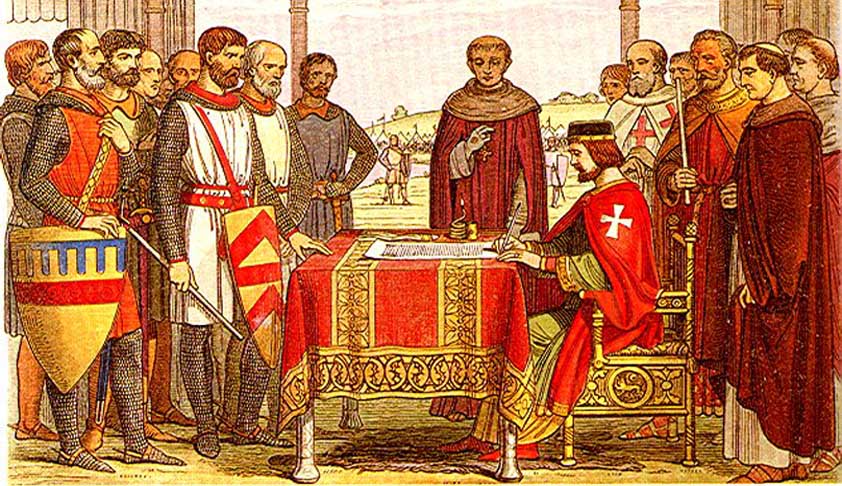
‘Does Magna Carta mean nothing to you? Did she die in vain?’ — so joked comedian Tony Hancock (1924-68) in Hancock’s Half Hour back in the 1950s.Clearly not. Far from dying, Magna Carta has had a life longer, fuller and more influential than the most optimistic medieval baron could have ever imagined.As the 800th anniversary of the Magna Carta is being celebrated today in Runnymede in grand opulence, it is worth revisiting how relevant the ‘Great Charter’ still is.It is relatively dense and...

Asserting the Human Dignity: The Judgment of the Supreme Court of India in NALSA Case
The judgment of the Supreme Court of India delivered in the case of National Legal Services Authority v. Union of India on 15th April 2014 by a Division Bench comprising Justices K. S. Radhakrishnan and Dr. A. K. Sikri is a historical decision which will be a mile stone in the area of gender justice in the country and will have long term impact in the coming times. The verdict is a great example of recognition of right to life with dignity and is also an example of unique judicial craftsmanship...